

Without a doubt, kayaking is the best way to get up close and personal with the world-famous Benagil Cave. Paddling into this natural wonder gives you the freedom to actually land on its hidden beach—something the bigger boat tours simply can't do. It's the only way to truly soak in the magic.
So, What's the Big Deal with Benagil Cave?
The Benagil Cave, or Algar de Benagil as it's known locally, isn't just a cave; it's a natural cathedral carved out by the Atlantic over millennia. Its most famous feature is the massive hole in the ceiling, the oculus, which acts like a natural skylight. When the sun hits just right, it streams down, lighting up the golden sand and turquoise water below. Trust me, seeing that in person is a moment you won't forget.
But getting that perfect moment requires a bit of smart planning. You can't just show up and hope for the best. Things like tides and weather aren't just minor details—they're the difference between an amazing day and a cancelled trip. Nailing these elements is key to a safe and unforgettable paddle.
Your Two Main Options for Paddling In
When it comes to your Benagil cave kayak adventure, you’ve basically got two choices: hop on a guided tour or rent a kayak and go it alone. Each has its own vibe.
Guided Tour vs Self-Kayak At a Glance
Here's a quick comparison to help you decide which path is right for you.
| Feature | Guided Tour | Self-Kayak (Rental) |
|---|---|---|
| Best For | Beginners, families, or anyone wanting expert insights and zero hassle. | Confident, experienced paddlers who crave total freedom and flexibility. |
| Safety | High. A guide handles navigation, safety briefings, and support on the water. | Your responsibility. You need to know the conditions and your own limits. |
| Navigation | All taken care of. Your guide knows the best routes and hidden spots. | All on you. You'll need to navigate the coastline and find the cave yourself. |
| Local Knowledge | You get stories about the coastline, geology, and other sea caves you might miss. | You're on your own to discover things as you go. |
| Flexibility | Limited. You follow a set itinerary and timeline with a group. | Total freedom. Explore where you want, for as long as you want. |
| Cost | Generally higher per person, but includes all gear and a guide. | Lower initial cost, but just for the kayak and basic equipment. |
So, what's the verdict? If you're new to kayaking or just want a stress-free experience where an expert leads the way, a guided tour is a no-brainer. But if you're a seasoned paddler who loves the thrill of independent exploration, renting a kayak gives you the ultimate freedom.
A Few More Things to Consider
During the busy season, this stunning sea cave, with its 20-metre 'eye', can draw hundreds of visitors a day. Kayaking has exploded in popularity because it’s the only way to get those incredible photos from inside the cave. Guided tours typically run for about two hours and cost around €35-€50 per person, with some of the first trips leaving from Praia de Benagil as early as 8:30 AM.
One last tip: getting to the launch point can be a real headache. Parking at Benagil Beach is famously difficult, especially in the summer. Seriously, save yourself the stress and pre-book a transfer. It lets you focus on the adventure ahead instead of circling for a parking spot.
For a deeper dive into all the logistics, you might want to check out our complete guide to planning your Benagil Cave tour.
Choosing Your Paddle Style: Guided Tour vs. Solo Rental
This is probably the biggest decision you'll make for your Benagil adventure: should you join a guided tour or rent a kayak and go it alone? Your answer really boils down to your confidence on the water, your budget, and what kind of vibe you're after. Both paths lead to the same jaw-dropping cave, but the journey there is worlds apart.
For most people—especially families, first-time paddlers, or anyone who just wants to relax and soak it all in—a guided tour is the way to go. With an expert showing you the ropes, you don't have to stress about navigating, checking the tides, or wondering if you're paddling the right way. It’s all taken care of.
The Case for a Guided Tour
Imagine trying to wrangle a couple of teenagers while also figuring out ocean swells. A guided tour provides a controlled, safe environment that still feels like a proper adventure. The guides know this coastline like the back of their hand and will not only get you to the main cave but also point out hidden grottoes and share cool stories about the cliffs you’d completely miss on your own.
The convenience is a massive plus, too. All the gear—life jackets, paddles, and often even a dry bag for your phone—is sorted. You just show up, get a quick safety briefing, and you're off. It strips away all the logistical faff, letting you focus on the incredible scenery. If you enjoy this kind of coastal exploration, you can find similar trips with kayak adventures in Lagos to see even more of the Algarve's best spots.
The Freedom of a Solo Rental
On the flip side, renting your own Benagil cave kayak gives you a sense of freedom that experienced paddlers will love. If you’re comfortable reading the ocean and know your way around a kayak, going solo means you can explore on your own terms. Want to spend an extra 30 minutes in a quiet cove you've discovered? Or wait for the perfect light to hit the cave's oculus for that killer photo? You can.
This option opens the door for a much more personal and spontaneous trip. A couple of adventurous friends might rent kayaks and decide to paddle west of Benagil first, finding smaller sea caves with nobody else around before hitting the main attraction. It’s an incredible feeling, but it definitely comes with more responsibility. Your safety, your gear, your navigation—it's all on you.
Key Takeaway: It really comes down to your comfort level. A guided tour offers safety and local knowledge, making it a brilliant choice for most visitors. A solo rental is all about ultimate freedom, but it demands experience and self-reliance on the open water.
To make the choice even clearer, here’s a quick visual guide.
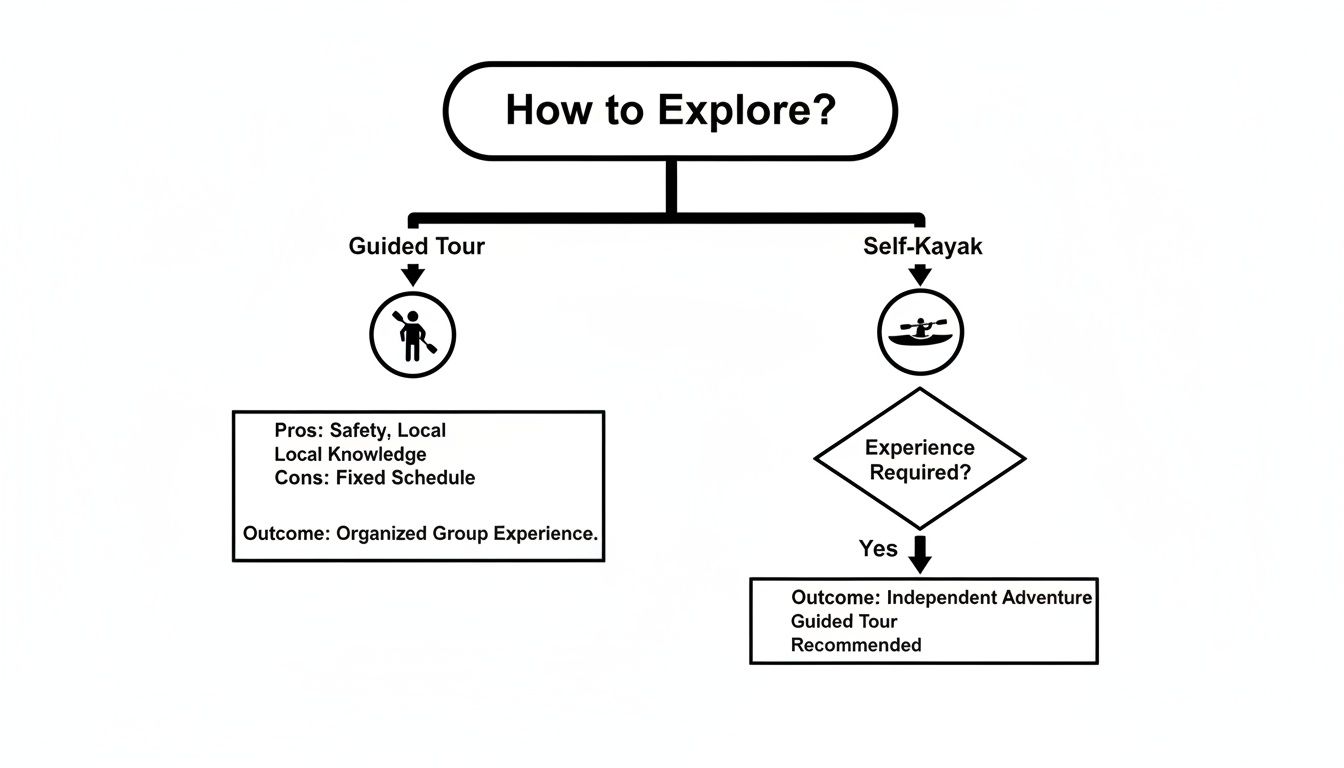
As the flowchart shows, tours are fantastic for safety and insights, while self-kayaking is tailor-made for experienced folks who crave flexibility. Another piece of the puzzle is the type of kayak you'll be using. For a deeper dive into what's available and what might suit you best, check out this guide on choosing your perfect vessel for different water conditions.
Mastering The Logistics: Weather, Tides, And Timing
Let's be honest, a successful kayak trip to Benagil Cave isn't just about paddling. It's about outsmarting the elements before your kayak even touches the water. Getting a handle on the Algarve's coastal temperament is the single most important part of your planning, turning what could be a risky outing into a genuinely magical experience.
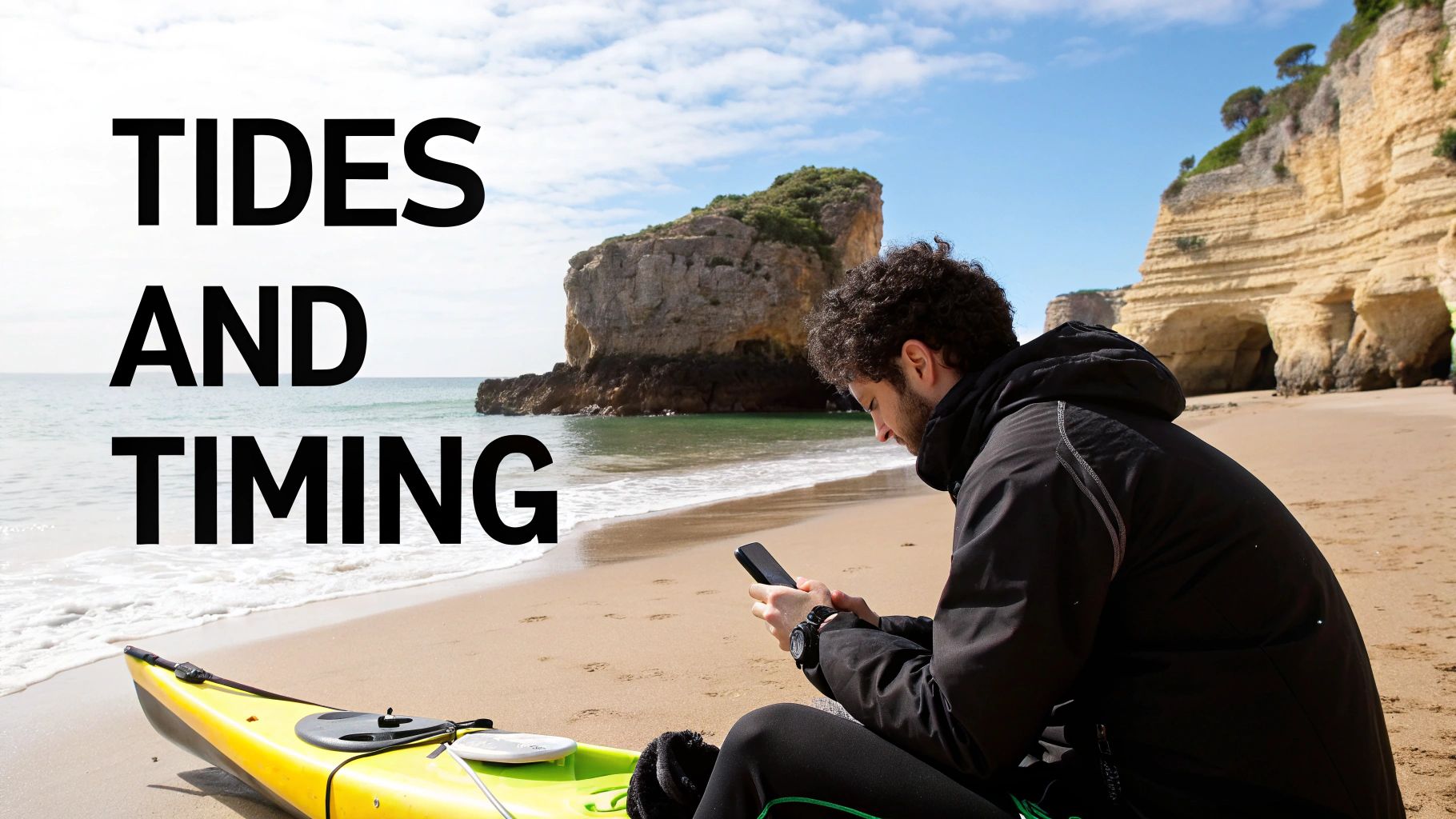
There are two forces of nature that will make or break your trip: the tides and the sea swell. These aren't just suggestions; they're the absolute rules of the ocean here. Ignoring them is the quickest way to find yourself in a very tricky situation.
Decoding The Tides And Swell
First up, let's talk tides. The golden rule, the one thing you need to remember, is to aim for low tide. Simple as that.
When the water level is at its lowest, the entrance to Benagil Cave is as wide and safe as it gets. This gives you maximum clearance from that iconic rocky archway, making it much easier to paddle in and out without fighting strong currents trying to pull you into the rocks.
A high tide, on the other hand, shrinks that entrance considerably. Worse, it can create powerful, unpredictable water movements inside the cave. You can easily check local tide charts online for "Praia de Benagil" a day or two ahead of your trip. Just look for the lowest point and plan to enter the cave within an hour on either side of that time.
Next is the sea swell, which is just a fancy term for the height and energy of the waves. A calm day with a swell under 1 metre is what you're looking for. Anything higher can make launching from the beach a real struggle and the journey itself unpleasantly choppy.
Check a reliable marine weather forecast that’s specific to the Benagil area. Pay close attention to these two things:
- Swell Height: Again, keep it under 1 metre for a comfortable paddle.
- Wind Speed and Direction: Offshore winds (blowing from land out to sea) are a nightmare. They can make the return paddle utterly exhausting.
If the forecast shows high swells or strong winds, just reschedule. It's not worth the risk. Any reputable rental company or tour operator will cancel trips in unsafe conditions, but if you're going solo, that judgement call rests entirely on your shoulders.
Choosing The Best Time To Go
Once you've got the weather and tides figured out, the final piece of the puzzle is timing your visit to dodge the crowds. The Algarve's peak season is July and August, and believe me, the waters around Benagil can start to feel like a traffic jam on the M25.
Insider Tip: For the best possible experience, aim for the shoulder seasons. September is arguably the perfect month—the water is still beautifully warm, the summer crowds have mostly disappeared, and the light is absolutely stunning, especially in the morning.
As for the time of day, an early start is your best friend. Booking the first tour of the day (usually around 9 AM) means you'll likely share the cave with far fewer people. The light inside the cave is generally best between 10 AM and 4 PM, when the sun is high enough to stream through the oculus and light up the interior. An early trip gives you that perfect sweet spot of incredible light and fewer boats.
Getting To Your Benagil Kayak Adventure
Let's be honest, the journey to your launch point is just as important as the paddle itself. A smooth start sets the tone for your whole day, and figuring out how to get to Benagil Beach—the main departure spot—requires a bit of insider knowledge, especially if you're coming from hubs like Faro Airport or Albufeira. You've got a few options, but one stands out for taking the stress completely out of the equation.
Driving a rental car might seem like the most flexible choice, but it comes with a massive headache: parking. Parking at Benagil Beach is famously difficult. The tiny car park fills up ridiculously early, especially in high season. You can easily waste an hour circling for a spot, which is a frustrating way to kick off what should be a relaxing day on the water.
Rideshares are another possibility, but the costs can be all over the place thanks to surge pricing. Plus, getting a ride back from a small fishing village isn't always a sure thing.
The Smartest Way To Arrive
For a genuinely hassle-free day, a pre-booked private transfer is your golden ticket. Imagine getting picked up right from your hotel or the airport and dropped off at the beach, with zero worries about navigating, traffic, or that dreaded parking hunt.
This approach just makes sense:
- Door-to-Door Service: You're picked up and dropped off exactly where you need to be. No fuss, no wasted time.
- Fixed Pricing: You know the cost upfront. No surprise fees for traffic jams or peak demand.
- Guaranteed Comfort: Whether you're a solo traveller or a big family, there’s a vehicle ready to get everyone there comfortably and together.
By ditching the transport headaches, you can focus 100% on the excitement of your upcoming Benagil cave kayak experience. It transforms the journey from a potential source of stress into a seamless part of your holiday.
Why It Makes A Real Difference
Picture this: a family lands at Faro Airport, eager to get to their pre-booked afternoon kayak tour. With a private transfer, a driver is waiting, helps with their luggage, and takes them straight to Benagil. They arrive relaxed and right on time. Now, imagine that same family trying to navigate with a rental car after a flight, finding the beach, and then battling for parking. They could easily be late, flustered, and start their adventure on a sour note.
The convenience simply can't be overstated. To really understand the challenge and why planning ahead is so crucial, you can learn more about the specifics of Benagil Beach parking in our detailed guide. Sorting out your transport beforehand is the single best tip for making sure your paddle to the cave is memorable for all the right reasons.
Navigating The Waters: Essential Safety Rules You Can't Ignore
The pull of paddling into the sun-drenched Benagil Cave is undeniable, but out on the open Atlantic, your safety has to be the top priority. The ocean here can turn on a dime, and knowing the essential safety rules is absolutely non-negotiable for a good, stress-free trip.
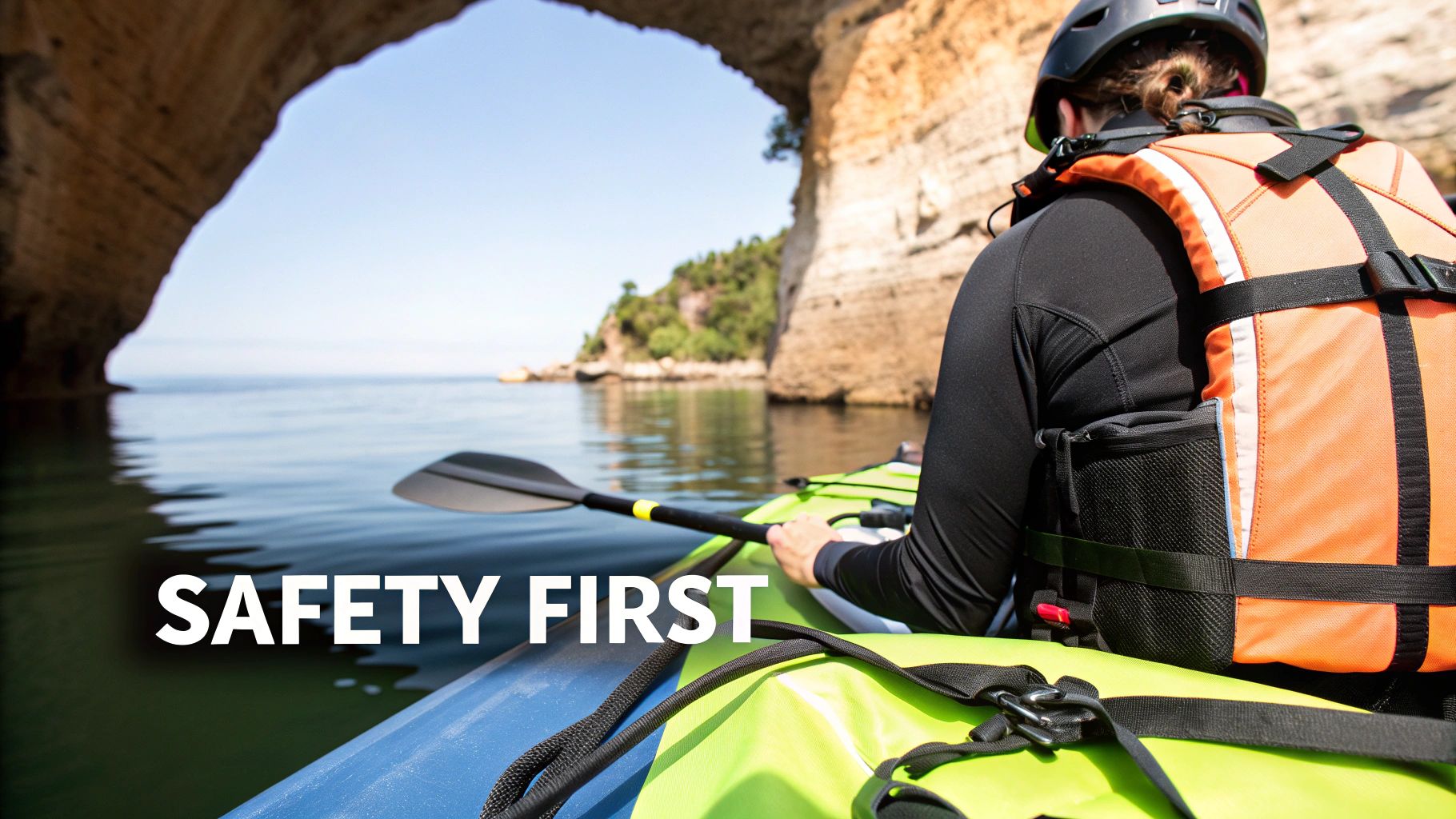
Let's get the most critical rule out of the way first: never, ever try to swim to the cave from Benagil Beach. It looks so close, you could almost touch it. But looks are deceiving. The currents whipping between the beach and the cave are notoriously powerful and have caught even strong swimmers off guard.
This isn't just an overcautious warning. Tragically, at least two tourists lose their lives each year on this coast trying to swim that short 200-metre stretch. That sobering fact is exactly why kayaking or taking a boat are the only safe ways to get inside. To keep things under control, authorities now enforce a strict 1:6 guide-to-kayak ratio and limit how many boats can be in the area at once.
Your Personal Safety Gear
Before your kayak even touches the water, a gear check is a must. Your life jacket, or personal flotation device (PFD), is your single most important piece of equipment. It’s not enough to just have it stuffed in the kayak; you need to be wearing it, and it needs to fit properly for the entire time you're on the water.
A good PFD should feel snug but not tight—you should be able to breathe and paddle without it getting in the way. Every reputable tour operator and rental shop will give you one, but it’s up to you to make sure it’s adjusted correctly before you set off. Having the right gear is fundamental, and you can learn more about all the essential kayak safety equipment to make sure you're fully prepared.
Safety First Mindset: Always treat the ocean with respect. Conditions can change in a heartbeat, and your best defence is your own awareness. Stay alert, listen to what your guide tells you, and never paddle beyond your comfort or skill level.
Before you launch, run through this quick mental checklist. It only takes a minute and ensures you've covered all the essential bases for a safe paddle.
| Benagil Kayak Safety Checklist | |
|---|---|
| Check Item | Why It's Important |
| Life Jacket (PFD) On & Fitted | It can't save you if you're not wearing it. Make sure it's snug and secure. |
| Weather & Tide Check | Conditions can change fast. Know what to expect for your paddle time. |
| Listen to the Guide Briefing | Your guide knows this coast. Their instructions are for your safety. |
| Know Your Limits | Be honest about your swimming and paddling ability. Don't push it. |
| Stay Hydrated | Bring water. The sun and salt will dehydrate you quicker than you think. |
| Check Boat Traffic | Be aware of other kayaks, SUPs, and tour boats, especially near the cave entrance. |
Taking these simple steps seriously is what transforms a potentially risky outing into an incredible memory.
Navigating The Cave Entrance
Getting close to the cave itself demands your full attention. The entrance can become a real bottleneck of kayaks, paddleboards, and tour boats, all jockeying for that perfect photo. The secret is to be patient and make your movements predictable.
Here are a few practical tips to keep in mind:
- Keep Your Head on a Swivel: Constantly scan for other boats. Give the larger tour boats a wide berth—they can't manoeuvre as easily as you and they throw off a wake.
- Watch for Hidden Rocks: You’ll find submerged rocks near the cliffs and cave entrance, especially at lower tides. Slow right down as you approach and keep your eyes peeled.
- Talk to Your Partner: If you're in a double kayak, communication is key. A simple "turning left" or "paddling on the right" helps you stay in sync and avoid bumping into others.
When you put safety first, you're guaranteeing your adventure will be remembered for all the right reasons—the jaw-dropping beauty of the cave, not a mishap that could have been avoided.
Got Questions About Kayaking to Benagil Cave?
Even the most organised adventurers have a few last-minute questions before heading out. It's totally normal. Let's run through some of the most common things people ask about their Benagil cave kayak trip so you can show up feeling like a seasoned pro.
Is Kayaking to Benagil Cave Okay for Beginners?
Yes, absolutely! The Algarve coast is incredibly welcoming to first-timers. But if you've never really held a paddle before, I'd strongly recommend booking a guided tour.
Guides give you a quick but surprisingly effective paddling lesson right on the sand before you even touch the water. More importantly, they handle all the navigation and keep an eye on safety, letting you just soak in the scenery without stressing about ocean conditions or trying to spot the cave entrance. Plus, the sit-on-top kayaks used by most companies are super stable and designed to be forgiving for novices.
What’s the Best Thing to Wear and Pack?
Keep it simple and practical. Let's be real—you're going to get at least a little bit wet, so dress for it.
- What to Wear: A swimsuit or some quick-drying sportswear is perfect. A rash guard or a long-sleeved top is a brilliant idea for sun protection, as the glare off the water can be intense.
- Footwear: Water shoes or sandals with straps are your best friend. They’ll save your feet from any sharp shells on the cave’s little beach and won't float away like flip-flops tend to do.
- Sun Protection: This one’s non-negotiable. The sun reflecting off the water doubles your exposure. You'll need a hat, polarised sunglasses, and a high-SPF, reef-safe sunscreen.
When it comes to packing, less is definitely more. Most tours will give you a dry bag for your small essentials.
A Pro Tip on Packing: Only bring what you absolutely need on the kayak. A waterproof phone case, a bottle of water, and maybe a small towel are usually enough. Leave your valuables and anything you'd be heartbroken to lose locked up safely in your car or at your hotel.
How Far in Advance Should I Book My Trip?
Booking ahead is the secret to a stress-free trip, especially if you're visiting during the buzzing summer months. Leaving it to the last minute often leads to disappointment, as the best tours and transfer times are the first to go.
If you’re planning a trip between June and August, you really should aim to book your kayak tour at least a week in advance. This is especially true if you have your heart set on one of those coveted early morning tours that let you see the cave before the major crowds arrive.
The same logic applies to your ride to the beach. We always suggest booking your private transfer as soon as you have your travel dates sorted. Not only does it guarantee you have a spot, but it also locks in the price, protecting you from any last-minute price hikes. In the shoulder seasons, like May or September, you can get away with booking both your tour and transfer a few days ahead of time.
Ready to make your Benagil adventure seamless from start to finish? The Algarve Experience offers reliable, door-to-door private transfers from Faro Airport, Albufeira, and across the region, getting you to the beach on time and stress-free. Book your comfortable ride today at https://www.thealgarveexperience.com.
Related posts