

You land in Faro, clear the airport, and get the practical part sorted first. Maybe it is a transfer to Albufeira, a few days in the Algarve, or a coastal stop before heading north. Lisbon works best as the next chapter of that trip. The beach rhythm gives way to hills, viewpoints, tiled streets, riverfront walks, and neighbourhoods that still feel like everyday Lisbon rather than a stage set for visitors.
That first transport decision shapes the rest of the holiday more than people expect. Many trips start with practical choices such as Faro airport transfers, Algarve airport transfers, or a straightforward transfer from Faro airport to Albufeira before the Lisbon leg is even on the calendar. The drive from Faro Airport to Albufeira is a fixed 46 km route with an approximate 40-minute private taxi journey under normal traffic conditions. Getting that arrival right usually means less waiting, less luggage stress, and a much easier start.
Lisbon rewards the same approach. It is a city with real depth, but it can also waste your time if you turn up without a plan. Queues build fast in Belém, hilltop districts take longer to cross than they look on a map, and some of the best experiences are grouped closely enough to cover well if you pace the day properly.
That is why this guide focuses on places that justify the detour, the queue, or the climb.
If you want to add time on the water after days split between the Algarve and Lisbon, a boat rental in Lisbon is one of the best ways to see how the city opens onto the Tagus.
If you're also mapping out other European city breaks, it's worth browsing your guide to Brasov's experiences for a very different kind of old-world charm.
1. Belém Tower (Torre de Belém) – Iconic Riverside Monument
Belém Tower is one of the clearest answers to the question of where to visit in Lisbon. It stands right on the Tagus, compact but dramatic, with the kind of carved stone detail that holds up even after you've seen a dozen famous landmarks in Europe. The setting does a lot of the work. River, promenade, open sky, and that pale Portuguese limestone that changes character with the light.
Go early if you care about space, photos, or a calmer experience. Between about 9 and 10 AM, the area still feels manageable, and the tower looks best before the riverfront fills up. Inside, the stairways are steep and narrow, so this isn't the place for flimsy shoes or a rushed visit.
What works best here
A good Belém morning is simple. Pair the tower with Jerónimos Monastery, keep walking time flexible, and leave room to linger by the river rather than sprint through the monument.
- Arrive early: The tower is far more enjoyable before the late-morning build-up.
- Wear proper shoes: The internal steps are tight, uneven, and not ideal in sandals without grip.
- Stay outside for a while: Some of the best views are from the riverside promenade rather than from inside.
- Build a half-day around Belém: The district works best as a cluster, not a single stop.
Practical rule: If a landmark is famous for both its exterior and its queue, prioritise the exterior first. You'll enjoy Belém Tower more if you've already taken your photos before joining any line.
Late afternoon gives you warmer light for photos from outside, especially along the river path. If you want to keep the waterfront mood going after the visit, a look at boat rental ideas in Lisbon fits naturally with the area.
A common mistake is treating Belém Tower as a stand-alone stop. It isn't. It's strongest as part of a wider Belém route, especially for first-time visitors who want Lisbon's maritime story without overcomplicating the day.
2. Jerónimos Monastery – Architectural Marvel of the Age of Discovery
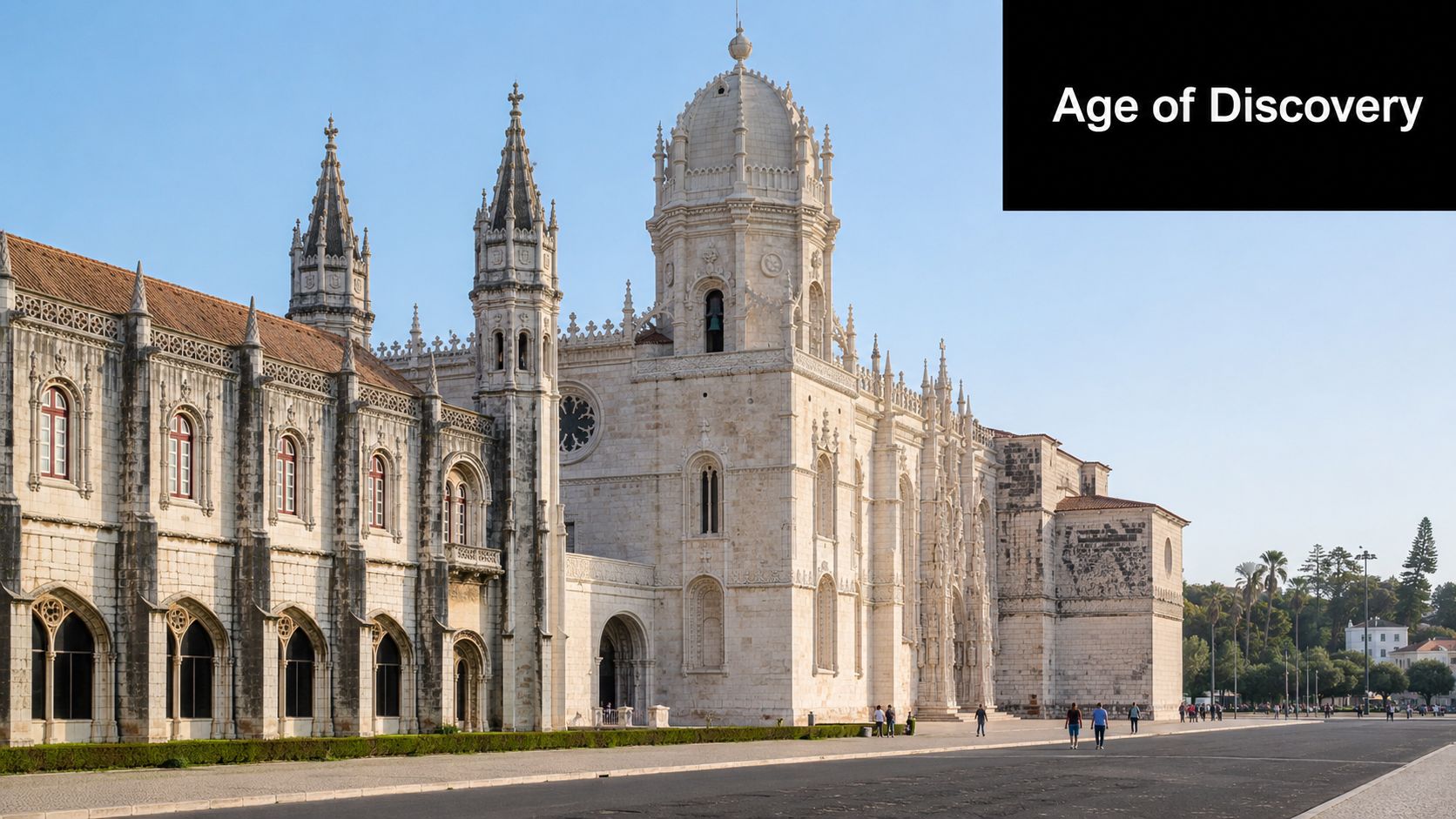
You arrive in Belém, the river light is still soft, and the monastery suddenly fills your whole field of view. Jerónimos does not work as a quick glance from the pavement. The long carved façade, the vaulted spaces, and the sheer amount of stone detail need time and a bit of patience.
Timing matters more here than many first-time visitors expect. Early morning is usually the easiest window if you want quieter photos and a calmer entry, while later afternoon can feel less pressured than the middle of the day. Midday is often the least rewarding slot because the forecourt gets busier and the visit starts to feel slower before you even reach the most interesting parts.
How to visit it well
Plan this as a proper stop, not a gap-filler between lunch and pastries. The monastery rewards slower visitors, especially anyone interested in Manueline architecture, royal history, or Portugal's maritime period.
- Set aside real time: Rushing through Jerónimos usually means missing the carving, vaulting, and atmosphere that make it memorable.
- Use the church and cloister hours to shape your visit: Entry patterns can affect how long you spend waiting versus looking.
- Stand back before going in: The open space in front gives you the best sense of scale and some of the strongest exterior photos.
- Keep energy in reserve: Belém looks flat on a map, but monument visits here add up fast, especially on warm days.
One trade-off is simple. The exterior gives instant impact, while the full interior visit asks for more time, more standing, and more queue tolerance. If your Lisbon day is tight, I would still stop here for the façade and church frontage alone rather than forcing a rushed full visit.
It also fits well into a wider Portugal itinerary if Lisbon comes after an Algarve arrival. Travellers who land at Faro, sort the airport transfer cleanly, spend a few days in the south, and then continue north usually enjoy Belém more because the logistics are already under control. That makes Jerónimos feel like the next strong chapter of the trip, not another transport puzzle to solve.
Jerónimos is one of Lisbon's busiest historic sites, so realistic expectations help. Go with time, comfortable shoes, and a little patience, and it easily earns its place among the city's standout landmarks.
3. Pastéis de Nata Trail in Belém – Iconic Custard Tart Neighborhood Experience
Belém isn't only for monuments. It's also where many visitors go looking for Portugal's most famous sweet. A proper pastéis de nata stop here isn't just a snack break. It's part of the district's identity, and it gives your sightseeing day a different rhythm.
The best version of this experience starts early. Go before the area fully wakes up and you'll find fresher pastries, shorter lines, and a calmer atmosphere around the bakery fronts. A common mistake is grabbing the first tart seen at peak time and moving on. Belém is better when you sample slowly and compare.
How to do the nata trail properly
Not every pastry stop needs to be iconic to be good. Some of the nicest moments come from smaller cafés a little away from the busiest corner.
- Go early in the morning: Fresh batches and shorter waits make a real difference.
- Try more than one bakery: Subtle changes in custard texture and pastry crispness are half the fun.
- Pair it with coffee: A small Portuguese coffee balances the sweetness perfectly.
- Take bakery photos early: Window displays and trays look best before the crowds press in.
The practical side matters here too. If you're arriving in the Algarve first with children, friends, or extended family, Faro airport transfers for families and groups can remove the usual luggage-and-queue hassle. That matters because multi-stop holidays work best when the transfer days don't drain you.
Belém's food stops also benefit from exact timing. That's true across lesser-known Lisbon spots too. One local example often missed in casual guides is the Doll Hospital, where narrow opening hours are easy to get wrong. A detailed local guide notes that many articles skip those specific windows and leave visitors turning up at the wrong time at Lisbon hidden gems such as Hospital de Bonecas. The lesson applies in Belém as well. Lisbon is more enjoyable when you plan around real opening patterns rather than vague “morning” advice.
4. Monastério dos Jerónimos – Cloisters and Church Interior Experience
Seeing Jerónimos from outside is one thing. Being inside the cloisters and church is another. Inside, the craftsmanship itself becomes the actual experience. Columns, arches, stone vaulting, and the quiet geometry of the cloister walkways slow visitors down without them even noticing.
If you only have energy for one interior in Belém, I'd make it this one. Not because it's the most intimate space in Lisbon, but because it gives you scale and detail at the same time. The church feels vertical and solemn. The cloisters feel measured and almost meditative.
Best approach inside
Start with the upper cloister if you can. It usually feels easier to appreciate the layout before the visit becomes crowded and noisy.
- Bring a light layer: Interiors can feel cool even on a warm Lisbon day.
- Pause rather than rush: This is a place to sit for a few minutes and look.
- Use a guide or audio support: Architectural symbolism is easy to miss without context.
- Choose a quieter weekday window if possible: The atmosphere improves when the site breathes a little.
The most rewarding part of Jerónimos isn't the “must-see” photo. It's the five quiet minutes after that, when you stop moving and start noticing the stonework.
Travellers often underestimate how tiring Lisbon can be because so much of it is visually beautiful. Beauty doesn't cancel out hills, queues, or hard flooring. If you're combining regions in one holiday, reliable logistics matter more than people admit. That's one reason many visitors book private transfers Faro airport instead of improvising each leg. For a smoother first stage in Portugal, best airport transfers Algarve options are the ones that are door-to-door, straightforward, and already sorted before arrival.
This interior visit suits travellers who like atmosphere more than novelty. It doesn't rely on interactivity or spectacle. It relies on craftsmanship, proportion, and patience, which is exactly why it stays memorable.
5. Museu de Arte, Arquitetura e Tecnologia (MAAT) – Modern Portuguese Cultural Museum
MAAT gives your Lisbon itinerary a change of texture. After monasteries, towers, and old stone, its curved modern form on the waterfront feels deliberate and fresh. Even people who aren't especially museum-focused often enjoy this stop because the building itself is part of the attraction.
The rooftop is a big part of the appeal. You can take in the river, the bridge, and the broad Belém light without needing a heavy museum commitment. If the current exhibitions interest you, go inside too. If they don't, the outside architecture and riverside setting still justify the stop.
Why MAAT works well in a mixed itinerary
This is a smart choice for travellers who want balance. Lisbon can get historically dense if every stop is a church, palace, or fortress.
- Check the current exhibition schedule first: MAAT is strongest when the show matches your interests.
- Go near sunset if possible: The white tiled exterior and river light work beautifully then.
- Use the rooftop even if you skip the galleries: It's one of the easiest modern viewpoints in the area.
- Add a café break: This is a good place to slow down rather than overpack the day.
MAAT also fits nicely for travellers coming off an Algarve stay and continuing through Portugal in stages. If you're planning an Albufeira to Faro airport return transfer before onward travel, pre-booking that leg keeps the schedule predictable and leaves more mental room for the enjoyable part of the trip.
One caution. Don't expect MAAT to deliver the same kind of emotional hit as Lisbon's oldest landmarks. That's not the point. It works because it broadens your experience of the city. It says Lisbon isn't only about the Age of Discovery. It's also a present-day cultural capital that still experiments, still builds, and still gives space to contemporary design.
6. Terreiro do Paço (Commerce Square) – Historic Riverside Plaza and Gateway to Lisbon
Step out here after the tighter lanes of Belém or the hills above the centre and Lisbon suddenly makes sense. Terreiro do Paço gives you width, light, and a clear relationship with the Tagus. Few first-time visitors realise how useful that is until they arrive.
This is one of the best first stops after reaching Lisbon from the south. If your Portugal trip started in the Algarve and you came up after a smooth Faro Airport arrival and transfer, the square works as an easy reset. There are no complicated queues, no steep climbs, and no need to commit to a long visit. You can walk the waterfront edge, pass under the arcades, and decide what kind of Lisbon you want next.
I usually recommend this square early in a central Lisbon day, especially for travellers who have just checked in and want somewhere impressive without much effort. From here, Baixa is straightforward, Alfama is within reach, and Chiado is an easy next move if you still have energy.
How to make the most of Terreiro do Paço
The square rewards good timing more than a long stay.
- Go early for the best atmosphere: The scale feels more elegant before tour groups and traffic build up.
- Use it to set your route: It is one of the clearest orientation points in central Lisbon.
- Climb the Rua Augusta Arch if you want context: The view helps you understand the grid of Baixa and the riverfront in minutes.
- Keep expectations realistic for midday: Strong sun and heavier foot traffic can flatten the experience.
If you want help linking this area with nearby districts without wasting time on poor route choices, these Lisbon city tours that connect central neighbourhoods well can be useful.
One trade-off matters here. Terreiro do Paço is historically important and visually grand, but it is not a square packed with intimate detail. It works best as a threshold, not a destination for half a day. Treat it as Lisbon's great front door to the river, then move on while the city still feels fresh.
7. Bairro Alto (Upper Neighborhood) – Historic Hillside Quarters with Nightlife and Local Culture
Bairro Alto changes personality by the hour. In daylight, it's textured, local, and surprisingly relaxed. You notice shopfronts, balconies, small bars, worn paving, and the kind of streets that make you look up as much as ahead. At night, it becomes one of Lisbon's best-known social districts.
That split is exactly why it's worth visiting twice if you can. Daytime suits browsing, coffee stops, and finding small shops. Evening suits music, atmosphere, and a noisier, more social version of the neighbourhood. The trade-off is obvious. The more energy you want, the less calm you'll get.
Day versus night in Bairro Alto
Most travellers enjoy Bairro Alto more when they decide which version they want instead of drifting into it at the wrong hour.
- Choose daytime for architecture and wandering: It's easier to notice the neighbourhood itself.
- Choose evening for bars and live music: The area comes alive after dark.
- Wear shoes with grip: The cobbles and slopes are no joke.
- Don't rely on random venue choice for fado: Ask locals or book a place with intention.
For visitors who want a broader look at the city around this area, Lisbon city tours can help connect Bairro Alto with nearby neighbourhoods that are easy to miss if you only follow the nightlife trail.
One useful crowd note applies here and elsewhere in Lisbon. A late-2025 travel source discussing lower-traffic alternatives such as LX Factory and Parque Eduardo VII found that the quietest experience came before 11:00 AM, with congestion rising sharply later in the day. Bairro Alto isn't the same setting, but the principle holds. If you want streets rather than crowds, earlier is usually better.
Need a safe plan after a late night? That's where the same thinking behind 24/7 Faro airport transfers helps. In Lisbon too, transport works best when you decide it before you need it.
8. Livraria Bertrand – World's Oldest Bookstore and Literary Cultural Institution
Livraria Bertrand in Chiado is one of those places that appeals even if you don't usually build trips around bookshops. Age matters here, but atmosphere matters more. It still feels like a functioning bookstore, not a museum pretending to sell books.
Chiado has plenty of polished, photogenic corners, and Bertrand fits the district without feeling overproduced. Go on a weekday morning if you want the quietest experience. That gives you time to move slowly through the rooms, check the Portuguese shelves, and ask staff for recommendations without the space feeling cramped.
Why it deserves a stop
Some Lisbon sights impress through scale. This one works through character.
- Allow time to browse properly: Rushing through defeats the point.
- Ask for Portuguese authors in translation: It's one of the easiest meaningful souvenirs to buy in Lisbon.
- Pair it with a Chiado café stop: The neighbourhood rewards slower travel.
- Support the shop with a small purchase: Places like this are better when people still use them.
Buy one book you'll actually read on the trip home. It's a better souvenir than something decorative you'll forget in a drawer.
This stop is also a good reminder that holiday budgets are built in the practical stages. Travellers searching cheap Faro airport transfers often aren't only trying to save money for the sake of it. They're freeing budget for meals, museum entries, and small purchases that make a trip more personal.
Bertrand won't take all afternoon unless you want it to. That's part of its strength. It slots well into a Chiado walk, especially on a day when you want Lisbon to feel intimate rather than monumental.
9. Museu Nacional do Azulejo (National Tile Museum) – Portuguese Ceramic Heritage and Artistry
If you only visit one museum in Lisbon, this is a strong contender. The National Tile Museum gets under the skin of Portuguese visual culture in a way that's both specific and surprisingly absorbing. Tiles in Lisbon aren't decoration alone. They're identity, storytelling, craft, and urban memory.
The museum's setting helps. It sits in a former monastery, which means you get both the collection and a built environment that complements it. The panoramic panel of pre-1755 Lisbon is the standout for many visitors, especially those who want to connect the city outside with the city that once existed before the earthquake.
How to get the most from the museum
This isn't the kind of museum to rush through in forty minutes. The sequence matters, and the story builds over time.
- Visit on a quieter weekday if possible: You'll have more room to study the panels properly.
- Use magnifying tools when available: Fine detail is part of the pleasure here.
- Consider the audio guide if you enjoy context: The visual beauty deepens when you understand the chronology.
- Look beyond the famous pieces: Smaller rooms often contain the most surprising work.
For travellers combining regions, an Algarve airport shuttle can set up a smoother start to a culture-heavy holiday. That matters particularly for families or groups balancing arrival logistics, luggage, and multiple overnight bases across Portugal.
What I like most about this museum is that it improves the rest of Lisbon. After visiting, you stop seeing tiled façades as pretty background and start reading them as a national art form. That changes the city. Few museums do that so effectively.
10. Sintra Cascais National Park (Cabo da Roca Viewpoint and Clifftop Landscapes) – Dramatic Atlantic Coastal Drama
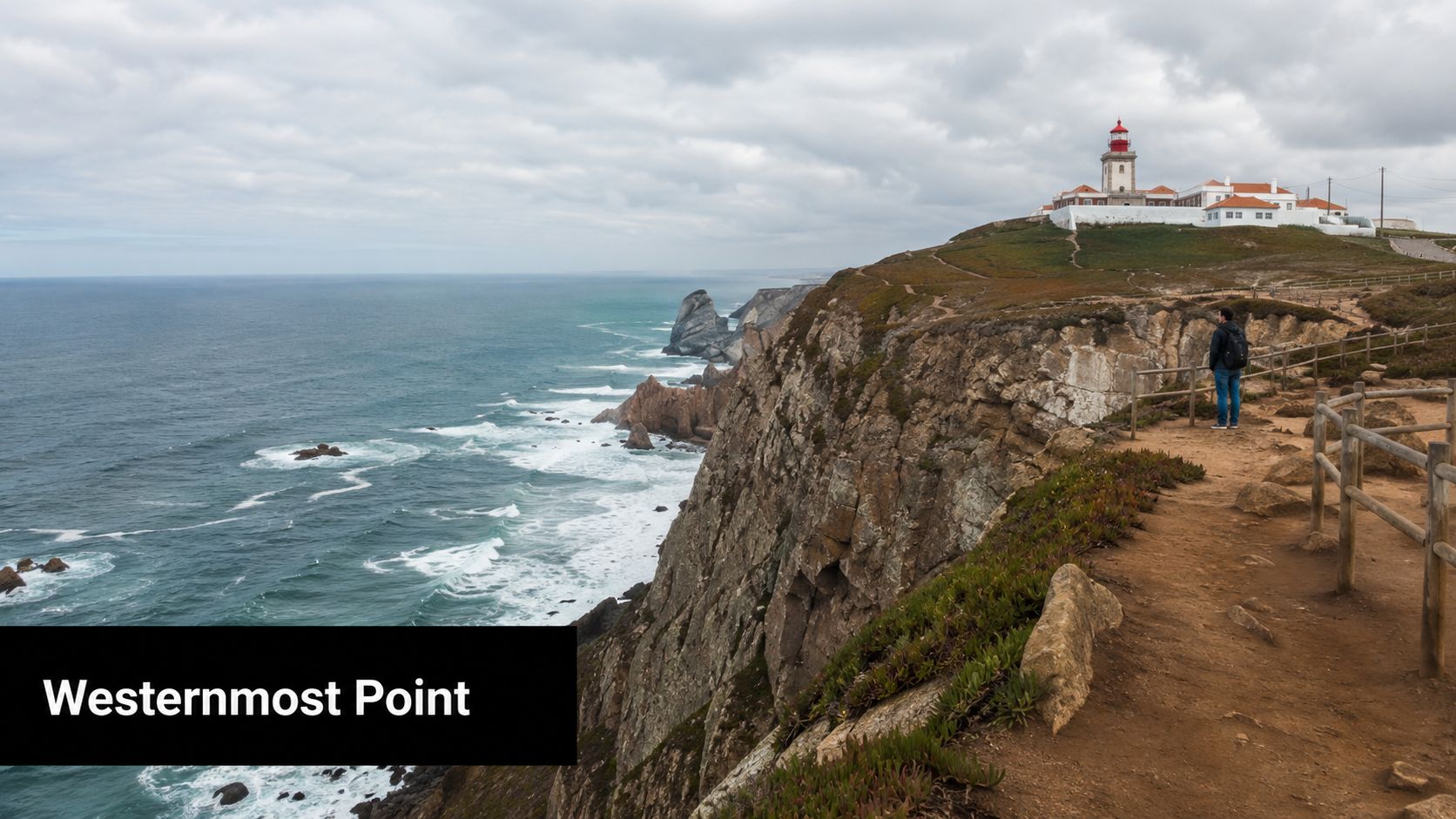
Strictly speaking, this isn't central Lisbon. Practically, though, it's one of the best day trips linked to the city, and it answers a different version of where to visit in Lisbon. Sometimes the right answer is outside the centre. Sintra, Cascais, and Cabo da Roca give you palaces, sea air, cliff views, and a full-day contrast to urban sightseeing.
Cabo da Roca is the dramatic payoff. Wind, ocean, rock, and that sense of standing at an edge. It feels raw in a way Lisbon rarely does. Bring a proper layer because coastal conditions can turn quickly, even on an otherwise bright day.
Planning a full day here
This trip works best with structure. If you wing it too casually, you can spend more time navigating than enjoying.
- Start early: Sintra gets congested quickly, especially around the best-known sights.
- Pack for changing conditions: Windproof layers and good shoes matter.
- Don't overbook the day: Choose fewer stops and enjoy them properly.
- Check weather before cliff walks: Coastal views are glorious, but exposure is real.
If you prefer not to manage all the connections yourself, Lisbon day trips that include Sintra and the coast can make the day easier.
This kind of outing suits travellers who like variety. You might begin your holiday with a Faro airport to Albufeira transfer, spend time in the Algarve, then finish with Lisbon and a day on the Atlantic edge. That sequence works well because it gives the trip a natural lift at the end. City, coast, history, food, then scenery.
Comparison of 10 Lisbon Attractions
| Attraction | Access & Complexity 🔄 | Time & Cost ⚡ | Expected Experience ⭐ | Best For / Ideal Use Cases 💡 | Key Advantages / Impact 📊 |
|---|---|---|---|---|---|
| Belém Tower (Torre de Belém) | Moderate, narrow spiral stairs, daytime-only access, can be crowded | 2–3 hrs; €6–7 | Iconic 16th‑century fortress with Manueline detail and river panoramas | Short cultural stop, photography, pair with Jerónimos | UNESCO landmark, compact visit, riverside vistas |
| Jerónimos Monastery | Moderate–High, large site, crowds, some access restrictions | 2–3 hrs; €12–15 (church free) | Lavish Manueline architecture, cloisters, tombs of national figures | Architecture/history deep-dive, educational visits | Exceptional craftsmanship, rich historical context |
| Pastéis de Nata Trail (Belém) | Low, walkable route but long queues at famous shops | 1–2 hrs; €1.50–3.50 per tart | Authentic culinary sampling of freshly baked custard tarts | Food lovers, casual walkers, budget indulgence | Affordable, immediate sensory experience, cultural tradition |
| Monastério dos Jerónimos (Interior) | Moderate, interior restrictions, cool temperatures, limited photos | 1–2 hrs; included in monastery ticket | Intimate cloisters and church interior; spiritual, detailed stonework | Quiet contemplation, architectural-detail study, interior photography (where allowed) | Restored interiors, peaceful upper cloister, fine stone carving |
| MAAT (Museum of Art, Architecture & Technology) | Low, accessible design, elevators; slightly isolated location | 1.5–2 hrs; €15–18 (rooftop €5) | Contemporary exhibitions in an iconic modern building with rooftop views | Modern art/design enthusiasts, architecture photography, rooftop visit | Striking architecture, free rooftop access, fewer crowds |
| Terreiro do Paço (Praça do Comércio) | Low, open plaza, easy access; exposed to weather, arch stairs steep | 30–90 mins; free (arch fee optional) | Grand riverside plaza with classical arcades and lively public life | Orientation point, people‑watching, photo ops, walk starts | Free, central hub, large-scale urban monument |
| Bairro Alto | Moderate–High, steep cobbles, narrow streets, busy nightlife, some safety concerns late | 2+ hrs; meals €10–15 typical | Lively historic neighborhood with nightlife, fado and local charm | Evening entertainment, fado seekers, vintage shopping by day | Vibrant nightlife, authentic local culture, rooftop viewpoints |
| Livraria Bertrand | Low–Moderate, narrow aisles, steep stairs, limited seating | 45–90 mins; free entry (books priced normally) | Historic bookstore ambiance; deep literary heritage | Book lovers, literary history visitors, quick cultural stop | World's oldest operating bookstore, authentic atmosphere |
| Museu Nacional do Azulejo | Moderate, museum setting, some photo restrictions, requires dedicated trip | 2–2.5 hrs; €5–6 | Extensive azulejo collection in a monastery setting; panorama of pre‑1755 Lisbon | Ceramic/art historians, craft enthusiasts, quieter museum visits | Unique specialized collection, panoramic historic panel, atmospheric cloisters |
| Sintra Cascais National Park (Cabo da Roca) | High, dispersed sites, uneven trails, requires transport or guided tour | Full day; transport/tour costs vary | Dramatic Atlantic cliffs, coastal trails and nearby palaces | Nature lovers, photographers, full‑day excursions from Lisbon | Spectacular vistas, combines natural and cultural highlights |
Start Your Unforgettable Portugal Adventure Today
You land in Faro, collect your bags, and head south without wasting the first evening of your holiday in a taxi queue or at a half-missed bus stop. That choice shapes the rest of the trip more than many travellers expect. A calm arrival in the Algarve gives you a much better start, and Lisbon then feels like the natural next chapter rather than another logistics problem to solve.
That matters because Lisbon rewards energy. Belém is better when you arrive early enough to enjoy the riverfront at an easy pace. Bairro Alto is more fun when you are not running on airport fatigue. The city works best when you have enough margin in the day to linger over a pastry, step inside a church you had not planned to visit, or stay out late and still feel ready for tomorrow.
Arrival logistics are part of trip design, not an afterthought.
For Algarve stays, pre-booked Faro airport transfers solve the usual weak points. You know the pickup plan, you avoid fare uncertainty, and you get straight to your accommodation with luggage handled in one go. If you are comparing options for Albufeira, one fare comparison from Faro Airport Taxis shows a fixed private transfer to Albufeira at €37 for up to four passengers, versus an estimated €62 metered public taxi fare. That kind of price clarity is useful, especially for families, late arrivals, and anyone landing after a long travel day.
Public transport still has its place, but the trade-off is time and flexibility. The direct airport bus is cheaper, yet service frequency can be limited outside peak periods. Algarve Tourist outlines Faro Airport to Albufeira bus timings, including long gaps that can turn a simple transfer into a waiting game. For groups, golfers with extra bags, parents with tired children, or travellers arriving on delayed flights, private transport is often the easier fit.
Book the airport transfer early, settle into the Algarve properly, and then plan Lisbon with the same mindset. Keep the transport simple so the city gets your attention instead of your patience.
Lisbon will take care of the rest. It gives you monastery cloisters, Atlantic light, tiled chapels, old bookshops, steep viewpoints, and neighbourhoods that change character from morning coffee to midnight music.
Ready for an effortless journey? Book your reliable Faro to Albufeira transfer now and get an instant quote!
If your plans also involve travelling with animals, check the latest rules for ensuring pet travel compliance for Portugal.
For dependable The Algarve Experience service, book your Faro airport transfers before you fly and start your Portugal holiday the easy way. The company is based in Albufeira, operates 24/7, monitors flights proactively, and provides fixed-price, door-to-door transport with licensed, insured drivers and a fleet that suits solo travellers, families, and larger groups. If you need a Faro airport to Albufeira transfer, Albufeira to Faro airport return transfer, or wider Algarve airport transfers, this is the practical way to avoid queues and travel in comfort.
Related posts