

Welcome to the heart of the Algarve. This guide is built around your essential Albufeira Old Town map, designed to make exploring its charming, historic streets feel completely natural and effortless. We’ll jump straight into interactive and downloadable options, getting the tools you need into your hands right away.
Why You Need More Than Just a Map for Albufeira Old Town
Wandering through Albufeira’s historic centre is like stepping into a living postcard. You've got the classic whitewashed buildings, the winding cobblestone alleys, and that unmistakable scent of grilled sardines in the air. While any old map can point out the streets, it can't capture the actual feel of the place.
Think of this guide as your local friend, turning what could be a confusing maze into an exciting adventure.
Our goal is simple: to help you explore with the confidence of someone who knows these streets like the back of their hand. We'll show you not just where to go, but how to truly experience the Old Town's one-of-a-kind character.
What This Guide Offers
This isn't just about directions. It's a complete resource put together to make your visit smooth and memorable from the moment you start planning to your last day. We’ve packed it with:
- Interactive and Downloadable Maps: Get instant access to a user-friendly Albufeira Old Town map you can pop on your phone or print out.
- Real-World Navigation Tips: Learn how to spot key landmarks and get a feel for the flow of the winding streets so you don't have to keep staring at your screen.
- Stress-Free Arrival Info: We'll cover how a reliable transfer from Faro Airport can drop you right at the edge of the historic core, letting you dive into the fun the moment you arrive.
As you get your plans sorted, figuring out the best time to visit Portugal can make a huge difference to your trip, helping you find that sweet spot of perfect weather and fewer crowds. It’s all part of planning a trip that really works for you.
Our mission is to change how you explore. Instead of just following a blue dot on a screen, you'll learn to read the town’s layout, discovering hidden courtyards and photo spots that most tourists walk right past.
Ultimately, this guide gives you the know-how to spend less time feeling lost and more time soaking in the authentic atmosphere. Whether you’re on the hunt for the perfect seafood restaurant, a quiet viewpoint, or just a peaceful alley to catch your breath, our curated map and tips will show you the way.
Navigating the Historic Labyrinth of Key Streets
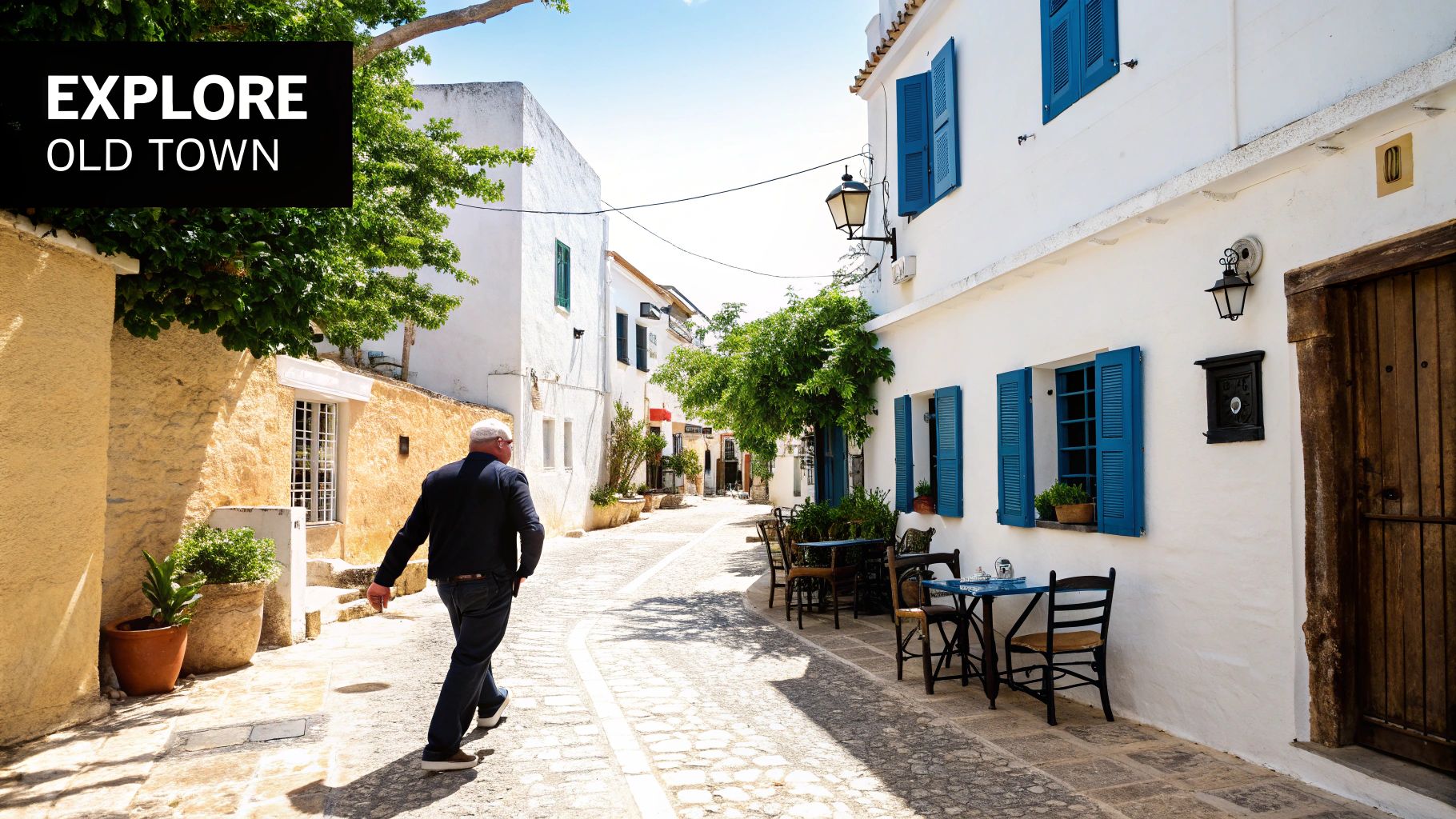
The real magic of Albufeira's Old Town is getting a little bit lost. Its winding, narrow streets weren't a planning mistake; they were a brilliant defence strategy designed to confuse pirates and invaders, turning the town into a natural fortress. Today, that same historic layout transforms a simple stroll into a treasure hunt, where every turn reveals a hidden gem.
With an Albufeira Old Town map, this labyrinth becomes your playground instead of a puzzle. The very design that once baffled enemies now invites you to discover quaint courtyards, tiny boutiques, and traditional cafés tucked away from the crowds. It’s a place that practically begs you to wander off the main path.
You can feel the history right under your feet. These streets have been here since the Moors renamed the town 'Al-Buhera,' or 'Castle on the Sea,' way back in the 8th century. The maze of whitewashed houses was built to keep invaders out and residents cool in the shade. Even after the devastating 1755 Lisbon earthquake, which flattened over 90% of the buildings, the town was rebuilt with the same layout, giving us the earthquake-resistant boxy style you see today.
The Heartbeat of the Old Town: Largo Duarte Pacheco
No matter how lost you get, all roads in the Old Town seem to lead back to Largo Duarte Pacheco, the main square. This is the social and geographical centre of everything, a bustling hub fringed with palm trees and packed with restaurants perfect for people-watching. By day, it’s a sun-drenched spot for a coffee; by night, it explodes with energy from street performers and happy crowds.
Think of the square as your anchor point on the map. It’s the perfect spot to start your adventure or to meet up before diving back into the quieter side streets. For a deeper look at what makes this place tick, check out our guide on the Albufeira Old Town Square.
Main Arteries and Hidden Gems
Branching out from the central square are a few key streets, each with its own personality. Getting to know them is the secret to navigating like a local while still leaving room for spontaneous discoveries.
- Rua Cândido dos Reis: This is one of the liveliest streets, connecting the square to the famous beach tunnel. It’s your go-to for souvenir shops, local crafts, and beach gear.
- Avenida 25 de Abril: Running parallel to the sand, this wide avenue is your gateway to Praia dos Pescadores (Fisherman's Beach). It's lined with seafood restaurants and bars offering incredible sea views.
- Travessa da Igreja Velha: When you need a break from the buzz, find the "Alley of the Old Church." This quiet lane gives you a peek into a more authentic side of Albufeira, with traditional homes draped in blooming bougainvillaea.
Using your Albufeira Old Town map isn't just about getting from A to B. It’s about understanding the rhythm of the town—knowing when to join the lively flow down Rua Cândido dos Reis and when to duck into a peaceful alley like Travessa da Igreja Velha for a quiet moment.
How History Shaped the Albufeira Old Town Map
Every street and square on your Albufeira Old Town map tells a story. It's a tale written over centuries of conquest, disaster, and sheer resilience. To really get a feel for the town's layout, you have to look past the modern-day cafés and souvenir shops and see the layers of history right under your feet. It completely changes a simple walk into a journey through time.
The story kicks off long before Portugal was even a country, back when the Romans called this place ‘Baltum’. It was a key port, and you can still feel that influence in the region's DNA. Roman ingenuity brought aqueducts, bridges, and roads that helped the Algarve flourish, and you can still find bits of their handiwork in nearby spots like Paderne and Guia.
Much later, the Moors arrived and gave the town its name, 'Al-Buhera'—the Castle on the Sea. They fortified the town, creating the maze-like street plan you see today, which was cleverly designed to confuse invaders. When you find yourself wandering through those narrow, twisting alleys, you're literally walking through a military strategy that's held up for over a thousand years.
The Great Quake and a Town Reborn
The single biggest event to shape the modern Albufeira Old Town map was the devastating earthquake of 1755. This cataclysmic event, immediately followed by a tsunami, levelled nearly every building in its path. The town you see today is a monument to the survivors' grit and determination to rebuild from the rubble.
This massive reconstruction effort led to the tough, cube-shaped architecture that defines the Old Town. This style wasn't just for looks; it was a smart, practical response designed to better withstand any future tremors. As you walk around, you'll notice this uniform, sturdy building style everywhere—a direct legacy of that historic rebuilding effort.
This period of rebirth also cemented the importance of key landmarks. While the town's official charter was granted by King Manuel I way back in 1504, it was after the quake that the current layout really took shape, centred around landmarks like the 18th-century Sant'Ana Church and the main Igreja Matriz. For a deeper dive into this rich past, you can explore Albufeira’s historical journey on algarviptravel.com.
Tracing the Past Today
So, how can you spot this history for yourself? Think of your map as a historical treasure hunt.
- Spot the Old Castle Walls: Head over near Rua da Igreja Nova, and you can still find chunks of the old Moorish castle walls. They're a real, tangible link to Albufeira’s fortified past.
- Look for Architectural Clues: Pay attention to the simple, strong lines of the buildings around the main square. That's the post-earthquake architectural style right there.
- Imagine the Old Harbour: As you stand near Fisherman's Beach (Praia dos Pescadores), try to picture it as the bustling Roman port of Baltum, filled with ships and merchants.
Viewing the Old Town through this historical lens adds an incredible depth to your visit. You're no longer just navigating streets; you're tracing the footsteps of Romans, Moors, and earthquake survivors who all left their mark on the very map you're holding.
A Stress-Free Guide to Parking and Transfers
Getting to Albufeira's Old Town should be the start of the fun, not a logistical headache. That last leg of the journey, whether you're coming from the airport or a nearby town, can sometimes feel like the biggest hurdle. But trust me, with a little insider knowledge, sorting out parking and transfers is a breeze, leaving you more time to soak up the historic atmosphere.
First things first: don't even think about driving right into the heart of the Old Town. Its charming, winding streets are mostly pedestrianised and definitely not built for tourist traffic. The smart move is to park on the edge and take a short, scenic stroll to the main square. This way, you avoid the inevitable frustration of searching for a parking spot that simply doesn't exist.
Parking Made Easy Near the Old Town
Your best friend for parking is the large multi-storey car park just a five-minute walk from the centre. It's clearly signposted as you approach the Old Town and has plenty of space, which is a lifesaver during the buzzing summer months from June to August. You won't waste precious holiday time circling the block.
Sure, there’s some limited street parking further out, but it's usually snapped up by locals before you've even had your morning coffee. The multi-storey gives you peace of mind, security, and straightforward hourly and daily rates. Plus, the short walk down towards the sea is the perfect little introduction to the town's vibe.
Insider Tip: That multi-storey car park is your most reliable bet. To practically guarantee a spot during peak season, try to arrive before 10 AM. You'll beat the biggest crowds and get to enjoy a peaceful morning.
Finding the right parking spot can make or break the start of your day. To make it even clearer, here’s a quick comparison of the main options.
Albufeira Old Town Parking Options
| Parking Location | Distance to Centre | Best For | Insider Tip |
|---|---|---|---|
| Multi-Storey Car Park | 5-minute walk | Everyone, especially in summer. Families and anyone wanting a guaranteed, stress-free spot. | Arrive before 10 AM in high season. It’s slightly uphill on the way back, so save some energy! |
| Street Parking (Outer areas) | 10-15 minute walk | Budget-conscious visitors in the off-season or those who get lucky. | Very limited availability. Best to look on the roads leading away from the coast. |
| Lidl/Aldi Car Parks | 15-20 minute walk | Shoppers only. Not intended for long-stay beach or town visits. | Parking is monitored and often has time limits. You risk getting a fine if you leave your car all day. |
As you can see, the multi-storey is the clear winner for convenience and reliability, letting you get on with your holiday without a second thought about your car.
Seamless Transfers from Faro Airport
Flying into the Algarve? Your adventure starts the moment you land at Faro Airport (FAO). While you can always grab a taxi, a pre-booked transfer is a much smoother, more relaxing way to begin your holiday. This is especially true if you're travelling with family, lugging suitcases, or in a group that needs a bigger vehicle.
The biggest plus is the fixed price. You know exactly what you're paying upfront, so there are no nasty surprises from a ticking meter if you hit traffic. A professional driver will be waiting for you in the arrivals hall, keeping an eye on your flight for any delays, and will handle all your luggage. All you have to do is relax. If you want to see how easy it is, you can find out more about arranging a transfer from Faro to Albufeira.
These drivers are pros; they know all the best routes and official drop-off points, navigating the sometimes-chaotic access roads with ease. They can get you right to the edge of the pedestrianised zone or to your accommodation's front door if it's accessible—something that feels like pure luxury after a flight. It’s the perfect, stress-free launchpad for your Albufeira getaway.
Still not sure how to plan your approach? This little decision tree should help point you in the right direction based on what you're looking for.
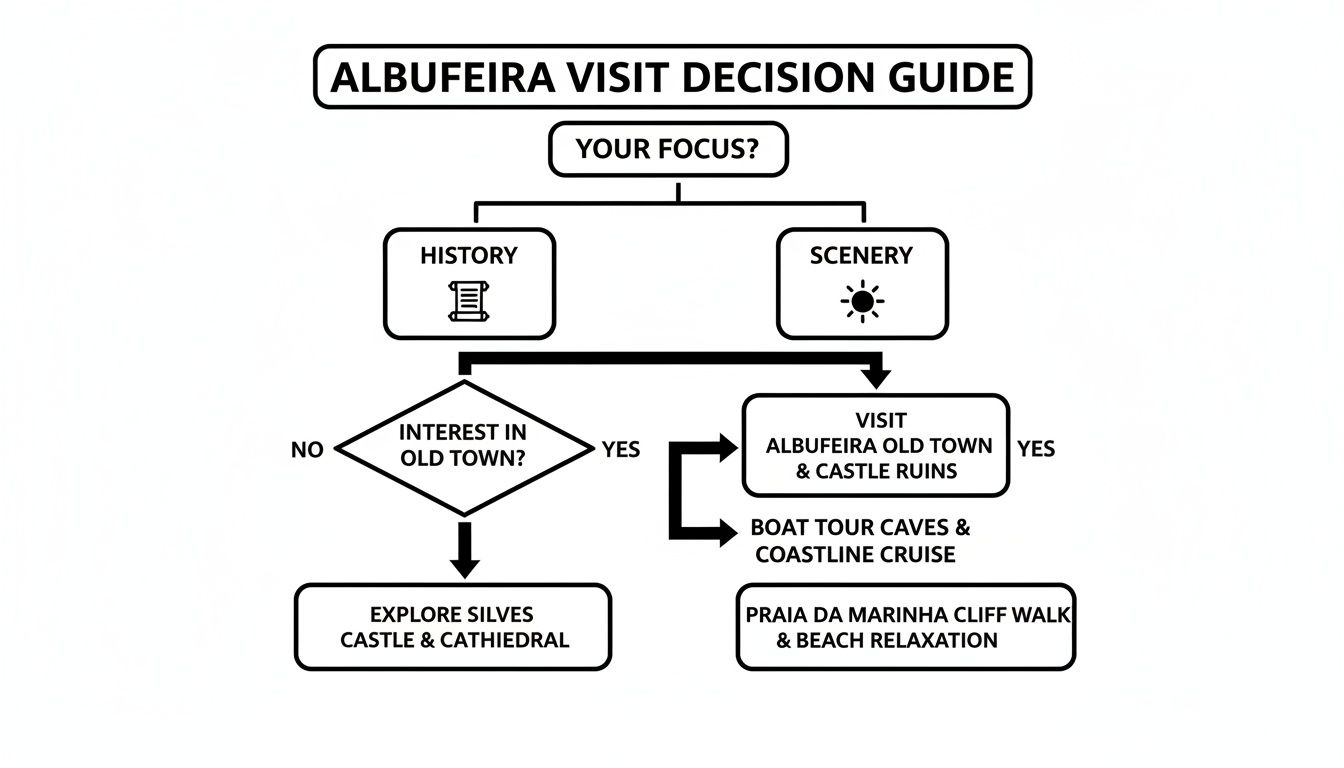
This handy guide makes it simple. Whether you're here to uncover history or just relax and enjoy the scenery, there's a straightforward path to an amazing visit.
Curated Walking Routes for Every Kind of Explorer
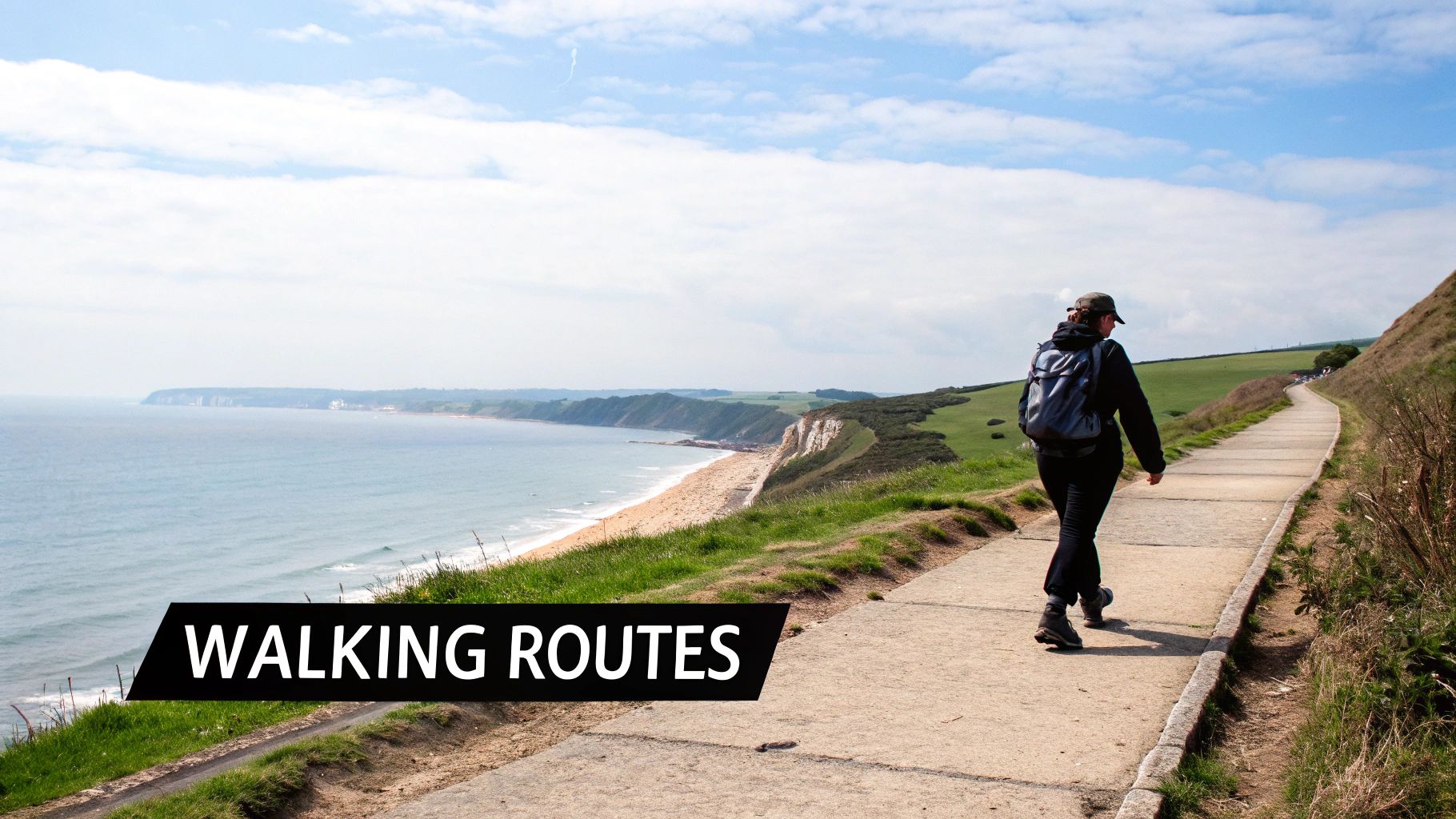
Ready to put that Albufeira Old Town map to good use? The best way to think of the Old Town isn’t as a single spot, but as a collection of different experiences all bundled together. To help you find the vibe that’s right for you, we’ve sketched out three self-guided walking tours.
Each route is more than just a line on a map; it's a curated journey designed to show you a different side of Albufeira. Forget wandering aimlessly—these paths will lead you straight to the good stuff, whether you're a history nerd, a sucker for a good view, or someone who travels with their stomach.
Consider these your insider's shortcut to discovering those hidden corners and local secrets you might otherwise walk right past.
Route 1: The Historic Heart Trail
This one's for the history buffs. It's a proper journey back in time, connecting the dots between Albufeira's most important landmarks. You'll trace the faint outlines of the old castle walls, discover the sites of ancient churches, and feel the layers of Roman, Moorish, and Portuguese history under your feet.
- Estimated Time: About 90 minutes.
- Best For: Visitors who want to uncover the stories behind the streets.
- Highlights: Spotting incredible architectural details and stumbling upon quiet, historic squares.
Your map of Albufeira’s Old Town tells a fascinating story of its evolution. It started as a simple fishing outpost, became the Roman hub of Baltum—where new roads helped agricultural output boom by an estimated 200%—and later transformed into the Moorish defensive fort of Al-Buhera. Now, this perfectly preserved historic core is just a 35-45 minute drive from Faro Airport, with transfer services ready to bring you here 24/7.
Route 2: The Coastal Views Path
If you're constantly drawn to the sea, this is your trail. It follows the stunning cliff tops that frame the Old Town, giving you one breathtaking panoramic view of the Atlantic after another. The path eventually leads you down to the golden sands of Praia dos Pescadores (Fisherman’s Beach).
This route is less about ticking off specific landmarks and more about just soaking in the raw, natural beauty that makes Albufeira so famous. It’s perfect for photographers or anyone who just needs a good dose of salty sea air.
Route 3: The Foodie and Shopping Tour
For anyone who plans their day around what and where they're going to eat, this tour is for you. It winds through the most vibrant streets, pointing you towards the best spots for traditional Portuguese food, from unbelievably fresh seafood to dangerously good pastries. Along the way, you’ll also find charming little boutiques selling local crafts and souvenirs.
- Estimated Time: 2 hours (but that really depends on how long you stop for food and shopping!).
- Best For: Travellers who want to eat and shop their way through the local culture.
- Highlights: Sampling local delicacies and finding unique, handmade gifts you won't see anywhere else.
Each of these routes offers a completely different take on the Old Town. By picking the one that jumps out at you, you can turn a simple walk into a memorable, personalised adventure. For even more inspiration, check out our guide on the best things to do in Albufeira Old Town.
Your Albufeira Old Town Questions Answered
Alright, let's wrap this up by tackling some of the questions that pop up time and time again. Think of this as your final pre-trip briefing, giving you those quick, practical answers so you can hit the ground running with confidence. Your Albufeira Old Town map is the star of the show, but these tips will fill in any gaps.
Navigating those beautiful, historic cobblestone streets might seem daunting, but with a little inside knowledge, it’s a breeze for everyone.
Is Albufeira Old Town Accessible?
The Old Town's undeniable charm lies in its old-world cobblestone streets, which, let's be honest, can be a bit of a challenge for pushchairs and wheelchairs. But it's definitely not a no-go area. The main drags, like the streets leading from the multi-storey car park down to the main square (Largo Duarte Pacheco), are generally much smoother and wider.
For the easiest routes, here's what I'd suggest:
- Stick to the main square and the avenues that lead straight to the beach, like Avenida 25 de Abril. These spots are flatter, more spacious, and much easier to get around.
- Try to avoid the steepest, narrowest alleys, especially the ones that climb the hills on either side of the central area. They're beautiful but can be tough going.
Plenty of restaurants and shops on the ground floor are accessible, but it never hurts to check ahead if you have specific needs. The beachfront promenade is also a fantastic option—it's flat, smooth, and perfect for a gentle stroll with an amazing view.
Best Times to Explore and Avoid Crowds
Albufeira Old Town always has a fantastic buzz, but timing your visit can completely change your experience, especially if you're here during the peak months of July and August.
To sidestep the biggest crowds and the scorching midday sun, the sweet spots are early in the morning (before 10 AM) or late in the afternoon (after 4 PM). The morning light is absolutely perfect for photos, casting a golden glow on the whitewashed buildings while the streets are still wonderfully quiet. Late afternoon brings a more relaxed vibe as people start thinking about dinner, and the temperature is far more pleasant for a walk.
A late evening stroll after dinner is also just magical. The streets are beautifully lit, live music often drifts from the main square, and the atmosphere is lively without being overwhelming. It's a completely different side of the Old Town compared to the daytime rush.
Getting Between the Old Town and New Town
Hopping between the historic Old Town and the buzzing New Town (better known as 'The Strip') is super simple. The two areas are about a 25-minute walk apart, but there are much easier options if you don't fancy the trek, particularly in the summer heat.
- Tourist Train: A fun, scenic little ride that runs a regular loop between the two hotspots.
- Tuk-Tuks: You’ll see them everywhere. They're a quick, breezy way to zip between locations.
- Taxis/Ride-Sharing: The most direct route, getting you there in just a few minutes.
This makes it incredibly easy to soak up the historic charm of the Old Town by day and then dive into the vibrant nightlife of the New Town after dark—or the other way around!
For a completely seamless arrival and departure, let The Algarve Experience handle your transport. Our professional drivers know these roads like the back of their hand, ensuring a stress-free, door-to-door transfer so you can start your holiday the moment you land. Book your transfer with The Algarve Experience.
Related posts