

You're up before dawn, the hotel room is dark, and the whole point of the morning hangs on one decision. If you leave too late, you miss the parking space and the best light. If you leave too early, you stand on a cold summit watching the horizon do nothing for ages. Pico do Arieiro sunrise rewards planning, not optimism, and that's exactly why this guide treats it like a logistics problem first and a viewpoint second.
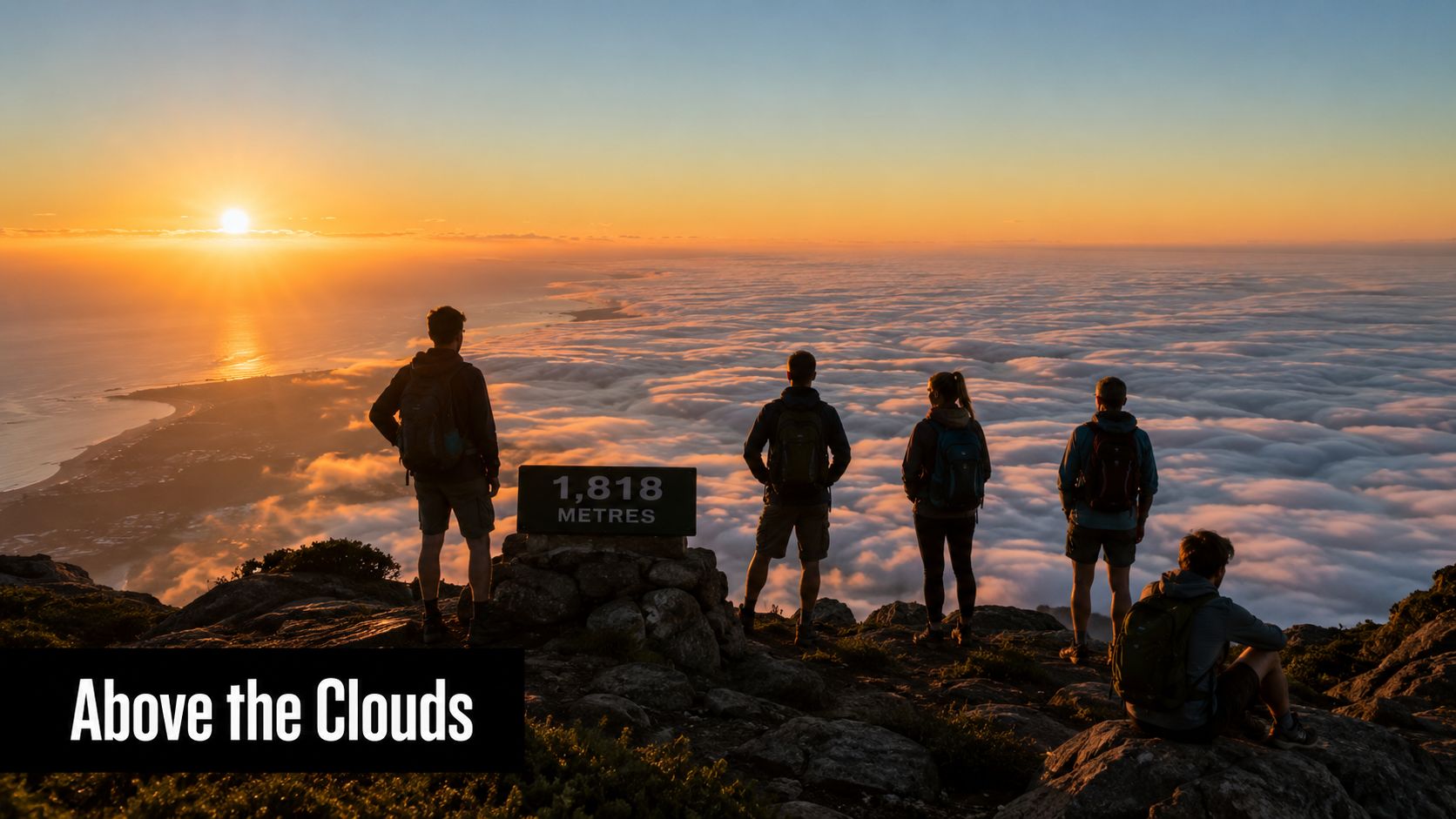
At 1,818 metres, Pico do Arieiro is Madeira's third-highest peak and one of the few places in Portugal where you can watch sunrise from above a cloud inversion, which is why the early alarm is worth it when the conditions line up. The simple truth is, the summit is colder than the coast, sunrise timing changes by season, and the access rules matter now more than they used to. If you want a smooth morning, you need a plan for transport, parking, clothing, and whether you're just watching sunrise or tying it to the PR1 trail.
Why Pico Do Arieiro Sunrise Is Worth the Early Alarm
The first thing to accept is that this isn't a casual viewpoint stop. You're standing in the dark at 1,818 metres, waiting for the first light to spill over a mountain ridge while the coast below is still asleep. That's the whole draw, a high, exposed summit, a cold wait, and the chance to watch the island wake up above the clouds.
The reason this works so well is geography. Pico do Arieiro's road access makes it unusually reachable for a high-altitude sunrise point in Portugal, but the summit still feels properly remote once you step out of the car. That combination is rare, easy enough to get to, dramatic enough to feel earned.
Practical rule: treat the trip like a dawn operation, not a spontaneous outing. If you're packing at the last minute, you're already late.
The contrast between sea level and summit is the bit people underestimate. Madeira's coast can feel mild, then the mountain hits you with wind, moisture, and a much colder waiting period before sunrise. The mountain is also notably wet, with a mean annual precipitation of 2,927.8 mm at regional climate level, and winter months such as November (448.9 mm) and December (447.0 mm) are far wetter than July (13.2 mm), which helps explain why the mood and visibility can shift so sharply with the season. Use that to set expectations, not as a reason to back out. Pico do Arieiro sunrise times and climate context
If you're deciding whether this is worth the 4 a.m. wake-up, my answer is yes, but only if you plan it properly. This guide covers when to go, how to get up the mountain, what the new access rules mean, what to wear, and how to avoid the common mistakes that ruin the experience. It doesn't waste time on generic praise. It tells you how to make the morning work.
For travellers who like comparing sunrise hikes elsewhere, the practical pacing of a mountain dawn is similar in spirit to the advice in find Triglav sunrise climbing tips, even though the terrain and rules are completely different.
Sunrise Times by Month and the Cloud Inversion Window
Pico do Arieiro sunrise timing is not a small detail. It changes how early you leave Funchal, how hard parking gets, and how miserable the cold wait feels before dawn. Because Madeira sits at the western edge of the Western European Time zone, sunrise is later than many people expect, with published times ranging from about 06:10 in June to roughly 08:00 to 08:05 in December. That spread is big enough to change the whole morning.
The better question is not just when the sun rises, but when the summit is most likely to give you the sea of clouds people travel for. Regional guide data points to the best window running from October to March, with clear summit mornings reported on roughly 60% to 70% of days in that period. Summer is still fine for warmer weather, but the cloud inversion is less dependable, so the scene is often less dramatic even when the sky is clear.
Pico Do Arieiro Sunrise at a Glance
| Month | Approx. Sunrise | Cloud-Inversion Odds | Recommendation |
|---|---|---|---|
| January | Around 08:00 to 08:05 | Stronger in the October to March window | Good for the classic cloud-sea look, dress very warmly |
| February | Around 07:40 to 08:00 | Stronger in the October to March window | Good choice if you want a more reliable inversion feel |
| March | Around 07:00 to 07:30 | Stronger in the October to March window | Solid pick before spring conditions start shifting |
| April | Around 06:40 to 07:00 | Transition period | Fine if you want easier conditions, less predictable cloud drama |
| May | Around 06:15 to 06:30 | Lower than winter months | Better for lighter logistics than for the signature inversion |
| June | About 06:10 | Lower than winter months | Early departure, but weaker odds for the cloud sea |
| July | About 06:20 to 06:30 | Lower than winter months | Warmest dawns, least compelling for the classic effect |
| August | About 06:40 to 07:00 | Lower than winter months | Choose this for comfort, not for inversion reliability |
| September | Around 07:00 to 07:20 | Improving | Shoulder month, decent compromise |
| October | Around 07:20 to 07:40 | Stronger in the October to March window | Start of the best visual season |
| November | Around 07:40 to 07:55 | Stronger in the October to March window | Excellent for the cloud inversion if weather cooperates |
| December | Around 08:00 to 08:05 | Stronger in the October to March window | Best for late sunrise and classic summit atmosphere |
The logic is simple. If you want the most reliable chance of a dramatic cloud inversion, aim for the colder months. If you want an easier wake-up and warmer standing conditions, summer works, but you're trading away the signature look. My preference is clear, book the winter window if your trip dates allow it.
A good morning here has three parts. The summit is clear, the cloud layer sits below you, and the horizon light builds slowly enough for the mountain ridges to show their shape before the sun fully breaks through. If you arrive and the summit is already buried in fog, don't pretend it's the same experience. It isn't.
How to Get There From Funchal and the Airport
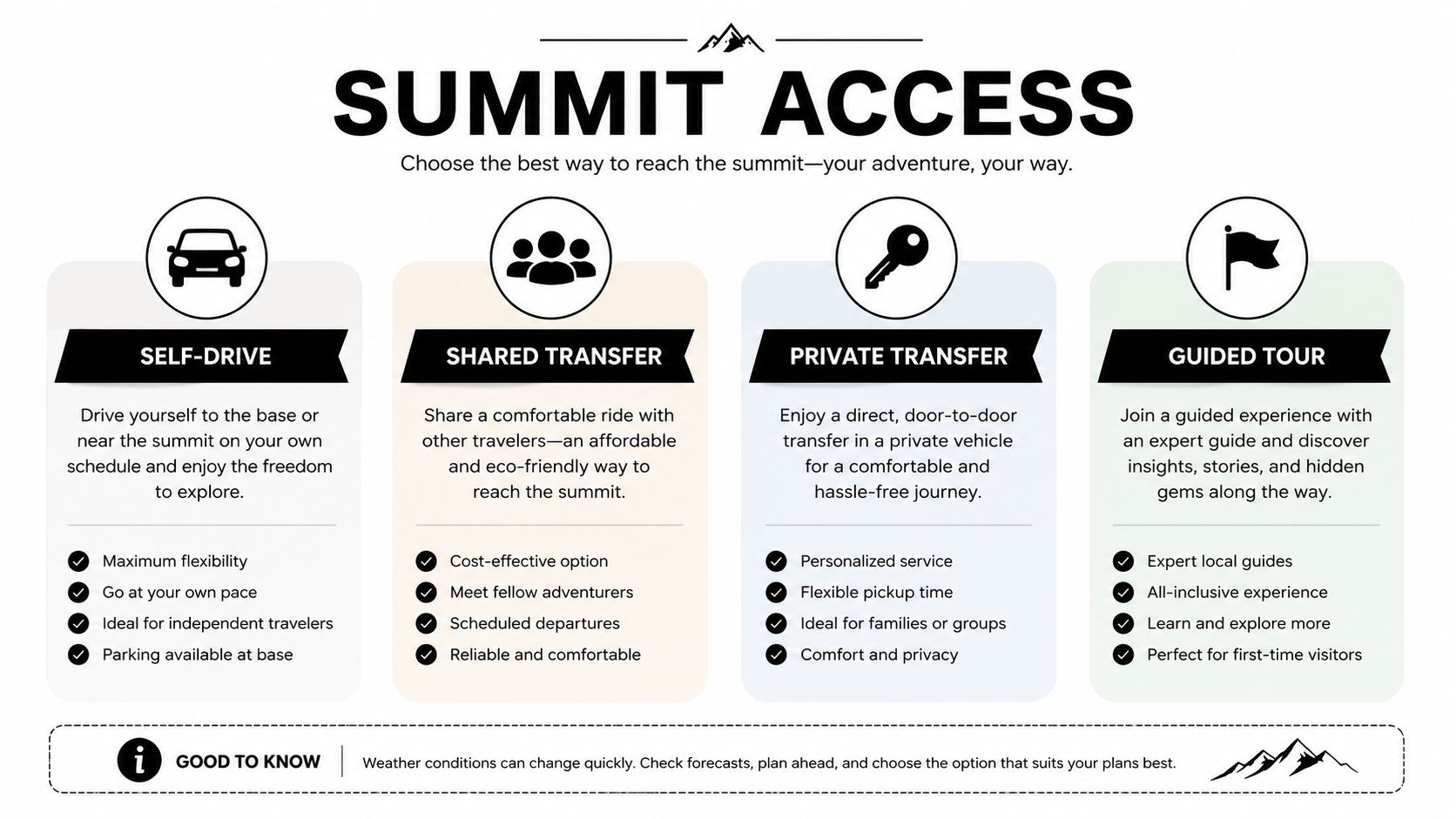
There's no public transport before dawn, so forget the idea of an easy bus ride. If you want Pico do Arieiro sunrise, you're driving, booking a transfer, or joining a guided tour. For short-stay travellers coming through Cristiano Ronaldo International Airport, that matters because sunrise on arrival day only works if your timing is generous and your luggage plans are simple.
The four options, ranked honestly
Self-drive is best if you want maximum flexibility at the summit. You control departure time, you can stay after sunrise, and you don't have to wait on anyone else. The downside is obvious, you're driving mountain roads in the dark, and you need to care about parking.
Private transfer is the best overall choice for most visitors. You avoid the stress of mountain driving, you get picked up when it suits your sunrise plan, and you can sleep a little longer. If you're comparing Faro airport transfers, Algarve airport transfers, or any door-to-door option in Portugal more broadly, the principle is the same, a private transfer removes queue time and timing guesswork. For Madeira-specific background, the Madeira airport transfers 2026 guide is a useful planning reference.
Shared transfer can work if you're travelling light and don't mind less control. It's usually the compromise option, cheaper than private, less flexible than a car, and more dependent on a fixed pickup chain. For photographers, that trade-off is usually not worth it.
Guided sunrise tour suits anyone who wants a simple answer. You pay, you get collected, and someone else deals with the logistics. The catch is that you lose freedom, and sunrise mornings here are often better when you can move at your own pace.
If you're trying to be efficient on travel days, pack something sensible for the road instead of relying on airport food. A practical snack setup from healthy snacks to avoid airport food is a better fit than waiting until you're hungry at the summit.
Timing from Funchal and the airport
From Funchal, a June sunrise usually means leaving around 04:00 to 04:30, earlier in winter if you want time to park and walk calmly to the viewpoint. From the airport, sunrise on arrival day is only realistic if you've already arranged transport and you're landing early enough to avoid turning the morning into a rush. Departure day is tighter, and I wouldn't force it unless your flight timing is forgiving.
My recommendation: if you care more about the experience than the driving, book a private transfer. If you care more about wandering the summit at your own pace, drive yourself. For almost everyone else, the guided tour is easier than trying to solve transport at 4 a.m.
For a well-run transfer example that keeps the morning simple, a private door-to-door option beats trying to improvise with taxis or a rental car after a short night.
Parking, Access Rules and the New PR1 Trail Booking
The key split in 2026 is between sunrise viewing and hiking. Miradouro do Juncal, the main viewpoint steps from the car park, is free to use for sunrise, and you do not need a booking or fee just to watch from the summit area. The paid system applies to the trail, not the viewpoint, so don't confuse the two. Summit viewpoint access details
The managed hiking side is more structured now. The PR1 trail reopened in April 2026 after about two years of restoration, and it now operates as a one-way Areeiro-to-Ruivo route with mandatory booking and a €10.50 per person fee for the hike section. That makes the mountain a managed tourism asset, not an informal free-for-all, and it changes the way you should build the morning.
What to do if you're only there for sunrise
Arrive early enough to park, walk to the viewpoint, and settle in before the sky starts changing. The summit car park can be full by 6:00 a.m. in summer and as early as 6:15 a.m. on clear winter mornings, so don't assume you'll glide in at the last minute. My rule is simple, arrive 60 to 90 minutes before sunrise if you want a sane start.
If you're combining sunrise with the PR1 start, be honest about the pace of the morning. A successful trail day starts with a calm parking decision, not with sprinting from the car in the dark because you arrived too late. If the summit is already crowded and you only want the view, stop overthinking the hike and stay at the viewpoint.
For travellers comparing access and transfers on the island, a pre-booked vehicle from 7 M Rent a Car Madeira can make the summit timing much less fragile.
My blunt parking advice
- Arrive earlier than you think: The people who roll in right at sunrise are the ones circling for spaces.
- Use the viewpoint first: Park, walk to Miradouro do Juncal, and only then decide whether you still want the trail.
- Don't mix up rules: Sunrise viewing is free. The hiking trail is booked and paid.
- Skip the summit rush if you're tired: The mountain is better when you're calm than when you're half-awake and stressed.
Weather, Safety and What to Wear at 1,818 Metres
Pico do Arieiro is not a warm sunrise stop with a nice breeze. It's colder and wetter than coastal Madeira, and the mountain can feel punishing if you dress like you're going to a beach cafe instead of a summit. The practical issue is standing still in the dark before dawn, not the few minutes after sunrise when you finally start moving.
The climate pattern explains a lot. The mountain's precipitation is high, with a mean annual figure of 2,927.8 mm, and the wettest months in the data, November (448.9 mm) and December (447.0 mm), are a reminder that the summit can be damp, slippery, and miserable if you under-prepare. Summer is easier on paper, but the summit still gets cold enough at altitude to make layers worth carrying.
What to wear and pack
- Warm layers: A base layer, jumper, and a proper outer layer are essential.
- Windproof or waterproof jacket: Pick one that blocks the summit wind, not just the drizzle.
- Sturdy shoes: Wear grippy shoes, not smooth trainers.
- Headlamp or torch: You need both hands free when the path is dark.
- Water and snacks: Don't rely on anything at the summit to be open.
- Hat and gloves in colder months: A small bit of insulation makes a big difference when you're standing still.
If you're only there for sunrise, you don't need a full hiking expedition pack, but you do need enough clothing to stay comfortable for an hour or more. On a calm, mild morning, a windproof jacket may be enough. On a winter morning with wind, that won't cut it, and people who arrive underdressed usually spend the first half of sunrise shivering instead of looking around.
Practical safety rule: if the road is wet, drive back down slowly and leave extra time. A rushed descent in low light is where bad judgement starts.
Low visibility is another issue. If the summit is in fog, don't wander too far from the main area just because other people are moving around. The summit is well known, but that doesn't make the dark edges friendly. If you're worried about poor visibility, the right decision is to wait, stay close to the viewpoint, or leave rather than forcing a dramatic shot.
For some travellers, a personal safety beacon is overkill on a managed summit, but the logic of carrying an emergency device on remote hikes is worth understanding. That broader mindset is similar to the advice in emergency locator beacons NZ, especially if you continue onto more exposed mountain terrain after sunrise.
Shoot it like a real dawn session
The best light starts before the sun itself appears. Get there for blue hour, not just for sunrise, because the ridge lines and cloud texture look better when there's still some colour in the sky. For Miradouro do Juncal, stand where you can keep both the horizon and the cloud layer in frame, then turn occasionally to catch the opposite light as the mountain brightens.
For camera gear, use a wide lens for the whole mountain scene and a telephoto lens if you want to compress the ridges and pull the cloud layers together. On a phone, lock exposure on the brighter part of the sky and use night mode sparingly, because overprocessing kills the mountain texture fast. Manual focus helps in the dark if your camera keeps hunting.
Do this, not that.
- Do this: arrive before blue hour, frame the cloud inversion, and leave the camera on a tripod only if you're not blocking the viewpoint.
- Not that: arrive at the last minute, point straight at the sun, and stay planted in the centre of the walkway.
Tripod etiquette matters here. Keep your setup tight, don't sprawl across the best spot, and move if other people need the same angle. A crowded summit works best when everyone acts like a guest, not like the place belongs to them.
Sample Itineraries From Funchal and the Airport
A good sunrise morning needs buffers. Miss one step and the whole thing turns into a rushed scramble, which is exactly what this summit punishes. The two itineraries below are the ones I'd use, one for a Funchal base, one for a travel day tied to the airport.
Funchal-based sunrise morning
Leave Funchal around 04:00 to 04:30 for a June sunrise, earlier in winter so you still have time to park. Build the morning backwards, wake up, leave the hotel, drive up, park, walk to Miradouro do Juncal, then settle in for blue hour. If you've got time after sunrise, stay a little longer for the changing light, because the summit often looks better after the first burst than at the exact moment the sun appears.
After sunrise, keep it simple. Stop for breakfast on the way back down rather than trying to force more sightseeing while you're tired. A practical breakfast stop near the descent works better than a grand plan you'll never follow at 7 a.m.
Airport day version
If you're arriving or departing through the airport, keep this brutally honest. Sunrise only works if your flight times and transfer chain are easy, because dragging luggage into a mountain morning is a bad idea unless you've already organised the transport. If your arrival is late or your departure is tight, skip the summit and do it on a proper free morning instead.
For the actual summit composition, stand slightly off-centre at Miradouro do Juncal so you can include the cloud layer and the ridgeline, not just the bright edge of the sun. That gives you a stronger frame and keeps the shot from turning into a flat orange disc.
The morning works best when one person handles the camera and the other handles the timing. If you're travelling solo, timing wins over photography every time.
Plan B for a cloudy morning
If the summit is socked in, don't obsess over it. Wait a short while if the cloud layer looks like it might break, but don't burn the whole morning hoping for magic that never arrives. If visibility stays poor, use the lower-altitude viewpoints on your route back down and save the full sunrise effort for another day.
The point is not to force a postcard. It's to give yourself the best odds of a real mountain dawn and then make a smart call if the weather refuses to cooperate.
FAQs and Plan B Options for a Cloudy Morning
Can you do Pico do Arieiro sunrise without a car? Yes, but public transport will not get you there before dawn. A private transfer or guided tour is the clean answer if you do not want to drive in the dark, and it is the option most likely to get you there on time. For reliable alternative transport on the island, see our guide to Porto Santo taxis.
Does the booking system cover sunrise-only visitors? No. Sunrise viewing at Miradouro do Juncal is free and does not need a reservation, while the booking and fee apply to the hiking trail itself, as covered above.
What happens if the access road is closed or the summit is full? Turn around. At dawn, a mountain access problem is not the moment to improvise. Use a lower viewpoint or come back another morning instead of gambling on a bad road decision.
Is sunrise feasible with kids or older parents? Yes, if they are fine with an early start, cold air, and some standing around before dawn. If anyone in the group struggles with cold, dark, or walking on uneven ground, keep the plan to the viewpoint only.
What if the clouds ruin it? Treat it as a weather-dependent mountain morning. If the summit is fully obscured, wait briefly in case the cloud layer lifts, then cut your losses and head for a different Madeira sunrise point later.
If the summit plan falls through, I would go to Cabo Girão, Ponta do Pargo, or Porto Moniz instead of wasting the morning hoping the mountain changes its mind. Each gives you a different version of Madeira's early light, and none of them ask you to fight the same parking and cold-weather logistics twice.
If you want a transfer team that handles early starts, luggage timing, and tight dawn connections properly, book through The Algarve Experience. They know how to get you to the mountain before first light without turning the morning into a transport problem, and that is the standard I would want for a Pico do Arieiro sunrise run.