

You've landed at Faro Airport, you've got luggage, maybe children, maybe golf clubs, maybe you're just tired from an early flight, and yet part of your mind is already in the north with a glass of Port in hand. That's how many Algarve holidays begin. The romantic part of Portugal is easy to picture. The practical part matters just as much.
A good port wine tasting trip doesn't start in Vila Nova de Gaia. It starts with getting out of FAO smoothly, reaching your hotel without queueing for a taxi, and settling into the Algarve without wasting the first hours of your holiday. If you're planning Porto later in the trip, or want to understand Port properly before ordering it in a restaurant or wine bar, it helps to get the basics right from day one.
Travellers searching for Faro airport transfers, Algarve airport transfers, or an easy Faro airport to Albufeira transfer are usually solving the same problem. They want a reliable arrival, no surprises on price, and a straightforward route to their accommodation. Once that piece is organised, the rest of the holiday gets easier, including any Port tasting plans in Porto, Gaia, or even down here in the Algarve.
Your Portuguese Dream of Port Wine
There's a reason Port stays in people's memory. You sit down on a terrace above the river, the glass catches the late light, and the wine gives off that deep, layered aroma that immediately feels different from ordinary table wine. For many visitors, that moment becomes one of the highlights of Portugal.
But the trips that feel effortless usually have one thing in common. The logistics were sorted before the traveller arrived.
I see this often with Algarve visitors. They land at Faro full of plans. Some want beach time first and Porto later. Others are staying in Albufeira, Vilamoura, or Lagos and want to include a northern wine detour in the middle of the holiday. The mistake is assuming the hard part is choosing the cellar. It usually isn't. The hard part is the first arrival, especially if you're carrying bags, travelling with family, or landing in peak season.
Local advice: If your holiday starts calmly, you make better decisions for the rest of the trip.
That's why people look for private transfers Faro airport, cheap Faro airport transfers, and Albufeira airport transfers before they think about tasting notes. A smooth transfer to your base means you can unpack, rest, and plan your Port day properly instead of trying to recover from airport stress. It also helps if you're arranging an Albufeira to Faro airport return later and want both sides of the journey settled in advance.
For anyone building a Portugal itinerary from the south, the order is simple.
- Land well: avoid uncertainty at the airport.
- Settle first: get to your hotel or villa comfortably.
- Taste better later: visit Porto or order Port in the Algarve with a clearer idea of what you're drinking.
That's the true beginning of a good Port experience.
The Story and Soul of Port Wine
A proper glass of Port makes more sense once you know why it tastes the way it does. This is not just a sweet wine from Portugal. It is a fortified wine with tight production rules, a clear regional identity, and a style shaped by decisions made both in the vineyard and in the cellar.
Why Port tastes the way it does
Port is made by stopping fermentation early with neutral grape spirit. That keeps part of the grape's natural sugar in the wine and lifts the alcohol, which is why Port feels richer, warmer, and more concentrated than a standard table wine, as outlined in this Port wine overview.
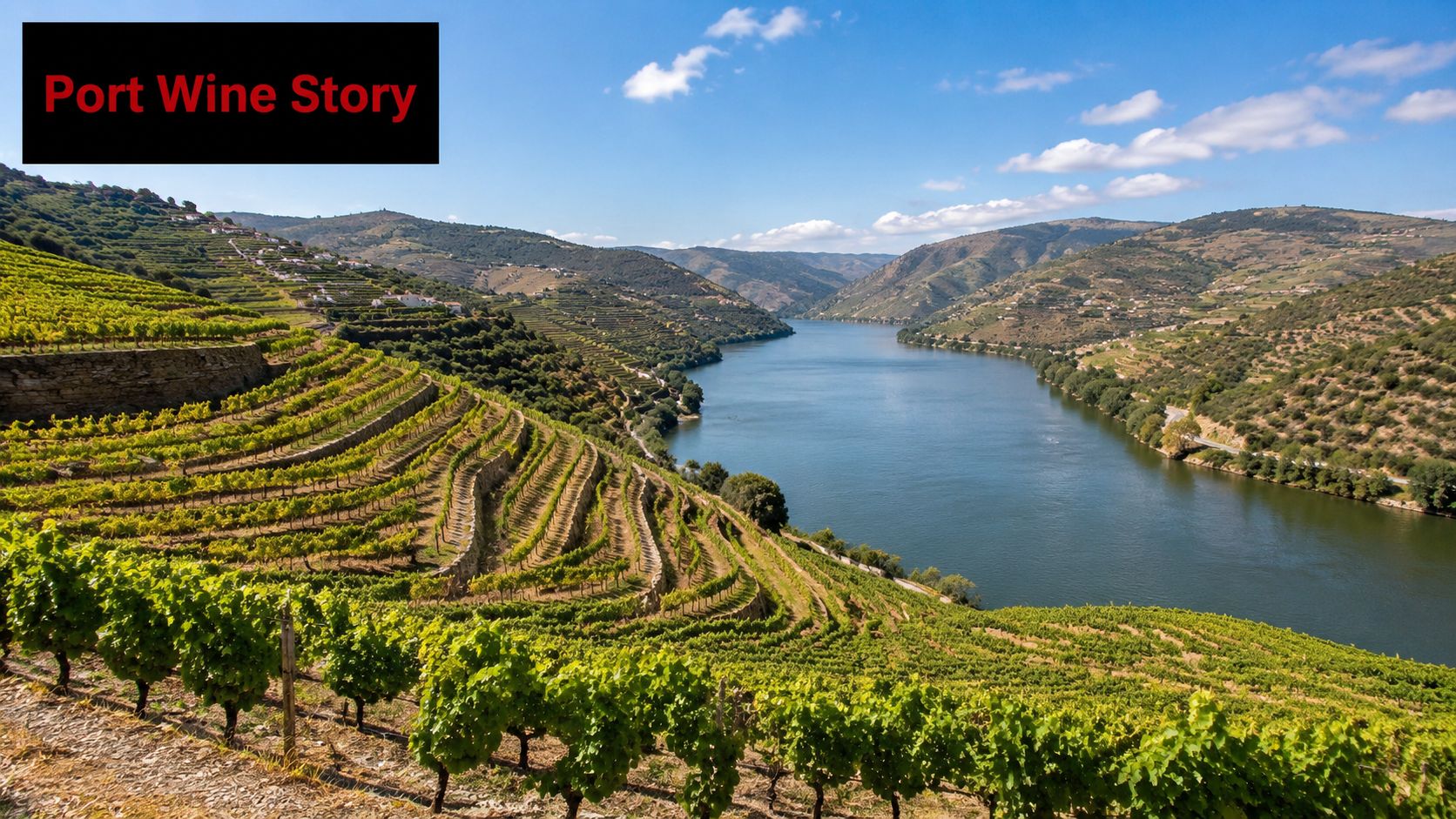
That production choice matters in the glass. Good Port is not just sweet. It balances sugar, alcohol, fruit, texture, and finish. In tastings, travellers often focus on sweetness first, but the better clue is how well the wine holds itself together after the first sip.
Why the Douro matters
Port comes only from the Douro Valley in northern Portugal. That point matters because place is not a marketing extra here. The region, its grape varieties, its steep vineyard sites, and its long trade history all shape the final wine.
The commercial side of Port grew through export, especially to Britain, and that history still shows in Vila Nova de Gaia. A visit there feels practical as well as romantic. You taste the wines where many of the famous houses built their reputation, and you start to see why old casks, lodge ageing, and river transport are part of the story rather than decoration.
Port also sits within a much older Portuguese wine tradition. Kopke's historical summary traces vine growing in the Douro back to Roman times and links Port to centuries of local viticulture. That long context is part of what gives the wine its weight. It is not only a product. It is a regional habit, a trade story, and a style refined over generations.
For Algarve visitors, this matters before you even book a tasting. If you land in Faro, settle into Albufeira, Vilamoura, Lagos, or another base, and then plan your northern wine trip properly, the experience is far better than trying to improvise it tired and rushed. If you want to understand the region before committing to cellar visits, this guide to Douro wine tours in Portugal is a useful starting point.
That is the soul of Port. A wine shaped by method, protected by origin, and best appreciated when the travel side is handled with the same care as the tasting itself.
A Traveller's Guide to Port Styles
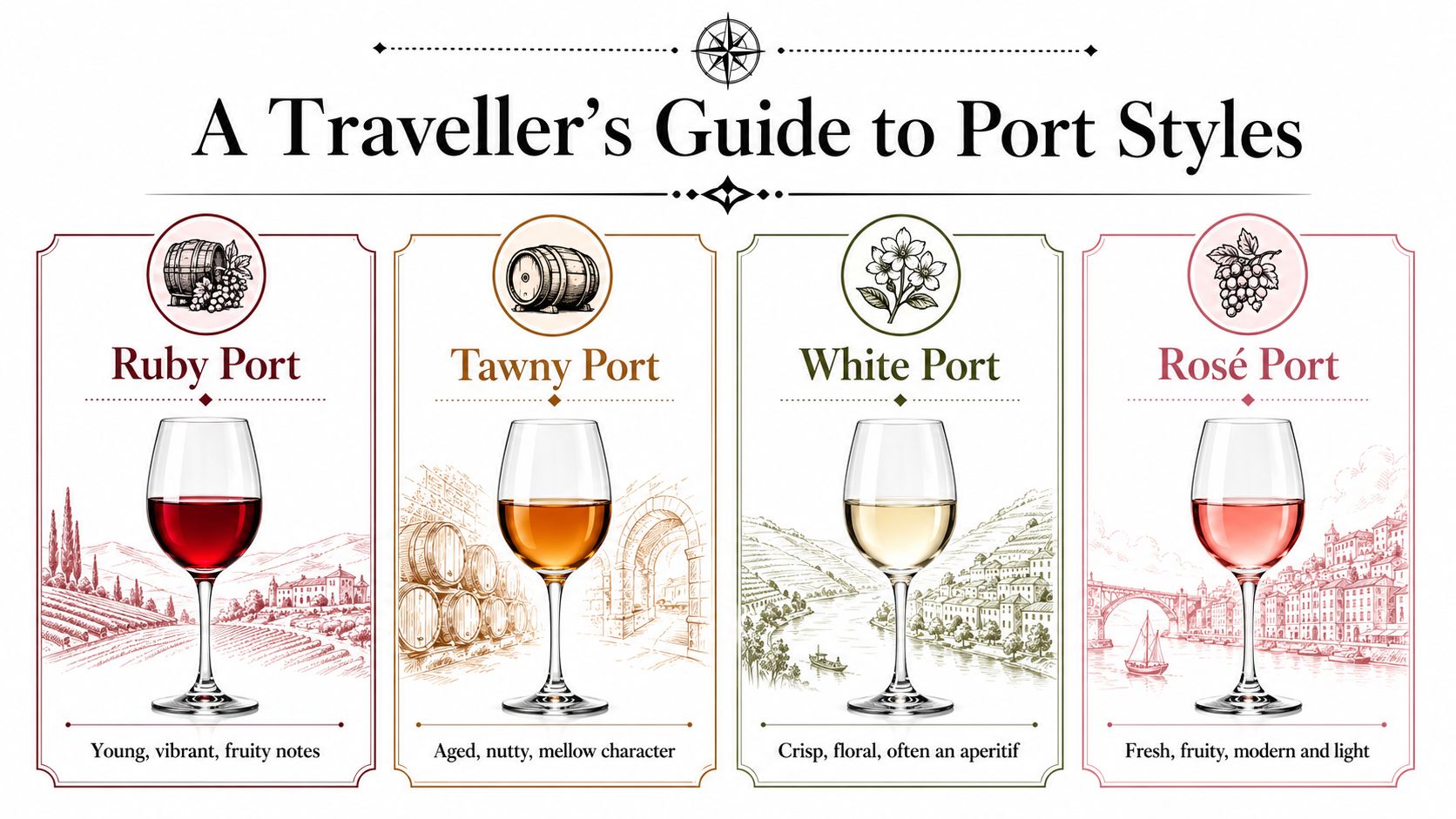
A cellar list can look confusing at first. The easiest way to approach Port is to think in personalities rather than categories.
Ruby and Tawny
Ruby Port is usually the first style people recognise. It tends to feel younger, darker, and more fruit-led. If you like vivid red and dark fruit character, Ruby is often the easiest entry point.
Tawny Port moves in a different direction. It shows more oxidative ageing character, so instead of fresh fruit leading the way, you'll often notice nuttier, caramel-like, and dried-fruit notes. It's the style many travellers warm to once they've tasted a few side by side.
Here's the practical difference in tasting terms:
- Choose Ruby if you want freshness, colour, and direct fruit.
- Choose Tawny if you want mellow texture and more evolved aromas.
- Order both if you're new to Port, because the contrast teaches you quickly.
White and Rosé
White Port surprises people because many assume Port must be red or brown. It can range from crisp and lighter in feel to richer and sweeter expressions. It works well as an aperitif, and in Portugal you'll often see it served in relaxed, warm-weather settings.
Rosé Port is the modern, easy-going option. It's fruit-driven, chilled, and approachable. Traditionalists don't always start here, but casual travellers often enjoy it because it feels simple and refreshing.
Quick rule: If you're standing at a bar and don't know where to begin, start with Ruby for contrast, then try Tawny for complexity.
The grapes behind the styles
Port doesn't come from just anything the producer happens to plant. It's produced exclusively from dozens of permitted grape varieties grown in the Douro, including notable red grapes such as Touriga Nacional and Touriga Franca, as explained in Kopke's history of Port wine. That controlled grape mix is one reason Port styles remain recognisable even when houses express them differently.
For travellers, that means two things matter.
- House style matters, because each producer presents the same broad categories with a different touch.
- Category still matters more, because Ruby, Tawny, White, and Rosé really do drink differently.
If you only do one tasting flight, make it a comparative one. A side-by-side pour teaches more than a long explanation ever will.
How to Taste Port Like a Professional
The people who get the most from a Port tasting usually slow down. Port rewards attention. It doesn't reward rushing through four glasses because the terrace is busy.
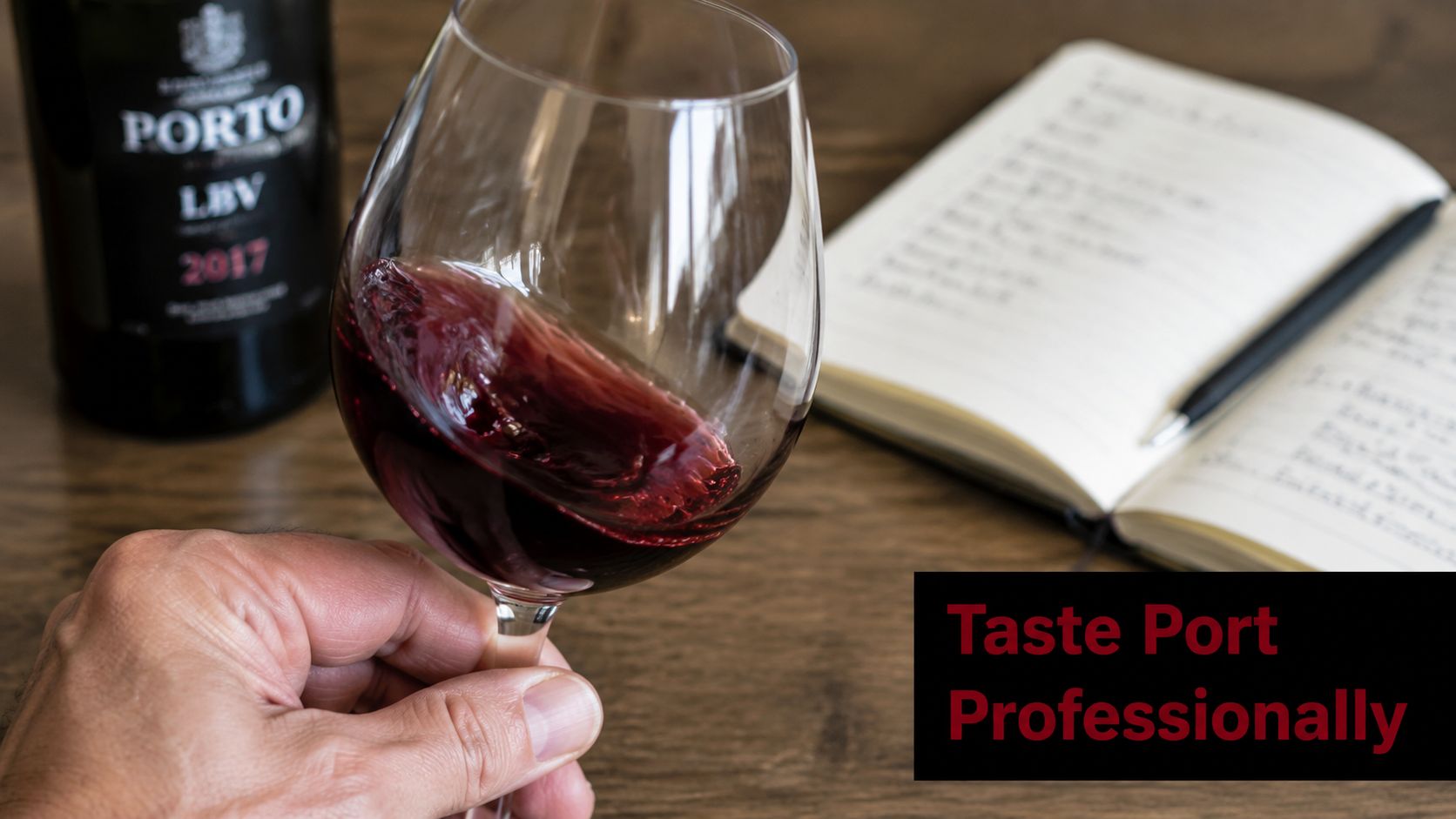
Use a simple tasting routine
You don't need formal wine training. You just need a repeatable method.
- See the colour: deep ruby, amber tawny, or pale white gives you an immediate clue about style.
- Swirl gently: enough to release aroma, not enough to slosh alcohol out of the glass.
- Sniff before sipping: look for fruit, spice, nutty notes, dried fruit, or floral lift.
- Sip small: Port has weight and sweetness, so a little goes a long way.
- Savour the finish: the aftertaste often tells you more than the first impression.
A beginner's mistake is focusing only on sweetness. Better tasters look for balance. Is the wine fresh enough? Does the alcohol sit neatly inside the wine, or does it stick out? Does the finish feel clean, warm, fruity, mellow?
Get the temperature right
Service temperature changes everything. Lighter Ruby Ports are typically served at about 13–18°C, while aged Tawny styles benefit from a slightly warmer serving temperature so their nutty and dried-fruit aromatics can open properly, according to Oh My Cod Tours' Port service guide.
That matters more than people think.
- Too cold: aromas stay muted and the wine can feel tighter than it should.
- Too warm: alcohol can dominate and the balance suffers.
- Just right: fruit, sweetness, and aromatic detail sit together properly.
If you want another practical walkthrough beyond the basics, this guide on how to drink port wine is a useful companion read.
A short visual guide can also help before you visit a cellar:
What works and what doesn't
What works in a tasting room is simple. Ask for contrasting styles, keep pours small, and revisit the first glass after the second. Port often opens gradually.
What doesn't work is drinking it like an ordinary bar pour. If you move too quickly, especially early in the day, the sweetness and alcohol blur together and you miss the point of the tasting.
Your Travel Plan from Faro Airport to the Port Lodges
Most Algarve visitors won't start their Port journey in Porto. They start in the south, and that changes the planning. The key is separating two travel problems. First, get from the airport to your Algarve base without hassle. Then decide how you want to reach Porto or Gaia later.
The first transfer matters more than people expect
If you're arriving at FAO and heading to Albufeira, a pre-arranged Faro airport to Albufeira transfer is usually the cleanest option, especially after a flight. The route is commonly described as about 46 km and usually takes around 40 to 50 minutes, based on the travel brief supplied for this article. For families, golfers, and groups, that door-to-door simplicity is often worth more than shaving a small amount off the fare.
People compare private transfer from Faro airport to Albufeira price, how to get from Faro airport to Albufeira without taxi queue, and Faro airport transfers for families/groups. The choice usually comes down to control. With a pre-booked transfer, you know who is meeting you, where you're going, and what happens if the flight lands tired passengers into a busy arrivals hall.
One factual option is The Algarve Experience Faro airport transfer service, which operates door-to-door transfers from Faro Airport and, according to the publisher background provided, offers meet-and-greet, flight monitoring, fixed pricing, and vehicles ranging from sedans to larger group transport. For travellers comparing private transfers Faro airport with local taxis or ad hoc rides, those are the practical details that usually matter.
Practical rule: Don't use your arrival day to improvise transport if you already know your accommodation.
Comparing Algarve to Porto transport options
Once you're settled in the Algarve, you can think about Porto. Your choice depends on budget, time, and how much energy you want to spend in transit.
| Transport Method | Estimated Travel Time | Pros | Cons |
|---|---|---|---|
| Driving | Long day journey | Flexible schedule, direct control, useful for wider itinerary | Tiring, especially after holiday travel; parking and city driving can be a nuisance |
| Train | Longer journey with change | Relaxed onboard time, scenic in parts | Usually less direct and involves a change in Lisbon |
| Domestic flight | Shorter in-air segment but airport process required | Fast over long distance | Airport formalities, transfers at both ends, less flexible overall |
For many holidaymakers, the smoother strategy is this:
- Base yourself in the Algarve first: ideal if your main stay is in Albufeira, Vilamoura, or Lagos.
- Use a reliable arrival transfer: useful for those looking for reliable Algarve airport shuttle 2026 or best airport transfers Algarve.
- Plan Porto separately: either as an overnight trip or a dedicated leg of the holiday.
Why pre-booking usually wins
On paper, public transport or an airport rank taxi can look fine. In real travel conditions, they're often less comfortable if you're carrying luggage, travelling with children, or arriving during a busy bank holiday or summer weekend.
Pre-booking is especially useful for:
- Families: easier with child seats and no waiting around.
- Groups: simpler than splitting across multiple cars.
- Late arrivals: less uncertainty when shops and desks are quieter.
- Return journeys: handy if you also need an Albufeira Faro airport return transfer at the end.
A lot of travellers search cheap Faro airport transfers when what they really mean is predictable value. Cheap isn't always the lowest headline number. Sometimes it's the transfer that turns up, gets you directly to the accommodation, and doesn't start your holiday with stress.
Recommended Port Houses and Tasting Experiences
Vila Nova de Gaia is still the classic place to do a serious Port tasting. The lodges line the riverfront opposite Porto, and the setting alone gives the experience weight. But not every tasting has to be a full guided tour.
Full tours versus tasting-only visits
Some travellers want the full story, the old lodges, the explanation of ageing, the walk through the cellars, and a seated tasting at the end. Others just want a good flight on a terrace with a view and enough guidance to understand the glasses.
That second option is more available than people sometimes realise. Discussion among independent travellers indicates that in Gaia, many houses offer tasting-only options, terrace flights, and wine-by-the-glass service, with prices varying widely and some premium tastings reaching about €160 for older vintages, according to the Rick Steves travel forum discussion on tasting without a tour in Gaia.
That's useful because it changes how you plan the day.
- Choose a full tour if you want structure and history.
- Choose tasting-only if you want flexibility and to compare several houses.
- Choose a terrace flight if atmosphere matters as much as technical detail.
Good options in Gaia and the Algarve
Well-known names such as Taylor's, Graham's, and Sandeman are common starting points because they're easy for first-time visitors to recognise. The trade-off is simple. Big houses are easier to plan around, while smaller or less structured experiences can feel more personal if you already know what you like.

If a northern trip isn't on your itinerary, you can still taste Port in the south. Good wine bars and garrafeiras in Algarve towns often pour curated flights, and that's often the most realistic option for visitors on a beach-based holiday. If you'd like a local alternative to a Porto cellar day, this page on wine tasting in the Algarve is a sensible place to look at regional options.
A useful tasting doesn't have to be elaborate. It just needs thoughtful pours, proper temperature, and someone who knows what's in the glass.
The biggest mistake here is overbooking. One carefully chosen cellar or one smart Algarve tasting flight is usually more enjoyable than trying to cram too many stops into one day.
Port and Transfer FAQs for Algarve Travellers
A few practical questions come up again and again, especially from visitors combining southern beach time with wine plans further north.
Common answers in one place
| Question | Answer |
|---|---|
| Is Port the same as ordinary red wine? | No. Port is a fortified wine with a sweeter, more concentrated profile and higher alcohol than standard table wine. |
| Where is real Port produced? | Port is produced exclusively from grapes grown in the Douro region of northern Portugal. |
| Do I need a full tour to do a Port tasting in Gaia? | Not always. Many houses offer tasting-only options, terrace flights, or wine by the glass. |
| Which Port style is easiest for beginners? | Ruby is often the easiest starting point if you enjoy fruit-led wines. Tawny is a strong second choice if you prefer nuttier, mellow flavours. |
| Does temperature really matter for Port? | Yes. A Ruby served too warm can feel heavy, while a Tawny served too cold can lose aromatic detail. |
| What's the easiest way to leave Faro Airport after landing? | Pre-booked door-to-door transport is usually the easiest if you want to avoid taxi queues and manage luggage comfortably. |
| Is a private airport transfer useful for families? | Usually yes, especially when you need direct travel, luggage space, and a simple arrival after a flight. |
| Can I taste Port in the Algarve instead of travelling to Porto? | Yes. Some Algarve wine bars and tasting venues offer Port flights, which can be a practical alternative if your holiday is based in the south. |
| What should I search if I'm comparing airport transport? | Useful terms include Faro airport transfers, Albufeira airport transfers, Faro airport to Albufeira transfer, private transfer from Faro airport to Albufeira price, and Albufeira to Faro airport. |
A final planning note from experience. If your holiday includes both the Algarve and Porto, don't stack every moving part onto arrival day. Sort the airport transfer first, then decide when you want the wine day. That single change makes the whole trip feel more organised.
If you want a simple start to your holiday, The Algarve Experience offers a practical way to organise your airport journey before you even land. That's useful if you're comparing Algarve airport transfers, planning an Albufeira Faro airport return transfer, or just want a straightforward door-to-door arrival so you can focus on the enjoyable part of Portugal, including a proper Port tasting later in the trip.
Related posts