

The best months for comfortable swimming in Albufeira are June through October, when the sea stays above 20°C (68°F), with the warmest water in August and September. If you're planning beach time around water temperature Albufeira conditions, that's the window most visitors find easiest for proper swims, not just quick dips.
That’s usually the question people ask before they even land. They’re checking whether the Atlantic will feel inviting, whether the kids will stay in the water, and whether it’s worth packing masks, paddleboards, or a light wetsuit. Right behind that comes the practical bit: how to get from the airport to the coast without wasting the first part of the holiday standing in a queue.
That’s why this guide combines both parts of the decision. You’ll get a clear picture of water temperature Albufeira conditions through the year, plus practical travel advice for anyone arranging Faro airport transfers, Algarve airport transfers, or a smooth Faro airport to Albufeira transfer after landing.
A lot of holidaymakers do the same thing. They check the sea, pick the right beach days, then realise the journey from Faro matters more than they expected. If your flight arrives tired, late, or with children, golf bags, or beach luggage, a clean door-to-door plan makes the first day much easier. If you’re heading straight to the sand, Albufeira Old Town Beach is one of the easiest places to picture when deciding what kind of day you want.
One more thing locals never ignore. Even when the sea feels comfortable, Algarve sun can be harsher than visitors expect, especially around the middle of the day. If you’re travelling with children or planning long beach hours, this guide to comprehensive sun protection is worth a look before you pack.
Planning Your Perfect Albufeira Beach Day
The best Albufeira beach days usually start before breakfast, not when you’re already hot, carrying bags, and trying to work out where to park. Visitors often imagine the holiday beginning at the hotel, but in reality it starts at arrivals in Faro. If you want a relaxed first day, the airport journey and the sea conditions belong in the same plan.
A typical example is the family arriving on a morning flight, hoping for a swim by the afternoon. If they’re visiting in the main swimming season, that works well. If they’re coming in spring, they may still have a lovely beach day, but the sea may feel brisk enough that children spend more time paddling than swimming. That’s not a problem if expectations are right from the start.
Match the beach plan to the journey
When people search for Faro airport to Albufeira transfer, they’re usually not just asking about transport. They’re really asking how quickly they can get from the terminal to the pool, the beach, lunch, or check-in without complications. The same goes for travellers comparing Algarve airport transfers and wondering whether they should pre-book or sort it out on arrival.
A practical approach is simple:
- If beach time matters on day one, travel light in your hand luggage and keep swimwear easy to reach.
- If you’re arriving with children, assume they’ll be tired before they’re excited.
- If you’re booking around sea conditions, choose your main swim days for the warmer part of your stay, not automatically the arrival day.
- If you’re staying near the coast, plan for wind as well as sunshine. A sunny sky doesn’t always mean the sea feels warm.
A good first day in Albufeira usually comes from reducing friction, not adding ambition.
What works and what usually doesn’t
What works is arriving with a clear sense of the season, then building the day around that. In summer and early autumn, many visitors can go straight from check-in to the water and enjoy it. In cooler months, the better plan is often a seaside walk, lunch with a view, and a short dip if the mood takes you.
What doesn’t work is assuming the Algarve behaves like the Mediterranean. Albufeira’s coast is Atlantic. It can feel fresh even on a beautiful day. Once visitors understand that, they tend to enjoy the place more because they stop expecting one thing and start using the coast properly.
Albufeira Water Temperature By Month A Complete Breakdown
A family landing at Faro at lunchtime usually wants one clear answer before they commit the next few hours to the beach. Will the water feel inviting today, or is it better to treat day one as a settle-in afternoon and save the long swim for later in the stay?
In Albufeira, the monthly pattern matters more than a one-off hot week. The sea usually feels coldest in late winter and early spring, then improves steadily through late spring, summer, and early autumn. September is typically the warmest point of the year, while March is often the hardest sell for anyone expecting a soft, Mediterranean-style swim.
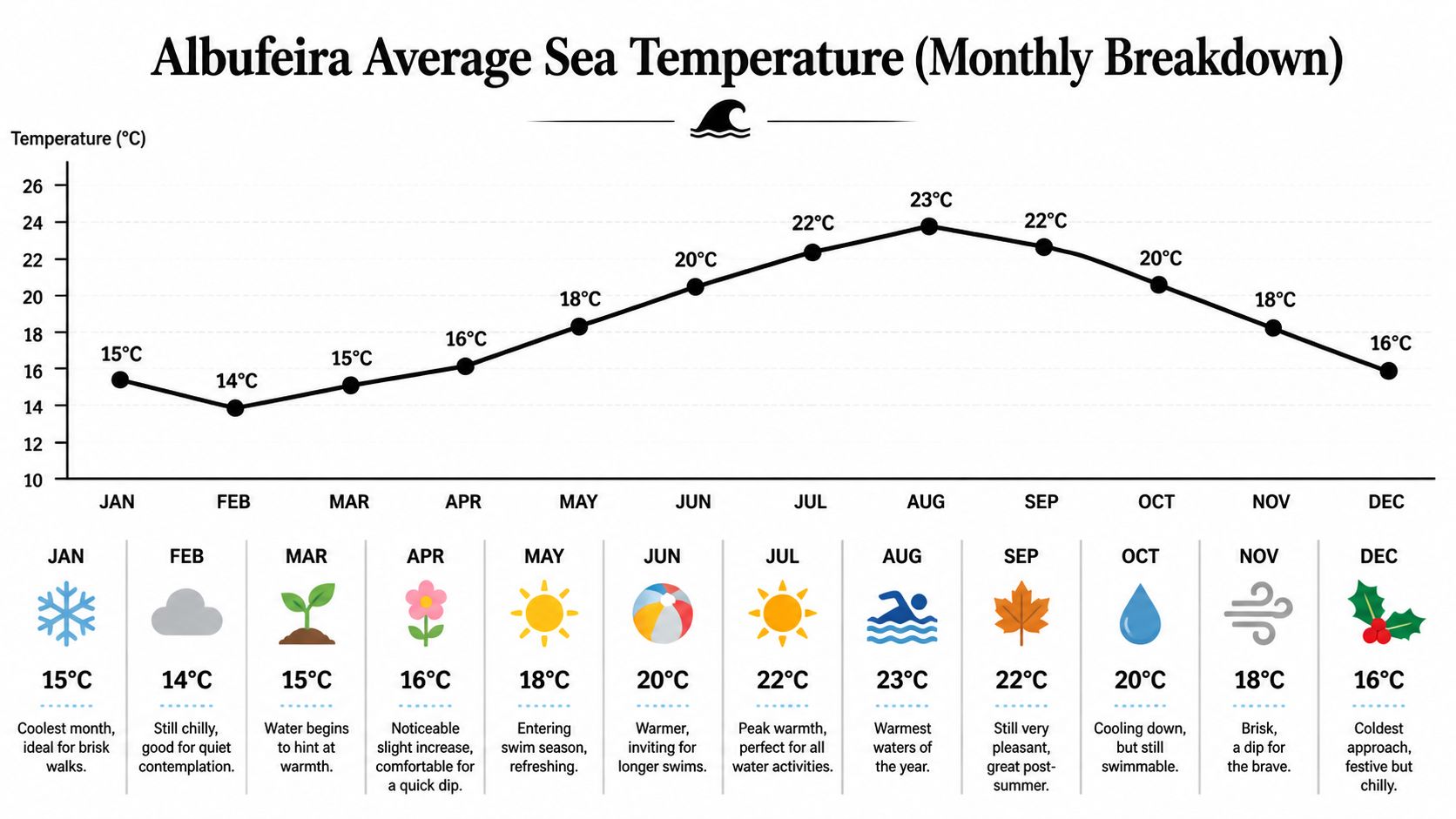
Average monthly sea temperature in Albufeira
| Month | Average Temp (°C) | Average Temp (°F) | Swimming Comfort |
|---|---|---|---|
| January | 15°C | 60.5°F | Cool and brisk |
| February | 14°C | 59.7°F | Chilly for most swimmers |
| March | 15.9°C | 60.6°F | Coldest average period |
| April | 16.2°C | 61.2°F | Refreshing, short dips for many |
| May | 18°C | 62.6°F | Better for confident swimmers |
| June | 20°C | 66°F | Comfortable for many visitors |
| July | 20°C | 66.4°F | Pleasantly warm by Algarve standards |
| August | 21°C | 67.3°F | One of the easiest months for swimming |
| September | 21.1°C | 70°F | Warmest average month |
| October | 20°C | 68°F | Still good for swimming |
| November | 19.7°C | 64.9°F | Manageable, but cooler feel returns |
| December | 18°C | 62.5°F | Fresh, better for quick dips |
What those months mean in real life
January to April suits walkers, surfers in proper kit, and visitors who are happy with a quick dip rather than a long float. The beach can still be beautiful, but the water usually feels sharp on first contact. Families with younger children often enjoy the sand more than the sea at this stage of the year.
May starts to shift the balance. Confident swimmers get more out of it, especially on calm afternoons, but it is still not the month I would sell as guaranteed warm-water swimming.
June to October is the easier window for beach holidays built around getting in the sea regularly. July and August work well for straightforward family beach time. September is often the best trade-off of the year. The water is at its friendliest, the weather is still strong, and the resort rhythm is often less intense than peak summer. October can still deliver very good swim days, especially if your flight arrives early enough to make use of the warmer part of the afternoon.
That matters for airport planning too. If you are landing at Faro and heading straight to Albufeira, summer arrivals give you more freedom to go directly from hotel check-in to the beach. In spring or winter, a smoother plan is often luggage drop, late lunch, then a shorter beach stop once you have checked the conditions properly.
Monthly range matters as much as the average
Average figures are useful for picking the right month, but they do not tell the full story of what you will feel on the shoreline. A warm, still spell can make the water feel far more welcoming than the monthly average suggests. After wind or changing currents, the same beach can feel noticeably cooler.
That is why two visitors can arrive in the same month and describe the sea very differently.
For practical trip planning, use the table to choose your season, then leave a little flexibility in your first beach session after arriving from Faro Airport. That approach usually works better than fixing your main swim around arrival time alone.
What Influences Albufeira's Sea Temperatures
You can land at Faro in warm sunshine, reach Albufeira an hour later, and still find the sea sharper than the air suggested. That catches plenty of visitors out on day one. The Algarve coast looks calm and bright from the promenade, but water temperature here is shaped by Atlantic conditions first and beach weather second.

The Atlantic sets the baseline
Albufeira does not warm like a sheltered Mediterranean bay. Even after several hot days, the sea often keeps a cool edge because fresh Atlantic water is always in circulation. Sunshine can warm the surface, especially in settled late-summer spells, but that comfort sits on top of a bigger system that changes fast.
This is why the beach can feel perfect while the first swim feels brisk.
Visitors who want to swim soon after landing should factor that in before they even leave the airport. A practical guide on getting from Faro Airport to Albufeira helps with the travel side, but it also helps with timing. An efficient transfer gives you more choice to arrive, drop bags, check the sea, and pick the right beach window instead of forcing a swim at the wrong hour.
Wind and sea movement often matter more than the air temperature
A hot afternoon does not always mean warmer-feeling water. Wind direction, wave action, and local sea movement can pull cooler water toward the shore or mix the surface layer enough to remove that mild top warmth swimmers notice first.
That is the trade-off in Albufeira. Open Atlantic beaches stay fresh and clean, but they are less predictable from one day to the next.
Even along the same stretch of coast, conditions can vary. A more exposed beach can feel cooler and rougher, while a slightly sheltered cove may feel easier for families, casual swimmers, or anyone testing the water after arrival.
Short-term weather changes can shift the feel of the sea quickly
The monthly averages are useful for choosing your travel period, but they do not explain every swim. A run of calm, sunny days usually makes the sea feel friendlier near the surface. After stronger wind or unsettled conditions, that comfort can disappear quickly.
Locals expect that swing. First-time visitors often assume the water should match the air temperature.
It rarely works that neatly on this coast.
Nearby geography also plays a part
Open beaches around Albufeira respond differently from enclosed or shallow areas elsewhere in the Algarve. Lagoons and more protected waters can warm faster because they are not exposed to the same level of Atlantic exchange. On Albufeira's main beaches, you feel that exchange more directly, which is one reason the sea stays refreshing even in high summer.
For practical beach planning, the takeaway is simple:
- Check the live reading on the day if swimming comfort matters to you
- Expect bigger day-to-day variation than you would in a more sheltered resort area
- Choose your first swim after arrival with some flexibility, especially outside peak summer
- If children or less confident swimmers are with you, consider a more sheltered beach first
That approach usually leads to a better beach day than relying on sunshine alone.
Your Seamless Arrival From Faro Airport to Albufeira
Once you know when the sea is likely to suit you, the next decision is how you want to arrive. The arrival experience often dictates whether many holidays begin smoothly or encounter immediate difficulties. After a flight, travelers generally prefer not to negotiate with drivers, drag cases through queues, or piece together a route while children are hungry and phones are low on battery.

What travellers usually compare
People searching Albufeira airport transfers, private transfers Faro airport, or cheap Faro airport transfers are normally weighing four practical options:
| Option | What usually works | Common drawback |
|---|---|---|
| Private transfer | Direct, door-to-door, organised on arrival | Needs pre-booking |
| Taxi rank | Immediate if the queue is short | Waiting time and fare uncertainty |
| Shared shuttle | Lower-cost option for some travellers | Multiple stops and slower arrival |
| Public transport | Can suit light travellers with time | Less convenient with luggage and family travel |
For most holidaymakers going straight to accommodation, the cleanest choice is the one that removes uncertainty at the airport. That’s why pre-booked best airport transfers Algarve style services keep winning over people who’ve already done the queueing and guesswork on previous trips.
Where private transfer makes the biggest difference
Private transfer is especially useful if any of the following apply:
- You’re travelling with children and want child seats sorted in advance.
- You’re carrying golf bags, pushchairs, or extra luggage and don’t want to improvise.
- You arrive late or very early and want the handover from airport to accommodation handled properly.
- You’re staying in Albufeira but not right in the centre and want a true door-to-door drop-off.
- You’re booking a return and want your Albufeira to Faro airport journey fixed ahead of time.
The difference isn’t glamour. It’s friction. A straightforward arrivals meet-and-greet, fixed pricing, and a direct journey save more stress than people realise until they’ve done it both ways.
What usually doesn’t work well
Taxi ranks can be fine on a quiet day. They can also be the first place your patience disappears. Shared transfers suit some budgets, but they’re a poor match if your hotel is the last stop and everyone else gets dropped first. Public transport has its place, but it’s rarely the option people praise after a long flight with beach bags and holiday gear.
Search terms like how to get from Faro airport to Albufeira without taxi queue, private transfer from Faro airport to Albufeira price, Faro airport transfers for families/groups, Albufeira Faro airport return transfer, reliable Algarve airport shuttle 2026, and best private transfer Faro to Albufeira hotel all point to the same concern. People want the simplest workable option, not the most complicated one they can technically survive.
The airport transfer sets the tone for the holiday. If that part is calm, everything after it feels easier.
What to look for before you book
If you’re comparing Algarve airport transfers, judge the service on the parts that affect the actual trip:
- Flight monitoring: delays happen, and the transfer should adapt.
- Meet and greet: useful when you don’t know the airport well.
- Fixed pricing: easier for budgeting than uncertain metered travel.
- Vehicle fit: families and groups need more than “standard car available”.
- Return planning: your departure day matters as much as arrival day.
- Local knowledge: drivers who know Albufeira hotels, villas, golf resorts, and beach areas save time.
For route planning, this guide on how to get from Faro Airport to Albufeira gives a useful overview of the main options and where each one makes sense.
Who benefits most from pre-booking
Pre-booking tends to matter most for families, wedding guests, golfers, and groups. Solo travellers can sometimes be more flexible, but even they often choose private transport for a return journey once they’ve seen how much easier it makes the airport side of the holiday.
If your priority is beach time, reliable arrival helps more than people expect. You check in sooner, unpack faster, and start the trip with your head clear instead of already irritated. That’s usually the difference between “we might get to the beach later” and “we’re ready, let’s go”.
Best Months for Swimming and Water Sports
Not every visitor wants the same sea. Some want long relaxed swims. Others are happy with a quick plunge followed by sunbathing. Others care more about paddling, surfing, or getting the children comfortable at the shoreline. The best month depends on the activity, not just the forecast.
Best period for straightforward swimming
The practical swim season in Albufeira spans June through October. That’s the period when the water is consistently above the point most holidaymakers find comfortable for real swimming rather than a fast in-and-out. If your holiday revolves around beach days, floating, snorkelling, and repeated swims, this is the safest booking window.
September is often a particularly easy choice. The sea has held onto summer warmth, and many visitors find it the most balanced month for proper water time.
Best months for active water sports
Surfing, paddleboarding, kayaking, and similar activities don’t require the very warmest sea. They require manageable conditions, good planning, and the right kit. Spring and late autumn can still work well if you’re comfortable with fresher water and use gear properly.
That’s why experienced visitors don’t write off April, May, or November. They adjust expectations. In those months, many people enjoy the coast more by mixing water time with cliff walks, cafés, and sheltered beaches rather than expecting all-day swimming.
A good starting point for activity planning is this local guide to surfing in Albufeira, especially if you’re trying to match season, beach, and your own tolerance for cooler water.
A simple activity match
- Family swimming holidays: June, July, August, September, October
- Confident adult swimmers: late spring through autumn, depending on preference
- Surf and board sports: much of the year with the right clothing
- Beach walks and scenic coast days: all year, even when the sea feels too fresh for a long swim
What works best is matching the sea to the holiday style. People enjoy Albufeira far more when they stop asking one month to do everything.
Safety and Comfort Tips for Enjoying the Atlantic
You land at Faro, reach Albufeira in under an hour, and the beach looks perfect. Then the first step into the Atlantic catches people out. The sun can be hot while the water still feels brisk, especially outside peak summer. A better beach day starts with planning for the sea, not just the forecast on your phone.
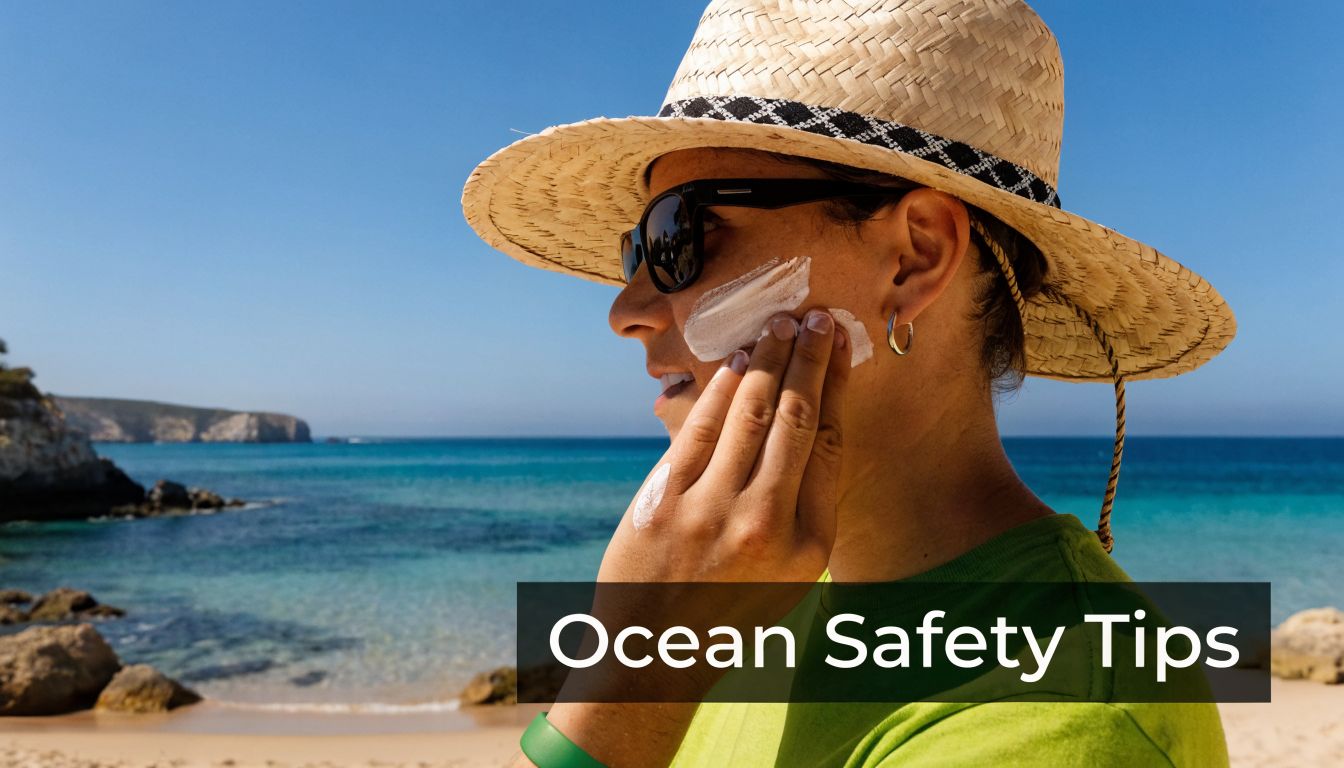
Dress for the water, not just the air
In Albufeira, beach comfort and water comfort are often two different things. Visitors arrive in swimwear because the promenade feels warm, then cut the swim short because the Atlantic has more bite than expected.
For surfing, paddleboarding, longer swims, or shoulder-season holidays, a light spring wetsuit is often the practical call once the sea drops below the level that feels comfortable for a relaxed holiday swim. It helps you stay in longer and stops that tired, chilled feeling that can ruin the rest of the afternoon. Even casual swimmers sometimes benefit from one in spring or late autumn.
A simple rule works well. If you want ten minutes in the water, normal swimwear may be enough. If you want repeated dips, lessons, or a proper session, extra insulation usually improves the day.
Families do better with short, warm resets
Children usually cope best with the Atlantic in stages. Let them paddle first, come out before they get cold, dry off, snack, then go back in if they want. That pattern works much better than pushing for one long swim.
Parents should also watch the timing. Morning can be calmer on many days, and children often have more energy earlier rather than after a hot lunch on the beach.
These habits help:
- Pack dry layers and a towel for each child. Post-swim wind can feel cool even on sunny days.
- Bring water and easy snacks. Hunger and dehydration show up as bad moods long before children explain what is wrong.
- Use shade early. A child who gets too much sun will usually enjoy the sea less, not more.
- Keep the first swim short. Confidence builds faster that way.
Cold, tired children rarely enjoy the second half of a beach day.
Read the flags before you read the mood of the sea
A warm-looking beach can still have difficult water. Flags and lifeguards matter more than first impressions, especially on Atlantic beaches where swell and currents can change the feel of the shoreline quite quickly.
Green does not mean careless swimming. Red does not mean negotiation. If lifeguards are moving people back from an area, there is usually a reason that visitors cannot spot straight away from the sand.
For adults who chill easily, it also helps to swim earlier rather than leaving the first dip until late afternoon. For groups arriving from Faro Airport the same day, avoid forcing a full beach session straight after travel if everyone is tired. Drop the bags, have something to eat, and choose an easier first swim. That small adjustment usually gives people a better first impression of Albufeira's water temperature and a more comfortable start to the trip.
How to Check Live Water Temperatures
You land at Faro, bags are in the car, and someone asks the question that decides the rest of the day. Is the sea warm enough for a proper swim, or is this better as a beach walk, lunch, and a quick paddle?
That is why live water temperature checks matter more than monthly averages once you have arrived. Averages help you choose travel dates. Same-day readings help you choose the right beach plan, especially for families, paddleboarders, and anyone arriving in Albufeira straight from the airport.
Where to check before you go
Use a live sea temperature source, then compare it with a local weather app and the beach conditions posted for the day. Earlier in the article, I covered the main sources people use for Albufeira water readings, so there is no need to repeat every link here. The practical point is simpler. Check more than one signal before you commit to a full swim session.
A single temperature number can mislead. Nineteen or twenty degrees can feel fine under strong sun and light wind. The same reading can feel much colder on an overcast afternoon with a breeze coming across the beach.
How to read the number properly
Start with the water temperature, then check wind, cloud cover, and the beach itself. If the group includes small children, older relatives, or nervous swimmers, judge the day by comfort rather than by whether swimming is technically possible.
I usually suggest this approach:
- Warm reading, light wind, sunny conditions: good day for a longer beach stop and repeated swims.
- Decent reading, but breezy: swim early, dry off quickly, and keep extra layers ready.
- Cooler reading: choose a shorter dip, a sheltered beach, or a plan built around sand time and lunch rather than long swimming.
- Arrival day from Faro Airport: keep expectations realistic. After a flight, people often enjoy a lighter first beach stop more than a full afternoon in the water.
That last point saves a lot of disappointment. Visitors often judge Albufeira's sea temperature too harshly when they reach the beach tired, hungry, and carrying half their holiday luggage.
If the live reading looks borderline, adjust the plan instead of forcing it. Head out later, pick a calmer bay, or treat the first day as a check-in day and book an easy transfer from Faro Airport to your hotel so the beach starts well the next morning. That usually leads to a better first swim and a better start to the trip overall.
Frequently Asked Questions About Albufeira's Waters and Your Trip
Is Albufeira sea water warm enough for children?
In the main swim season, many families find it comfortable enough for regular beach days. Outside that period, children often enjoy paddling and shorter dips more than long swims. The key is matching expectations to the season and not assuming sunny weather means warm water.
When is the best month for adult swimming?
If you want the easiest balance of pleasant sea and classic beach weather, late summer and early autumn usually suit best. If you’re happy with a fresher feel, the season opens up more.
Is Albufeira good for surfing and paddleboarding?
Yes, but comfort depends on conditions and your tolerance for cooler water. In shoulder season, proper kit makes a big difference. For many visitors, the right wetsuit matters more than the month.
What’s the easiest way to get from Faro Airport to Albufeira without stress?
Pre-booked private transport is usually the simplest option for a door-to-door arrival, especially for families, groups, and anyone carrying more than basic luggage. It removes the airport queue decision and gives you a clearer start to the trip.
Are there good options for groups and return journeys?
Yes. Group travellers, golfers, wedding guests, and families usually benefit most from booking both directions in advance. That’s often the easiest way to sort Faro airport transfers for groups, private transfer Faro airport to Albufeira hotel, and a reliable Albufeira to Faro airport return without last-minute scrambling.
Where can I check transfer pricing?
The best approach is to use an instant quote tool from a local operator rather than guessing from generic travel forums. That gives you vehicle-specific pricing based on your route, group size, and luggage needs.
Are cheap Faro airport transfers worth it?
Sometimes. But the cheapest option isn’t always the best fit if it involves waiting, extra stops, or poor luggage handling. For many travellers, value comes from reliability, clear pick-up, and a smooth arrival rather than just the lowest headline fare.
If you want both parts of the holiday sorted properly, sea conditions and the airport journey, The Algarve Experience is a practical place to start. They specialise in reliable, door-to-door Algarve transport with Faro Airport pick-ups, flight monitoring, meet-and-greet service, and vehicle options for solo travellers, families, golfers, and larger groups. If you're comparing Faro airport transfers, Albufeira airport transfers, or a dependable Faro airport to Albufeira transfer, you can book ahead, get a clear quote, and arrive ready to enjoy the coast instead of dealing with queues.
Related posts