So, you're planning an unforgettable marine adventure in the Algarve? You've come to the right place. This guide is your compass for whale and dolphin watching in one of Europe's top spots, pointing you towards the best seasons, locations, and ethical tours that put the animals first.
Why Is the Algarve So Good for Whale and Dolphin Watching?
The Algarve’s sun-drenched coast is more than just a pretty face with stunning beaches—it's a dynamic gateway to the vast Atlantic Ocean. This prime location creates a thriving marine ecosystem, making it an absolute hotspot for spotting cetaceans (the fancy term for whales and dolphins). The secret? It’s where different ocean currents collide, pushing nutrient-rich waters close to the shore.
Think of it as a massive, all-you-can-eat buffet for marine life. This natural phenomenon supports a powerful food chain, starting with tiny plankton and small fish, which in turn attract much larger predators. As a result, the waters off the Algarve become a bustling highway for all sorts of whale and dolphin species throughout the year.
A Deep Connection to the Ocean
Portugal's bond with these incredible creatures runs deep. For centuries, the nation had a significant whaling industry, a tough but important part of its history. Thankfully, things have changed. Since protective laws were introduced in the early 1980s, cetacean populations have made a remarkable comeback.
Today, whale watching in the Algarve has flipped that legacy on its head, turning it into a celebration of conservation. It’s a way for visitors to connect with Portugal's maritime past in a positive, sustainable way. You can dive deeper into Portugal's cetacean conservation efforts and history.
The journey from a whaling nation to a conservation leader is a powerful story. It shows how communities can completely shift their relationship with the ocean, creating amazing opportunities for eco-tourism that everyone can feel good about.
This rich biodiversity means that on any given trip, you could see a real variety of species. From playful pods of Common dolphins leaping through the waves to the more elusive Minke whales, the Algarve offers a genuine chance for a wild, unpredictable, and truly memorable encounter. The stage is set for an adventure where natural beauty and a deep respect for marine life go hand in hand.
When to Go for the Best Sightings
Ask any local marine biologist, and they’ll tell you the same thing: timing is everything. Getting your whale watching Algarve trip on the calendar isn't just about booking a boat; it's about aligning with the ocean's rhythm. Get it right, and you dramatically boost your chances of having one of those unforgettable encounters with the Atlantic's gentle giants.
The absolute best window for sightings stretches from late spring all the way through to early autumn. This is when the Algarve's famous sunshine teams up with calmer seas, creating the perfect stage for spotting fins, tails, and breaches.
The Peak Summer Season
From June to September, the waters off the Algarve coast come alive. This is, without a doubt, the peak season for a reason. The sea is often beautifully calm, and the warmer temperatures draw an incredible variety of marine life closer to shore. It's prime time for spotting species like pilot whales and sperm whales, and if you’re lucky, you might even see a pod of orcas passing through.
The clear Atlantic waters during these months give you fantastic visibility, turning the sea into a grand theatre for these magnificent mammals. If you want to dive deeper into who's visiting when, you can find more great info on seasonal marine life in the Algarve.
This infographic really puts into perspective how our relationship with these creatures has evolved, moving from historical whaling practices to today's focus on conservation and respectful tourism.
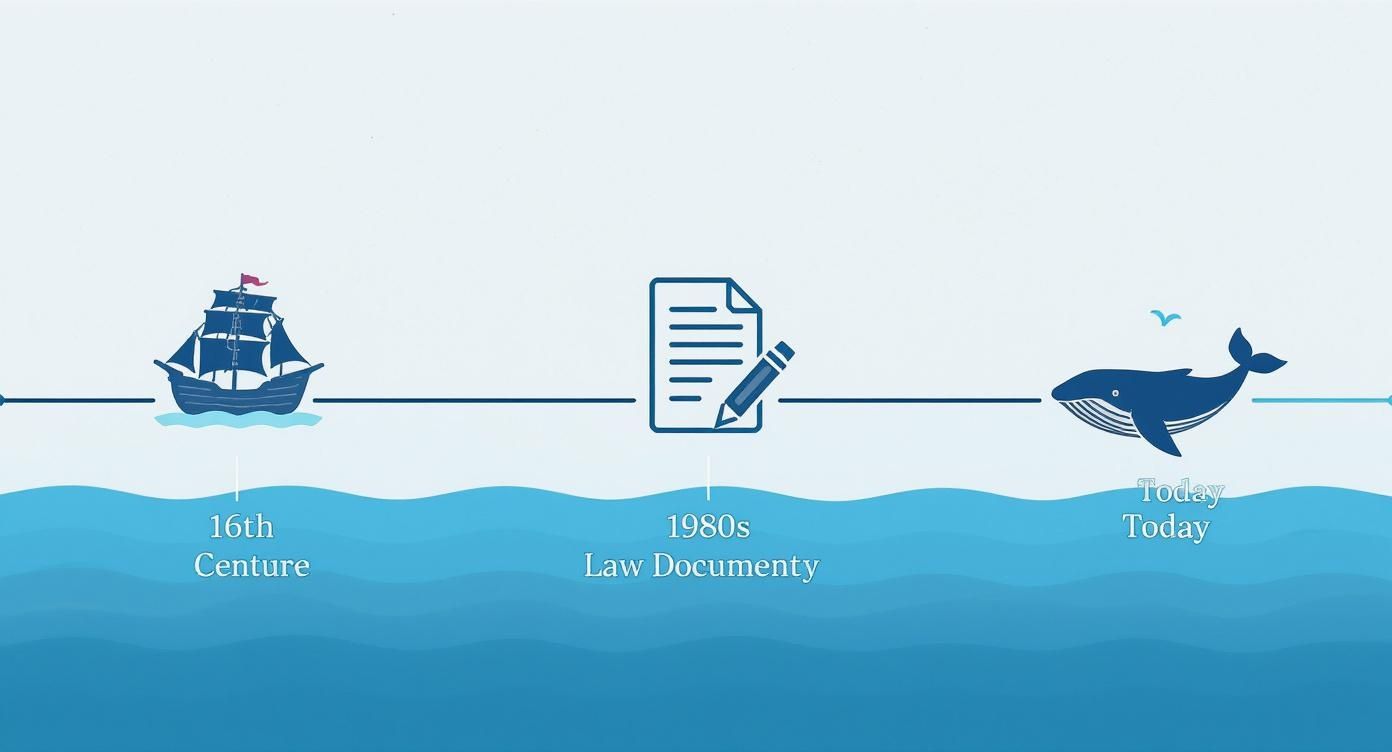
It's a powerful reminder of why responsible, sustainable tours are so crucial for protecting these animals for future generations.
The summer peak delivers the highest probability of sightings, with many tours reporting success rates well over 90%. Just keep in mind that this popularity means more boats and fellow enthusiasts will be out on the water with you.
A quick look at the calendar shows what you can generally expect throughout the year.
Seasonal Guide to Algarve Marine Life Sightings
This table gives you a snapshot of what to expect season by season, from the types of species you’re likely to see to the typical sea conditions.
| Season | Months | Common Species | Sighting Probability | Sea Conditions |
|---|---|---|---|---|
| Spring | March – May | Common Dolphins, Bottlenose Dolphins, Minke Whales, Fin Whales | Moderate to High | Often calm but can be choppy |
| Summer | June – September | Common Dolphins, Bottlenose Dolphins, Pilot Whales, Orcas | Very High | Generally calm and smooth |
| Autumn | October – November | Common Dolphins, Bottlenose Dolphins, Risso's Dolphins | Moderate to High | Can be mixed, with calm days |
| Winter | December – February | Common Dolphins, Harbour Porpoises | Low to Moderate | Can be rough and unpredictable |
While summer is the most reliable time, spring and autumn still offer fantastic opportunities with fewer crowds.
The Advantage of Shoulder Seasons
But don't write off the shoulder seasons! The months of April, May, and October have their own quiet magic. The weather might be a bit more of a gamble, but the rewards can be huge.
- Fewer Crowds: You’ll often find tours are less packed. This means more space to move around the boat and a more intimate, personal experience when you do find a pod of dolphins.
- Different Visitors: These months line up with the migration schedules of other species. You have a solid chance of spotting less common visitors making their journey through the Algarve's waters.
- Better Value: Flights, hotels, and even tour prices can be friendlier on the wallet outside of the summer rush, making it a savvy choice for travellers watching their budget.
So, when is the best time to go? It really comes down to what you’re looking for. If you want the highest chance of sightings in glorious weather, summer is your best bet. But if you prefer a quieter trip and the thrill of potentially seeing something unique, the spring and autumn months are absolutely brilliant alternatives.
Meet the Marine Wildlife of the Algarve
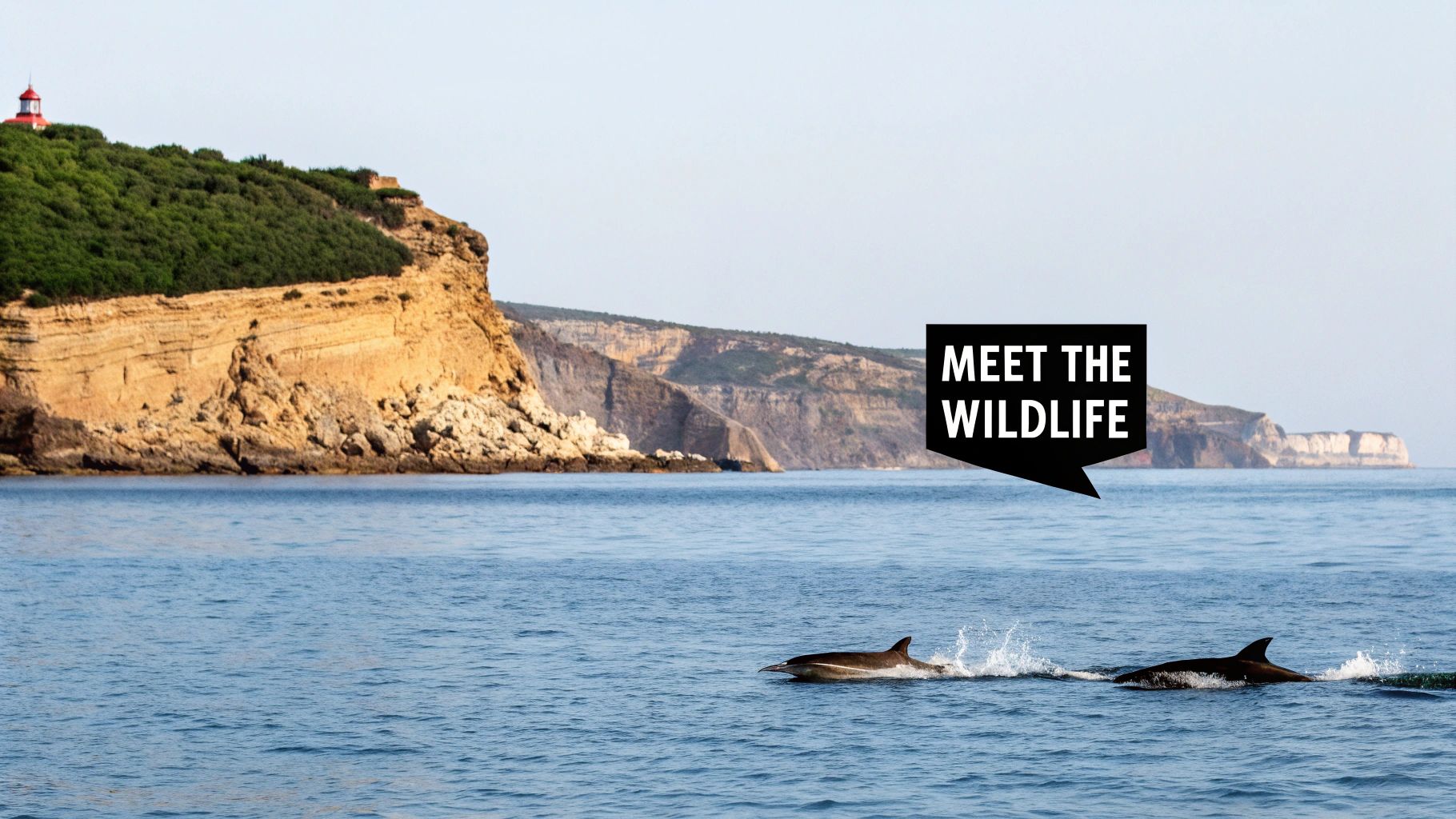
Heading out on a whale watching Algarve tour is less like a trip to the zoo and more like getting front-row seats to the best unscripted show in town. The Atlantic is the stage, and the stars are some of the most fascinating creatures on Earth. Knowing who you might meet out there transforms a simple boat trip into a genuine connection with the wild.
The ocean doesn't make promises, but the Algarve's rich waters are a remarkably reliable hangout for a whole cast of marine life. It's not just about getting a quick photo; it's about learning to spot the different personalities and behaviours that make each species so unique. That's when your trip becomes a real wildlife expedition.
The Playful Pods: Dolphins
Let's be honest, dolphins are the headliners on most Algarve marine tours. Their energy is infectious, and they're famous for putting on a show. You're most likely to cross paths with two main species, each with its own flair.
-
Common Dolphins (Delphinus delphis): These are the acrobats. Often travelling in huge, energetic pods, they're smaller, sleeker, and absolutely love to bow-ride—racing alongside the boat in a blur of speed and agility. That distinctive hourglass pattern on their sides is how you'll know it's them.
-
Bottlenose Dolphins (Tursiops truncatus): Bigger, more powerful, and incredibly curious, Bottlenose dolphins are the charismatic stars. You might see them launching themselves completely out of the water in powerful, arching leaps. If you're particularly keen on seeing them, our guide to dolphin watching in Lagos has some great local tips.
Local research backs this up. Tour operators consistently report sighting rates of over 90%, confirming that the Algarve isn't just a pretty coastline—it's a critical cetacean hotspot.
The Majestic and Elusive Whales
While dolphins are a frequent highlight, spotting a whale is that rare bit of magic that makes a great day unforgettable. These gentle giants are usually just passing through, migrating through these food-rich waters at certain times of the year.
Spotting a whale takes patience and a dash of good luck, but the payoff is a moment of pure awe. There's nothing quite like seeing a creature of that scale moving so gracefully in its own world. It’s an image that stays with you long after you’re back on dry land.
Keep your eyes peeled for these magnificent, though less common, visitors:
- Minke Whales: The most frequently spotted baleen whale around here. They’re one of the smaller whale species, but they are incredibly sleek and fast. You'll often see them travelling solo.
- Fin Whales: Spotting a Fin Whale is a heart-stopping moment. As the second-largest animal on the planet, their sheer size and power are hard to comprehend until you see it for yourself.
- Orcas (Killer Whales): It's rare, but it happens. Pods of Orcas sometimes pass through, usually in the summer months. Seeing these incredible apex predators in the wild is the ultimate wildlife lottery win on an Algarve tour.
How to Choose Your Ideal Whale Watching Tour
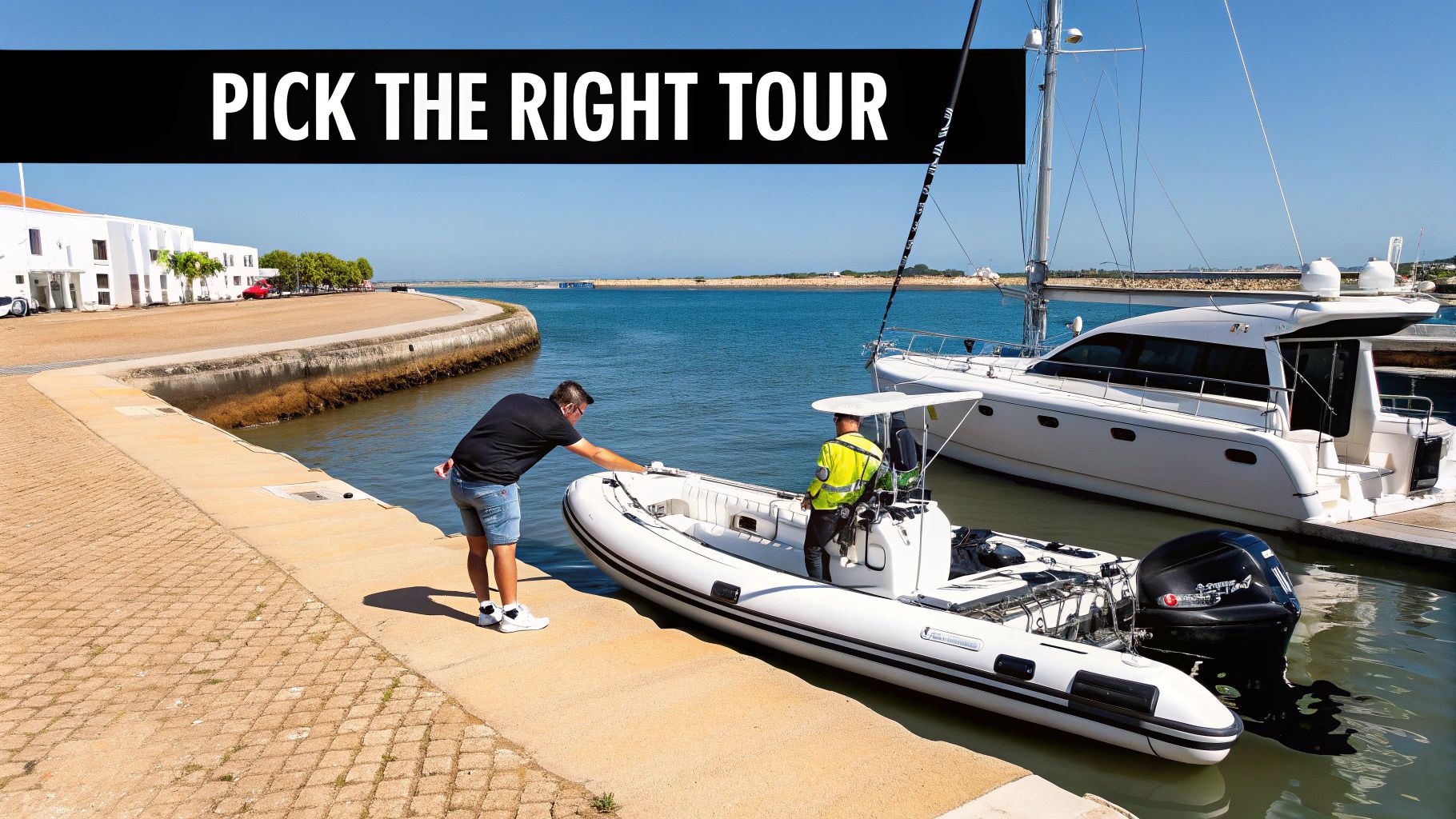
So, you’re ready to see some dolphins? Great! But picking the right whale watching Algarve tour is about more than just finding the first boat with an empty seat. It’s like choosing a vehicle for a safari: are you after an open-top jeep for a rugged, up-close adventure, or a comfy, air-conditioned bus for a relaxed journey?
The type of boat you choose will completely shape your day on the Atlantic. From the speed and agility of the vessel to the amenities on board, each option offers a totally different way to experience the ocean's incredible wildlife. Getting to grips with these differences is the secret to planning your perfect day at sea.
Comparing Your Boat Options
The Algarve serves up a brilliant variety of vessels, and your choice will likely come down to balancing thrill, comfort, and who you’re travelling with. Let's break it down.
-
Rigid Inflatable Boats (RIBs): These are the speedboats of the sea. Low to the water and seriously fast, RIBs offer an adrenaline-fuelled ride that can cover huge distances in no time, boosting your chances of finding those distant pods. They’re perfect for adventurers and photographers who want a dramatic, eye-level view of the action.
-
Catamarans: If stability and comfort are top of your list, you can't go wrong with a catamaran. Their twin-hull design creates a much smoother ride, which is a massive plus for families with young children or anyone who gets a bit wobbly at sea. They almost always have shaded areas, onboard toilets, and plenty of space to move around.
-
Private Charters: Looking for a truly personal adventure for a special occasion or just your own group? A private charter is the ultimate experience. You get the boat all to yourself, giving you the freedom to customise the day and spend as long as you like with any dolphins you meet. For a bit more inspiration on different sea excursions, check out this excellent guide to booking a boat tour in the Algarve.
Comparison of Algarve Whale Watching Tour Boats
Choosing the right boat can make all the difference to your experience. Use this quick comparison to see which vessel best fits your style of adventure.
| Boat Type | Best For | Typical Capacity | Pros | Cons |
|---|---|---|---|---|
| RIBs | Thrill-seekers, photographers, small groups | 12–18 | Fast, exciting ride; gets close to the water; covers large areas | Bumpy ride; minimal shelter; no toilets; not for everyone |
| Catamarans | Families, large groups, comfort-seekers | 20–80+ | Very stable; spacious deck; toilets & amenities; smooth ride | Slower; less intimate due to larger group size |
| Private Charters | Special occasions, custom itineraries, privacy | 2–12 | Total flexibility; personalised attention; intimate experience | Most expensive option |
Ultimately, there’s no single "best" boat—it all comes down to what kind of day you’re hoping for on the beautiful Algarve coast.
What to Look for in an Operator
Picking an ethical and professional operator is just as important as choosing the right boat. A responsible company not only keeps you safe but also respects the marine life you’ve come all this way to admire.
Look for operators who are open about their commitment to responsible tourism. This means they stick to strict approach distances and speeds around the animals to avoid causing any stress. The best companies have glowing online reviews that consistently mention the crew's professionalism and deep respect for the wildlife.
Having a marine biologist on board transforms your trip from a simple boat ride into a floating classroom. Their expertise adds incredible depth, as they can interpret animal behaviours, identify species with certainty, and answer your questions with fascinating insights.
Prioritise tours that have a certified marine biologist guide. Their presence is a huge indicator of an educational and conservation-focused trip. A truly great tour isn't just about spotting dolphins; it’s about learning from them in a way that’s respectful to their home.
What to Expect on Your Whale Watching Trip
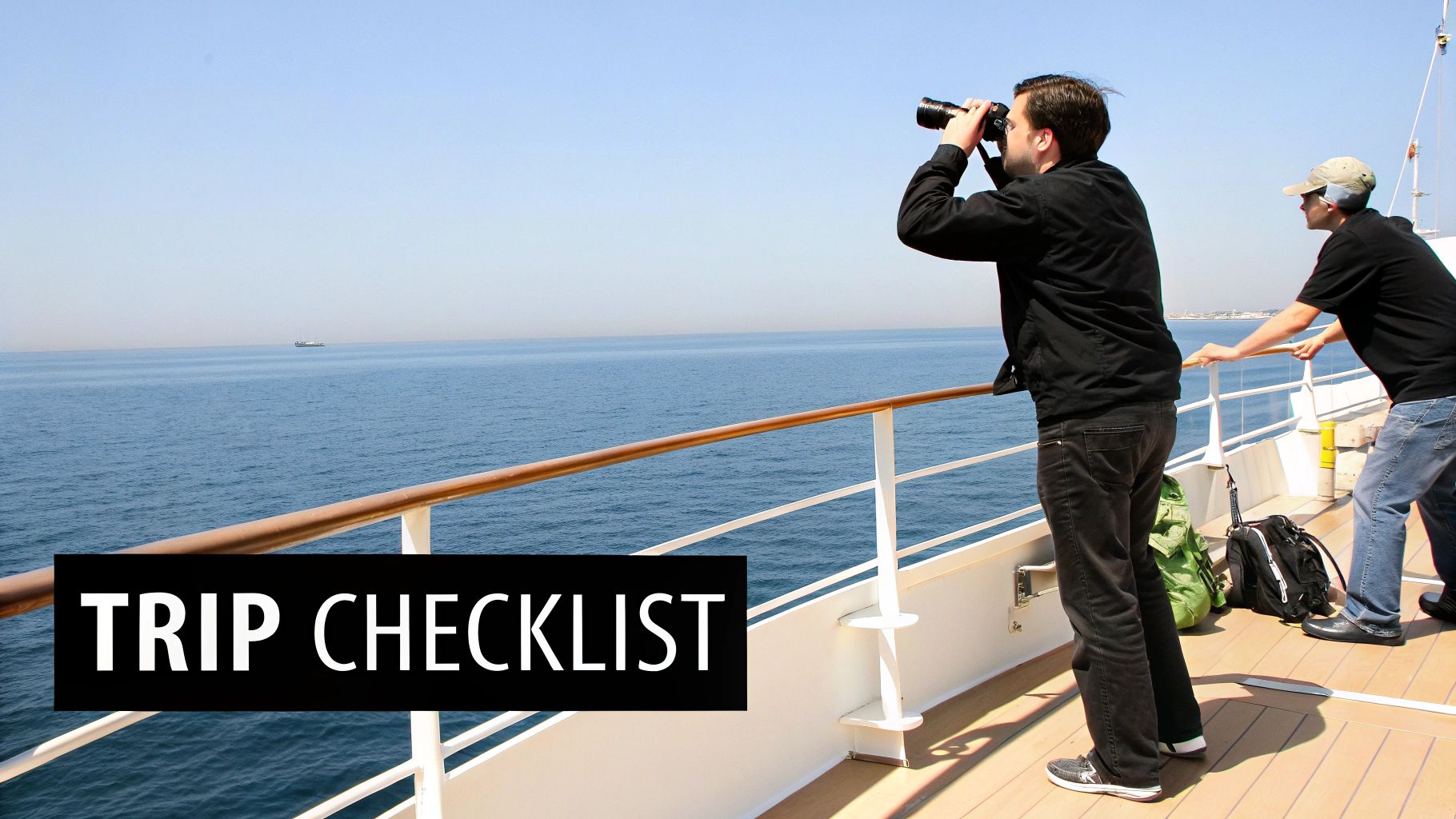
So, you've booked your whale watching Algarve adventure! It's a genuinely incredible experience, but a little inside knowledge can take your trip from good to unforgettable. Think of this as your pre-departure rundown, ensuring you arrive at the marina feeling ready, comfortable, and excited for whatever the Atlantic has in store.
Your day will kick off with a friendly welcome from the crew at the marina. Before you even hear the engine start, every professional tour begins with a clear safety briefing. The crew will show you the boat's layout, point out life jackets, and explain the ground rules for a safe trip. They’ll also cover the golden rules of responsible wildlife viewing, which is all about protecting the animals. This briefing isn't just a formality—it's the first sign you've chosen a top-notch, ethical operator.
Once you motor out of the harbour and hit the open ocean, the real hunt begins. The crew, often with a marine biologist on board, will be scanning the horizon for any sign of life—a distant splash, a fin slicing through the water, or the iconic blow from a whale. This part of the journey is all about patience. Remember, you're a guest in their enormous, wild world.
Your Essential Packing List
Getting your kit right is the secret to staying comfortable out on the water. The weather at sea can feel worlds away from the shore, even on a sunny day, so a little prep makes a huge difference.
- Layer Up: It can get surprisingly chilly with the sea breeze, so bring layers. A light windproof or waterproof jacket is your best friend.
- Sun Protection: The sun reflecting off the water is no joke. Pack high-SPF sun cream, a hat that won’t fly off, and a good pair of polarised sunglasses.
- Camera and Binoculars: You won't want to miss a thing. A camera with a decent zoom and a pair of binoculars will let you get a great view without disturbing the animals.
- Seasickness Remedies: If you're prone to motion sickness, it's best to take your preferred medication before you board, following professional advice.
A Quick Word on Expectations and Weather
It’s so important to remember that these are wild animals in their natural home. While Algarve tours have a fantastic sighting rate, especially in summer, a sighting is never 100% guaranteed. The best companies will do everything they can to find marine life, but the ocean has its own plans. If you're departing from the central Algarve, our guide to different boat tours from Faro is a great place to compare your options.
Most reputable operators offer a "sighting guarantee." This usually doesn't mean a refund, but they'll often invite you back for another trip, free of charge, if you don't spot any dolphins or whales.
Weather is the other big variable. Your safety is always the number one priority, so trips will be cancelled or moved if the sea conditions are too rough. Operators keep a very close eye on the forecast and will let you know if things change, which is why it's crucial to leave correct contact details when you book. By keeping these things in mind, you can just sit back, relax, and soak up the adventure.
Your Whale Watching Questions Answered
To help you get everything sorted for your trip, we’ve put together the answers to the questions we hear most often about whale watching in the Algarve. Think of this as your quick-start guide to make sure your adventure goes off without a hitch.
Is Seeing a Whale or Dolphin Guaranteed?
While the Algarve has an amazing track record for sightings — often over 90% during the high season — we’re dealing with wild animals in their own backyard. That means a sighting can never be 100% guaranteed, which, honestly, is part of what makes it so exciting when they do appear.
Good tour operators are experts at this. They use years of experience and stay in constant contact with other boats to give you the best possible shot. Many companies also offer a "sighting guarantee." This usually means if you don't see any cetaceans, you can join another tour for free. It's always a good idea to ask about their specific policy before you book.
What’s the Best Town to Leave From?
You'll find fantastic whale watching tours all along the coast, so the "best" spot really comes down to where you're staying and what kind of vibe you're after.
- Lagos: The perfect choice if you want to mix wildlife spotting with breathtaking views of the famous Ponta da Piedade coastline.
- Albufeira: A bustling, central hub with a huge variety of tours. You'll find everything here, from zippy RIBs to big, comfortable catamarans.
- Vilamoura: Known for its glamorous marina, this is the place for modern tour boats and a wide range of options.
Are the Tours Suitable for Young Children?
Absolutely, many tours are brilliant for families, but it really depends on the boat you choose.
For families with little ones or anyone with mobility issues, we always recommend the larger catamarans. They’re much more stable, offer more room to move around, have toilets on board, and provide a smoother, gentler ride on the open water.
The high-speed RIBs, on the other hand, are a bit more of an adventure. Because they're fast and can be bumpy, they're often not recommended for very young children, pregnant women, or anyone with back problems. Your best bet is to call the tour operator ahead of time to chat about your family's needs. They’ll make sure you're booked on a trip that’s both safe and fun for everyone.
Need to sort out your transfers to the marina? The Algarve Experience offers reliable, door-to-door service from Faro Airport and anywhere else in the region. We'll make sure you arrive on time and completely stress-free for your whale watching adventure. Book your seamless Algarve transfer with us today.
Related posts