

Imagine this: you've just spent the morning wandering through a historic European capital, and by the afternoon, you're paddling out to catch world-class waves. That’s not a dream; that's just a regular day when you surf in Lisbon. It's this unique blend of vibrant city culture and a raw Atlantic coastline that makes it so special. Whether you’re a complete beginner eager to stand up for the first time or a seasoned pro hunting for barrels, Lisbon has a wave with your name on it.
Why Lisbon Is a Top-Tier Surf Destination
Lisbon’s stellar reputation as a surf city isn't just hype. It’s the perfect storm of geographical luck and a deep-rooted love for the sea. The city itself is the gateway to over 50 kilometres of incredible coastline, offering a staggering variety of waves for every single skill level. Seriously, where else can you explore ancient castles and then be in the water for a sunset session just a short train ride later?
The whole story kicked off back in the 1950s, with Carcavelos Beach rightfully earning its title as the birthplace of Portuguese surfing. Since then, the scene has exploded, weaving modern surf culture right into the region's rich history and pulling in thousands of wave-chasers every year. If you're curious, you can dive deeper into Portugal's fascinating surf history and see how it became such a global hotspot.
Three Awesome Surf Zones to Explore
To really get a grip on the surf scene here, it helps to think of the area in three distinct zones. Each one has a completely different feel, vibe, and type of wave, which is what makes surfing around Lisbon so incredibly diverse.
- The Cascais Line: These are your city beaches, super easy to get to on a scenic train ride from the centre. Spots like Carcavelos serve up consistent, user-friendly waves, making them a massive hub for surf schools and locals getting their daily fix.
- Costa da Caparica: Just a quick hop across the river, this place is a paradise of seemingly endless sandy beach breaks. It’s lined with jetties that create perfectly defined peaks, meaning there’s more than enough space for everyone from absolute beginners to advanced surfers.
- The Sintra Coast: For anyone craving something a bit more wild and untamed, the coastline near Sintra is where it's at. Fully exposed to the raw power of the Atlantic, beaches like Praia Grande offer powerful, often challenging waves set against a backdrop of seriously dramatic cliffs.
Think of these zones like different difficulty settings in a video game. The Cascais line is your friendly tutorial level. Costa da Caparica is the sprawling main world with tons of variety. And Sintra? That’s the epic boss level for those ready to really test their skills.
Before we dive deeper, here's a quick look at how these regions stack up.
Lisbon Surf Regions at a Glance
| Region | Best For | Vibe | Distance from Centre |
|---|---|---|---|
| The Cascais Line | Beginners & Intermediates | Bustling, social, and convenient | 20-30 mins (Train) |
| Costa da Caparica | All Skill Levels | Laid-back, sprawling, and consistent | 20-30 mins (Car/Ferry) |
| The Sintra Coast | Intermediates & Experts | Wild, powerful, and scenic | 40-50 mins (Car) |
This table gives you a snapshot, but now it's time to get into the details.
This guide is your game plan, designed to get you stoked and ready for an epic adventure. We're going to break down each region, helping you find the perfect wave for your ability and style. From your very first lesson to hunting for those elusive winter barrels, you'll find all the local knowledge you need right here. Let’s get you ready to discover why surfing in Lisbon is an experience you won't find anywhere else.
Finding Your Perfect Wave in Lisbon
Lisbon's coastline is like a perfectly curated playlist, with a track for every mood and skill level. The real secret to a fantastic session? Matching your ability to the right wave. Think of it like choosing a hiking trail—you wouldn’t send a first-timer up a sheer cliff face, and an expert climber isn't looking for a flat, paved path. The same logic applies when you surf in Lisbon.
Let's break down the best spots, so you spend less time guessing and more time riding. I'll walk you through the top breaks for beginners, intermediates, and advanced surfers, giving you the kind of local knowledge you need to find that perfect wave.
For the First-Timers Learning to Surf in Lisbon
If you're just starting out, your ideal wave is gentle, predictable, and breaks over a soft, sandy bottom. You need a safe space to practise popping up, finding your balance, and getting a feel for the ocean without worrying about rocks or powerful currents. This is your training ground.
- Costa da Caparica: This is hands-down the best classroom for beginners in the Lisbon area. Its long, sandy beach stretches for kilometres, dotted with jetties that help create organised, peeling waves. The sheer size of Caparica means there's plenty of room to learn without feeling crowded, and you'll find countless surf schools lining the promenade, ready to get you started.
- Carcavelos Beach (Sheltered Zones): While Carcavelos can get seriously powerful, on smaller summer days or during a higher tide, its sandy shores offer forgiving waves perfect for lessons. Its accessibility via train from central Lisbon makes it an incredibly convenient option for a quick, hassle-free introduction to surfing.
This infographic gives you a quick visual on Lisbon's main surf zones and how to get to them. It’s a great little cheat sheet for planning your journey to the waves, showing that some spots are better for spontaneous trips while others are best for a planned day out.
For the Intermediate Surfer Ready for a Challenge
Once you can consistently catch green waves and manage basic turns, you’re ready to step things up a notch. Intermediate spots around Lisbon will challenge you with faster, more powerful waves that demand better positioning and timing. These breaks are where you'll really refine your technique and build confidence.
- Praia do Guincho: Known for its stunning, wild beauty, Guincho is a highly consistent beach break that just soaks up swell. It's often windy, which can create choppy conditions, but this also helps build your strength and adaptability. When the conditions line up, you’ll find long, powerful walls perfect for practising carves and cutbacks.
- Carcavelos (Main Peak): On a medium-sized swell, the main peaks at Carcavelos come alive. The waves here are faster and often hollower than the beginner-friendly sections, offering short but exciting barrel sections close to the shore. It's an excellent place to improve your wave reading and take-off skills.
“Surfing at Guincho teaches you to respect the wind. It’s a powerful spot that forces you to be a stronger paddler and a smarter surfer. Catching a clean wave there feels like a real achievement.”
Stepping up to these waves requires a much greater awareness of your surroundings and the ocean's behaviour.
To help you decide where to head, here's a quick comparison of Lisbon's most popular breaks.
Lisbon Surf Break Comparison
| Surf Spot | Skill Level | Wave Type | Best Swell | Hazards |
|---|---|---|---|---|
| Costa da Caparica | Beginner | Beach Break | SW, W, NW | Crowds, Jetties |
| Carcavelos | Beginner to Advanced | Beach Break | SW, W | Crowds, Rips |
| Praia do Guincho | Intermediate to Advanced | Beach Break | W, NW | Strong Winds, Rips |
| Praia da Poça | Advanced | Reef Break | NW, W | Rocks, Localism |
| Praia Grande | Advanced | Beach Break | NW, W | Strong Rips, Heavy Waves |
This table should give you a solid idea of what to expect at each spot, helping you make the right call based on the day's conditions and your own comfort level.
For the Advanced Rider Seeking Power and Barrels
For experienced surfers, the Lisbon area holds some serious gems. These are the waves that demand respect, skill, and a deep understanding of ocean dynamics. They break over reefs or shallow sandbanks, producing hollow, fast, and powerful rides for those who know how to handle them.
- Praia da Poça: Located along the Cascais line, Poça is a well-known reef break that offers fast, hollow right-handers. It works best on a mid-tide with a decent northwest swell. This spot is not for the faint of heart; the wave breaks over a rocky bottom and is a favourite among local experts, so be sure to surf with confidence and show respect.
- Praia Grande: Situated on the beautifully rugged Sintra coast, Praia Grande lives up to its name. As a full-on Atlantic beach break, it captures a huge amount of swell, producing heavy, powerful waves and challenging barrels, especially in the autumn and winter. The currents here can be brutal and the paddle-out demanding, making it a true test of an advanced surfer's abilities.
Before you even think about paddling out to any of these spots, it’s vital to assess the conditions and your own limits. Knowing the best tide, swell direction, and potential hazards will not only keep you safe but also ensure you score the best possible session while you're exploring the incredible surf in Lisbon.
Navigating Lisbon's Swells and Seasons
Scoring the perfect wave when you surf in Lisbon isn’t about luck—it’s about understanding the ocean's rhythm. The Atlantic is a powerful, ever-changing force, and its mood shifts dramatically with the seasons. Nailing the timing for your trip is the single biggest factor that will turn a good surf holiday into an epic one.
Think of Lisbon’s surf calendar in two distinct chapters. The first is written for the chargers and thrill-seekers, while the second is a welcoming story for those just starting their journey. Get this right, and you'll find the waves you've been dreaming of.
Autumn and Winter: The Prime Time for Power
From September through to March, the North Atlantic truly comes alive. This is prime time for experienced surfers, as powerful, long-period groundswells generated by distant storms march relentlessly towards the Portuguese coast. These are the swells that light up Lisbon’s most famous and challenging breaks.
During these months, spots like Guincho and Praia Grande soak up this raw energy, creating fast, hollow, and powerful waves. The water gets cooler, so you'll need a good 4/3mm wetsuit, but the lineups are often less crowded with tourists. Instead, you'll be sharing the water with local surfers who know exactly when and where the magic is happening.
The magic of autumn is that perfect blend of lingering warmth from the summer and the arrival of the first proper winter swells. September and October are often seen as the sweet spot, delivering world-class conditions for intermediate to advanced riders.
This is the season when the coastline shows its teeth. While you’re focused on the waves, it's cool to remember the incredible marine life sharing these waters. If you're curious about the bigger creatures out there, our guide to whale watching in the Algarve offers a glimpse into Portugal's vibrant offshore ecosystem.
Spring and Summer: A Welcoming Classroom
As the fierce Atlantic storms fade, the surf mellows out considerably. The period from June to August is Lisbon's high season for beginners and anyone looking for a more relaxed, playful time in the water. The waves are generally smaller, cleaner, and much more forgiving.
This creates the perfect learning environment. Beaches like Costa da Caparica become a paradise for surf schools, with gentle, rolling waves breaking over soft sandbanks. The water is warmer, too, meaning you can often get away with a 3/2mm or even a shorty wetsuit, letting you stay out for long, comfortable sessions under the sun. It's the ideal time to grab a longboard and just enjoy the simple fun of gliding.
Understanding Tides and Wind
Beyond the seasons, two other critical elements will make or break your session: tides and wind. Think of them as the local dialect of the ocean—learning to interpret them is essential.
- Tides: The tide acts like a volume knob for the waves at a specific spot. Some breaks, like the reef at Poça, work best at mid-tide when there’s just enough water to cover the rocks. Beach breaks like Carcavelos can be much better on a pushing tide (from low to high) as it helps organise the sandbanks.
- Wind: Wind direction is everything. An offshore wind, which blows from the land out to sea, is the holy grail for surfers. It grooms the wave face, making it smooth and holding it up for a longer, cleaner ride. In contrast, an onshore wind blows from the sea towards the land, creating messy, choppy conditions that are tough to surf.
Learning to read a surf forecast and understanding how these variables affect each spot is the final piece of the puzzle. It lets you think like a local, avoid frustratingly flat or blown-out conditions, and ultimately spend more time enjoying the fantastic waves Lisbon has to offer.
Choosing the Right Surf School and Equipment
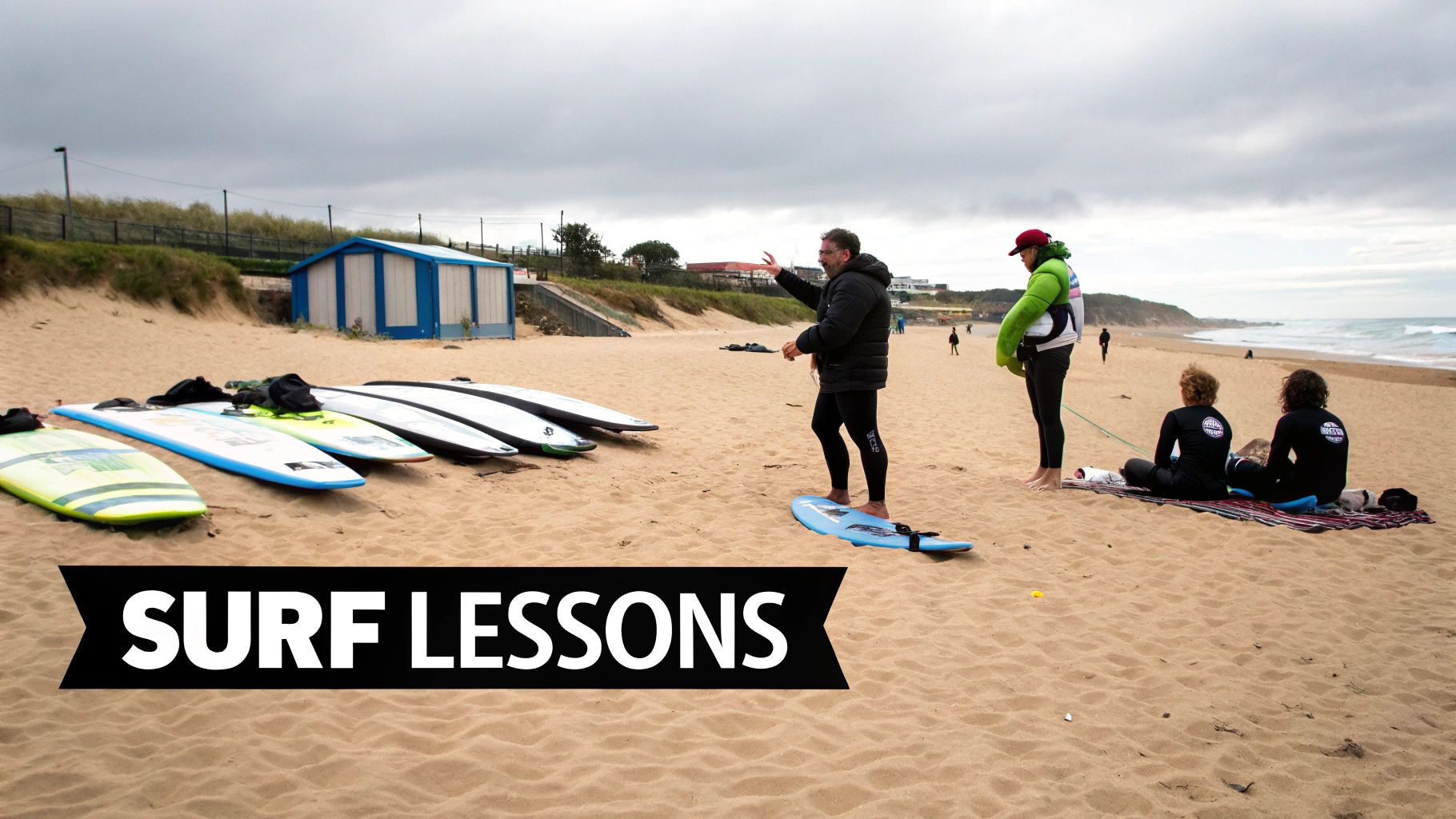
Whether you’re a complete beginner eager for your first lesson or an experienced surfer just looking to rent a board, picking the right school and gear is crucial for a great day in the water. Lisbon's coastline is packed with surf schools and rental shops, and knowing what to look for can make or break your experience.
This is your no-nonsense guide to navigating the options, making sure your time surfing is safe, fun, and totally worthwhile. Let's break down how to find a top-notch surf school and the perfect equipment for whatever the Atlantic throws at you.
Finding a Quality Surf School
Lisbon's surf scene is incredibly welcoming, and thankfully, the quality of instruction is generally high. Portugal has a deep, passionate surf culture that has produced world-class talent—in 2014, local hero Vasco Ribeiro from nearby Cascais even became the country's first junior world champion. That passion runs deep in the local instructors.
When you're picking a school, keep an eye out for these signs of quality:
- Certified Instructors: Make sure the instructors are certified by the Portuguese Surfing Federation (FPS) or an equivalent like the ISA. This isn't just a piece of paper; it means they're properly trained in teaching and, more importantly, water safety.
- Small Groups: For beginners, the magic number is a 5-to-1 student-to-instructor ratio (5:1). Any more than that, and you won't get the personal feedback you need to actually improve.
- Good Equipment: A reputable school will have quality soft-top beginner boards and wetsuits that aren't falling apart. They should ask for your height and weight to get you on the right size board from the start.
- Safety First: Every single lesson should kick off with a proper safety briefing on the sand. This should cover everything from currents and surf etiquette to how to handle your board so you don't hurt yourself or others.
A great surf lesson is about so much more than just standing up. It’s about building confidence in the ocean. The right instructor won't just show you the technique; they’ll teach you how to read the water and stay safe—skills that will stick with you forever.
Renting the Right Surf Gear
If you already know your way around a surfboard and just need to rent gear, choosing the right board and wetsuit for the day’s conditions is everything. Renting the wrong stuff is a fast pass to a frustrating session.
Your choice of board and wetsuit depends entirely on the season and the daily forecast. Most rental shops along Carcavelos or Costa da Caparica have plenty of options, but it helps to walk in knowing what to ask for. And after a long day in the waves, you might fancy a different kind of water adventure; our guide on kayak adventures in Lagos has some great ideas for the rest of your trip.
Matching Your Wetsuit to the Season
Let's be clear: the Atlantic water around Lisbon is chilly all year round. A good wetsuit isn't optional, it's essential. Wetsuit thickness is measured in millimetres (like 4/3mm), where the thicker number is for your core and the thinner is for your arms and legs to allow for movement.
Here’s a simple guide to what you'll need:
| Season | Months | Water Temperature (Avg) | Recommended Wetsuit |
|---|---|---|---|
| Winter | Dec – Mar | 14-16°C (57-61°F) | 4/3mm Full Wetsuit (Boots recommended) |
| Spring/Autumn | Apr – Jun / Sep – Nov | 16-19°C (61-66°F) | 3/2mm Full Wetsuit |
| Summer | Jul – Aug | 19-22°C (66-72°F) | 3/2mm or Shorty Wetsuit |
Selecting the Right Surfboard
The board you choose needs to match your skill level and the waves on offer that day. Don't let your ego talk you into grabbing a sleek shortboard if you're still learning—a bigger board means more waves, and more waves mean more fun.
- For Beginners: Stick to a soft-top foam board (a "foamie"). They’re stable, floaty, and much safer when you inevitably fall. A long one (8-9 feet) will make catching waves and finding your balance a whole lot easier.
- For Intermediates: A funboard or mini-mal (around 7-8 feet) is the perfect middle ground. You'll still have plenty of stability, but with more freedom to start practising turns.
- For Advanced Surfers: You know what you want—a shortboard suited to the conditions. But remember, on those small, weaker summer days, even the pros will have a better time gliding on a longboard or a fish.
By taking a moment to choose your school and gear wisely, you're setting yourself up for an amazing time surfing in Lisbon.
Getting to the Waves: A Transport Guide
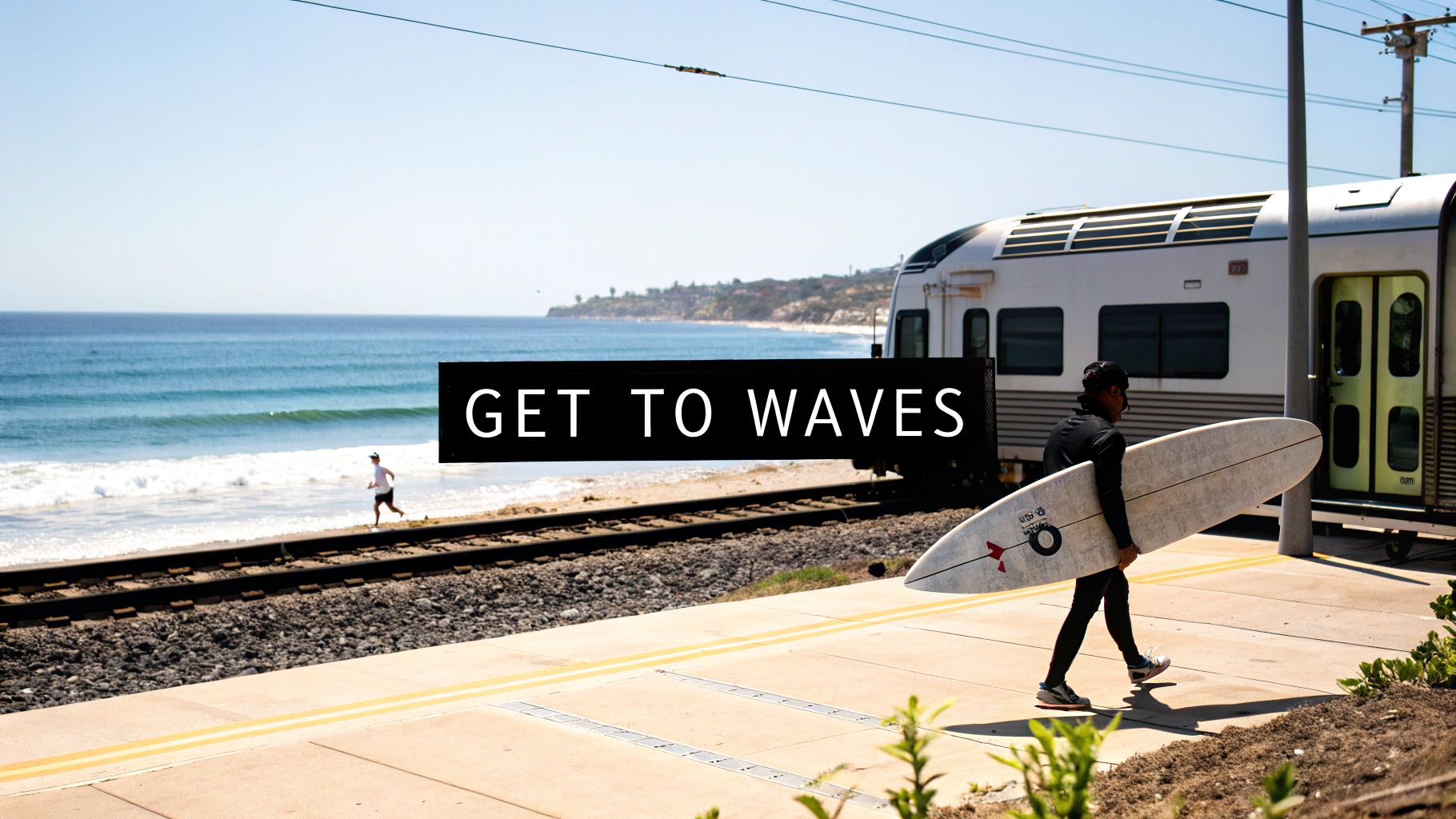
Don't let logistics stand between you and the perfect wave. Lisbon’s best surf spots are surprisingly easy to get to, and this is your complete playbook for the journey. Whether you're hopping on a scenic train, catching a ferry across the Tejo, or renting a car for a coastal adventure, getting there can be part of the fun.
We’ll break down the best ways to reach each of the three main surf zones. Think of this as your guide to making the commute as smooth as the waves you’re about to ride, so you can focus on the ocean, not the traffic.
The Cascais Line by Train
For quick and painless access to spots like Carcavelos and São Pedro do Estoril, the train is your best mate. It's the most popular option for a reason. The journey itself is a treat, tracing the coastline with killer views of the Atlantic unfolding right outside your window.
The train to Cascais leaves from Cais do Sodré station in central Lisbon every 10-20 minutes. A trip to Carcavelos takes about 25 minutes and will only set you back a few euros. The best part? The station is just a short walk from the sand, making it ridiculously convenient.
Local Tip: Don't stress about bringing your board. It's a common sight on these trains. Just try to grab a spot in the carriages at the very front or back where there’s usually more room. Going during off-peak hours helps you avoid the commuter crush.
Costa da Caparica by Ferry and Bus
Reaching the endless beach breaks of Costa da Caparica is a charming two-step journey that feels like a mini-adventure in itself. It's a fantastic way to see a different side of the city and its relationship with the water.
- Catch the Ferry: Head to the Cais do Sodré ferry terminal and take the short, scenic boat ride across the River Tejo to Cacilhas. The trip is only about 10 minutes.
- Hop on the Bus: From the Cacilhas bus station, look for bus 3011. It’ll take you right into the main town of Costa da Caparica. In the summer, keep an eye out for a small beach train called the "Transpraia" that chugs along the coast, stopping at different beach access points.
If you're flying in and want to hit the waves straight away, sorting out your transport from the airport beforehand can save a ton of hassle. You can find out more about arranging a seamless Lisbon airport transfer to get your trip started on the right foot.
The Sintra Coast by Car
While public transport is great for the city beaches, exploring the wild, powerful waves of the Sintra coast—like Praia Grande and Guincho—really calls for a car. Renting a vehicle gives you the freedom to chase the best conditions and discover those hidden, less-crowded spots.
The drive from central Lisbon to Praia Grande takes around 40-50 minutes, traffic depending. Having your own car means you can check multiple breaks, find the best peak, and haul your gear around with zero fuss. Just a heads up: parking can get competitive, especially on a sunny weekend, so an early start is always a smart move.
Getting to Grips with Surf Safety and Etiquette
The ocean doesn't come with a rulebook, but every surf spot from Lisbon to Hawaii runs on a shared code of conduct. Figuring out this etiquette is just as vital as learning to pop up on your board. It all boils down to respect—for the power of the Atlantic and for every other surfer sharing the waves with you.
Get these unwritten rules down, and you won't just stay safe; you'll have a much better time in the water and earn a nod from the locals.
Think of the lineup like a conversation; you have to wait for your turn to speak. The absolute golden rule is wave priority. The surfer closest to the breaking part of the wave (the peak) has the right of way, simple as that. Paddling around someone just to nab that spot is a serious no-go.
The Unwritten Rules of the Water
Navigating a busy break, especially one you don't know, is all about awareness. The biggest rookie error you can make is "dropping in"—that's when you catch a wave that someone with priority is already up and riding. Always look both ways, left and right, before you commit to paddling for a wave.
And when you're paddling back out after a ride? Stay out of the way. You don’t want to be a human slalom cone for someone enjoying their wave. The best route is to paddle through the whitewater or go wide around the main break, never straight through the middle of the action.
Here are the essentials to keep in mind:
- Right of Way: The surfer sitting deepest, closest to the peak, gets the wave.
- Don't Drop In: Always check if someone is already on the wave before you go.
- Paddle Out Smart: Avoid paddling through the impact zone where people are surfing.
- Hold Onto Your Board: Your board can become a dangerous missile if you let it go. Always maintain control.
"Good etiquette isn't about being a pro; it's about being respectful. A friendly nod and a bit of awareness go a long way in earning your place in any lineup, especially in a new spot."
Local Safety Knowledge
Beyond the social rules, a healthy dose of respect for the Atlantic itself is non-negotiable. Lisbon's beaches can have powerful rip currents, which are essentially strong channels of water pulling away from the shore.
Learn to spot them: look for a channel of choppy, churning water, a different colour to the surrounding water, or a gap in the incoming wave pattern. If you ever get caught in one, don't panic and don't fight it. Just paddle parallel to the shore until you feel the pull release, then head back in.
Also, be aware of what's under your feet. While many of Lisbon’s best spots are sandy, some breaks hide rocky bottoms. Keep an eye on the lifeguard flags on the beach—they provide crucial, real-time info about the day's conditions. Follow their lead, and your surf sessions will be memorable for all the right reasons.
Your Lisbon Surfing Questions Answered
Even the most seasoned traveller has a few questions before hopping on a plane. To make sure you're totally ready for your Lisbon surf adventure, we've tackled some of the most common queries we get.
Think of this as your final check-in, clearing up any last-minute doubts so you can focus on what really matters—scoring some incredible waves.
What’s the Best Time for a Beginner to Surf in Lisbon?
If you're just getting your feet wet, the summer months are your best friend. Aim for a trip between June and August to find the most welcoming conditions for learning. The big Atlantic winter swells have calmed down, leaving behind smaller, friendlier waves that are perfect for building confidence.
The water is also at its warmest, hitting a pleasant 19-22°C (66-72°F). This means you can stay out longer without getting chilly. Spots like Costa da Caparica basically turn into the ultimate surf classroom, with plenty of surf schools and gentle, sandy-bottom waves that make for a soft landing.
Do I Really Need to Rent a Car?
It honestly depends on the kind of surf trip you have in mind. You can absolutely have an amazing time surfing around Lisbon without a car. The surf spots along the Cascais train line, like the super popular Carcavelos, are a scenic and easy train ride from the city centre.
You can even get to the endless beach breaks of Costa da Caparica by catching a ferry and a quick bus. It's all part of the adventure.
That said, if you're dreaming of exploring the raw, powerful, and more remote breaks along the Sintra coast—like Praia Grande—then renting a car is pretty much a must. It gives you the freedom to hunt down the best waves of the day and discover hidden gems you can't reach by public transport.
What Kind of Wetsuit Should I Pack?
The Atlantic Ocean doesn't mess around; the water here is cool all year, so a good wetsuit is essential. What you pack really boils down to when you're visiting, as the water temperature changes quite a bit from winter to summer. The right suit is the difference between a quick dip and a marathon session.
Here’s a simple guide to get it right:
- Winter (December to March): This is when the water is at its coldest. You'll need a full 4/3mm wetsuit. Trust us, throwing in some wetsuit boots and a hood is a brilliant move for staying toasty.
- Spring & Autumn (April to November): A solid 3/2mm full wetsuit is your go-to for these transitional seasons. It hits that sweet spot of warmth and flexibility for most days on the water.
- Summer (July to August): During the warmest months, a 3/2mm wetsuit will still be your most-used piece of kit, but you might get away with a shorty wetsuit on those really hot, sunny days when the water feels a bit more forgiving.
Don't let airport logistics get in the way of your wave-hunting. For a smooth, hassle-free start to your surf trip, The Algarve Experience offers dependable, door-to-door transfers to get you and your boards right to the coast. Book your ride here and start thinking about the surf, not the traffic.