If you're wondering whether to squeeze dolphin watching in the Algarve onto your travel list, the answer is a massive yes. Seriously. With tour boats reporting sighting success rates well over 80% during the high season, and the Algarve’s jaw-dropping coastline as your backdrop, it’s easily one of Europe's top marine wildlife experiences. This is so much more than a simple boat trip; it’s a proper adventure you won't forget.
Uncovering the Magic of Algarve Dolphin Tours
So, what’s the big deal about dolphin watching here? It’s the perfect storm of reliable sightings, a surprising variety of marine life, and scenery that looks like it’s straight off a postcard. The Atlantic waters off Portugal's southern coast are basically a giant, nutrient-rich buffet, drawing in several dolphin species throughout the year.
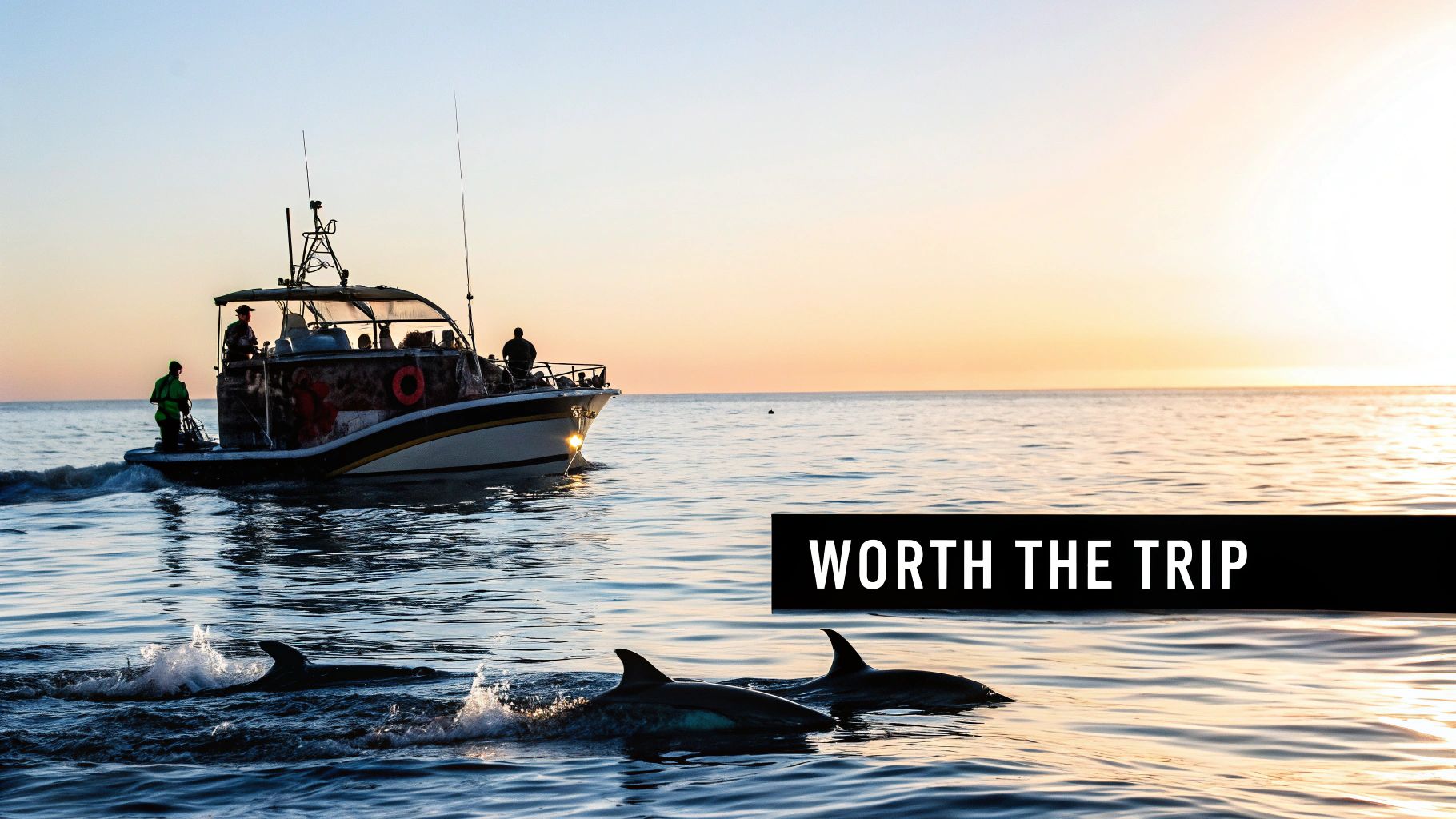
We're not talking about a squint-and-you-might-see-it glimpse from the shore. This is an up-close-and-personal experience where you can watch pods of dolphins leap, hunt, and play right beside your boat in their natural playground.
The secret is out, too. Dolphin watching has become a huge part of the local tourism scene. Over the last decade, the number of tours has jumped by over 50%, with an estimated 100,000 visitors heading out to sea each year. Between May and October, the odds are firmly in your favour, with a reported sighting success rate of 80% to 90%. It’s no wonder the Algarve has cemented its reputation as a premier spot for these kinds of encounters.
To give you a quick overview, here's what you can generally expect.
Algarve Dolphin Watching at a Glance
| Aspect | Details |
|---|---|
| Best Time to Go | May to October for the highest success rates. |
| Common Species | Common Dolphin, Bottlenose Dolphin. |
| Tour Duration | Typically 1.5 to 3 hours. |
| Departure Points | Lagos, Albufeira, Vilamoura, Faro, and more. |
| Sighting Success | 80-90% in peak season. |
| Added Bonus | Often combined with tours of the Benagil Cave and coastline. |
Essentially, you're almost guaranteed a fantastic day out on the water.
More Than Just a Sighting
Unlike a lot of other places, an Algarve tour often throws in some fantastic extras that make the whole day even better. Many operators cleverly blend the search for dolphins with a coastal tour, meaning you also get to:
- Explore Dramatic Sea Caves: Duck into world-famous grottos and sea caves, including the spectacular Benagil Cave.
- Admire the Golden Cliffs: Get a unique, sea-level view of the iconic limestone cliffs that define the Algarve coastline.
- Enjoy a Refreshing Swim: On longer trips, the captain might drop anchor in a quiet, secluded bay for a quick dip in the cool Atlantic.
This mix of wildlife and scenery means that even on the very rare day the dolphins are playing hard to get, your time on the water is still absolutely incredible.
The real value of a dolphin tour here is the complete coastal journey. You head out looking for dolphins, but you come back with memories of hidden beaches, majestic caves, and the raw beauty of the Algarve from the sea.
It’s the perfect way to complement your time exploring the charming towns and sun-soaked beaches on land. After a trip out on the ocean, you’ll have a whole new appreciation for the diverse landscapes that make this region so special. To help you plan the rest of your holiday, be sure to check out our complete guide to the best places to visit in the Algarve.
Finding the Best Times and Places for Your Tour
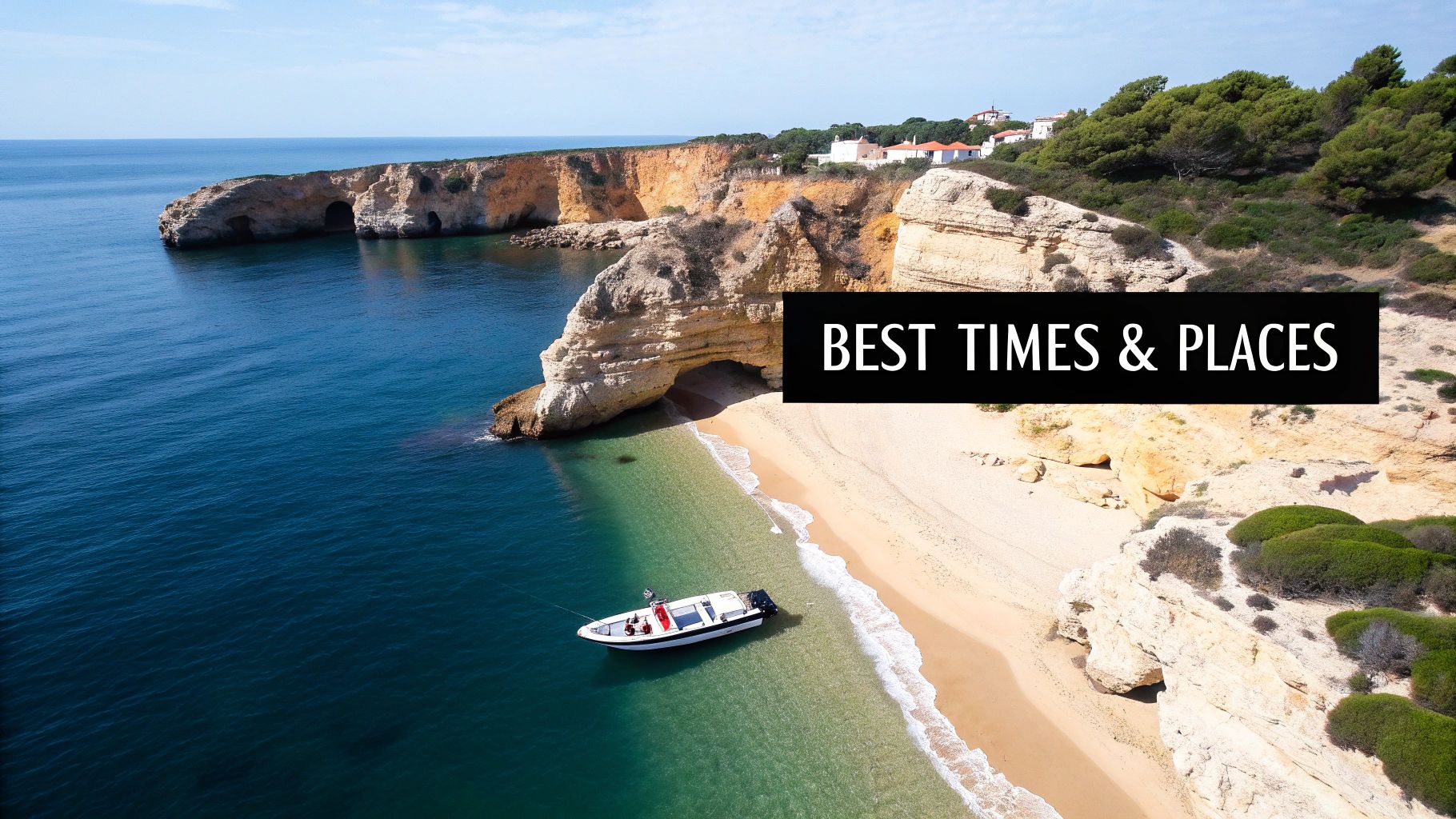
Nailing a fantastic dolphin watching trip really comes down to two simple things: when you go and where you leave from. Getting the timing right is like scoring front-row seats to the best show in town—it just makes the whole experience better. Luckily for us, the Algarve offers a massive window of opportunity for incredible sightings.
The absolute sweet spot for dolphin watching in the Algarve is between May and October. During these warmer months, the Atlantic chills out, the waters are calmer, and conditions become perfect not just for us, but for the dolphins too. This is when their favourite snacks are migrating, drawing huge pods much closer to the coast.
While you can technically spot dolphins all year, booking your trip inside this six-month peak season seriously stacks the odds in your favour. Many tour operators boast sighting success rates of over 90% during this time. Plus, the sunny skies and gentle seas make for a far more comfortable and pleasant day out on the water.
Picking Your Perfect Departure Point
The Algarve coast is peppered with fantastic marinas and harbours, and each one offers a slightly different, but equally brilliant, starting point for your adventure. Think of them as different trailheads leading into the same stunning national park. Your choice will probably come down to where you're staying and what kind of scenery you want to soak up along the way.
Here are the top launchpads for dolphin watching tours in the Algarve:
- Lagos: Famous for its jaw-dropping rock formations like Ponta da Piedade, a tour from Lagos means you get a dolphin quest and a sightseeing trip all in one. It’s a brilliant two-for-one deal.
- Albufeira: As one of the Algarve’s biggest tourist hubs, Albufeira is swimming with tour operators. The competition helps keep prices sharp, and its central spot on the coast gives you quick access to known dolphin hangouts.
- Vilamoura: The chic Vilamoura Marina is another major player for boat trips. Tours from here often head further out into the open ocean, which can sometimes lead to spotting bigger pods or even less common marine species.
- Portimão: Sitting near the Arade River estuary, Portimão is an excellent choice. It offers a great mix of dolphin tours and trips to the world-famous Benagil Cave, often rolling both into one unforgettable excursion.
Choosing a departure point isn't just about logistics; it's about curating your experience. Whether you want the golden cliffs of Lagos or the convenience of Albufeira, each location adds its own unique flavour to your day on the water.
Does Morning vs. Afternoon Really Matter?
One of the most common questions we get is whether it’s better to go out in the morning or the afternoon. The great news? Dolphins are active all day long, so there's no single "magic" hour. You can pretty much base your decision on your own schedule and what else you have planned.
That said, there are a couple of subtle differences. Morning trips often enjoy calmer seas, as the wind can sometimes pick up later in the day. A smoother ride can make it a bit easier to spot those tell-tale dorsal fins slicing through the water.
On the flip side, the afternoon light can be absolutely stunning for photos, casting a warm, golden glow on the cliffs and ocean. In the end, what truly matters isn't the time on your watch, but the crew on your boat. Experienced skippers know the local dolphins' habits inside and out, and they know where to find them, no matter the hour. They are your secret weapon for a successful and memorable dolphin watching Algarve experience.
Meeting the Algarve's Diverse Marine Wildlife
Setting out on a dolphin watching Algarve tour is like cracking open a living field guide to the Atlantic. These waters aren't just a pretty blue backdrop; they're a bustling metropolis of marine life, and the dolphins are its most famous, charismatic residents. Knowing who you might meet out there transforms a simple boat trip into a genuine wildlife expedition.
The stars of the show are, without a doubt, the dolphins. While a few different species cruise through these waters, you're most likely to cross paths with two regulars, each bringing a totally unique energy to their appearances.
The Most Common Performers
First up is the Common Dolphin (Delphinus delphis). Don't let the name fool you—there's absolutely nothing ordinary about them. These are the acrobats of the ocean, often seen launching themselves from the water in breathtaking leaps. They’re a bit smaller and more streamlined than their bottlenose cousins, and you can spot them by the distinct hourglass or crisscross pattern of tan and grey on their sides.
Common dolphins are incredibly social creatures, often travelling in huge groups called super-pods that can number in the hundreds. Witnessing a super-pod move through the water, a coordinated frenzy of energy as they hunt for fish, is something you won't forget.
Then there’s the Bottlenose Dolphin (Tursiops truncatus), the intelligent, powerful character made famous by TV and movies. They are larger, more robust, and usually a uniform grey. Famous for their curiosity, Bottlenose dolphins will often swim right up to the boats, surfing the bow waves and giving you an incredible, up-close view of their powerful bodies and what always looks like a smiling face. They tend to travel in smaller, tight-knit family pods.
Understanding the difference between these two adds a whole new layer to your tour. Spotting the sleek, energetic Common dolphins racing alongside the boat is a different kind of thrill from the calm, inquisitive approach of a larger Bottlenose pod.
The Wider Cetacean Community
The Algarve’s rich marine ecosystem supports an astonishing variety of life. Its position as a biodiverse hotspot means that while you're scanning the horizon for Common and Bottlenose dolphins, you might just get a surprise visit from some other, less frequent cetaceans.
This region is a well-known haven for marine mammals. In fact, an incredible 22 different cetacean species have been recorded in the waters off the Algarve—that's roughly a quarter of all known species on the entire planet. This amazing biodiversity is all down to perfect ocean conditions, like water temperature and an abundance of food.
Keep an eye out for these other potential visitors:
- Risso's Dolphin: You'll know them by their pale, heavily scarred bodies, which get whiter as they age. They're often seen "logging"—just resting motionless at the surface.
- Striped Dolphin: Similar in size to the Common dolphin, but they stand out with striking blue-white stripes running down their sides. They're also known for putting on some impressive aerial shows.
Beyond Dolphins: Whales and Orcas
While dolphins are the main event, the deep offshore waters of the Algarve occasionally play host to even bigger marine mammals. Sightings are much rarer, but the possibility adds an extra layer of excitement to any tour.
The term "cetacean" covers both dolphins and whales, and sometimes the line can get a little blurry. If you're keen to learn more about the larger members of this family, our guide on whale watching in the Algarve takes a deeper dive into what you might encounter.
These bonus sightings can include species like the Pilot Whale, which is actually a large type of oceanic dolphin, or even the apex predator of the sea, the Orca (Killer Whale). An encounter like this is the ultimate prize for any wildlife watcher, turning a fantastic day on the water into a once-in-a-lifetime memory. Nothing is guaranteed, of course, but that thrilling sense of possibility makes every moment out there feel special.
How to Choose the Right Dolphin Watching Tour
Picking the right tour for your dolphin watching Algarve adventure is a bit like choosing the perfect vehicle for a safari. Are you after the rugged, open-top jeep that gets you right into the thick of the action? Or do you prefer a comfortable, air-conditioned bus with panoramic windows? Both will show you the wildlife, but the experience itself will be completely different. The same logic applies out on the water.
Your choice of boat directly shapes your day, influencing everything from how fast you travel to how close you get to the dolphins. The two most popular options are the zippy Rigid Inflatable Boats (RIBs) and the larger, more leisurely catamarans. Let's break down what makes each unique so you can pick the one that perfectly matches your sense of adventure.
The Adrenaline Rush of a RIB
Think of a RIB as the sports car of the sea. These boats are built for one thing: speed. Their agility allows them to cover huge areas of the ocean quickly, meaning if the dolphin pods are playing further offshore, a RIB has a much better chance of reaching them and giving you quality time before heading back.
This speed creates a thrilling, wind-in-your-hair experience. You’re also much closer to the water's surface, which often means a more intimate, eye-level encounter when the dolphins swim by. It’s an exhilarating ride, but it does come with a few trade-offs.
- Pros: You get to sighting locations much faster, groups are smaller, and the perspective is more personal and up-close.
- Cons: The ride can get bumpy, there’s very little shade or protection from sea spray, and they rarely have onboard toilets. This makes them less suitable for very young children, pregnant women, or anyone with back problems.
The Comfort and Stability of a Catamaran
If a RIB is a sports car, a catamaran is the spacious and stable family SUV. These larger vessels are designed for a relaxed, comfortable journey from start to finish. Their dual-hull design makes them exceptionally stable on the water, which is great news if you're worried about seasickness.
Catamarans offer plenty of space to walk around, find a spot in the sun or shade, and enjoy the scenery from a higher vantage point. They almost always come equipped with essential amenities like toilets and a bar for drinks and snacks, making them the go-to choice for families and anyone who puts comfort first. For a more detailed look at all the vessels available, our guide to choosing a boat tour in the Algarve offers even more tips.
The choice between a RIB and a catamaran isn't about which is "better"—it's about what's better for you. One offers an adrenaline-pumping chase, while the other provides a serene, comfortable cruise.
To help you decide, here’s a quick comparison of the most common tour boat types.
Comparing Dolphin Tour Boat Types
| Feature | RIB (Rigid Inflatable Boat) | Catamaran | Private Charter |
|---|---|---|---|
| Best For | Thrill-seekers, couples, small groups | Families, comfort-seekers, large groups | Special occasions, photographers, exclusive groups |
| Experience | Fast, exhilarating, low to the water | Relaxed, stable, spacious | Fully customisable, intimate, flexible |
| Speed | Very high | Moderate | Varies by boat, but schedule is flexible |
| Comfort | Basic, can be bumpy | High, very smooth ride | High, tailored to your preferences |
| Amenities | None (usually no shade or toilets) | Toilets, bar, shade, seating | Bespoke (can include drinks, food, swim stops) |
| Group Size | Small (12-20 people) | Large (40-80+ people) | Private (just your group) |
Ultimately, your choice boils down to what kind of day you envision on the Atlantic.
Considering a Private Charter
For anyone looking for the ultimate personalised experience, a private charter is the top-tier option. Hiring a boat just for your group gives you complete control. You can decide exactly how long to spend watching a pod of dolphins, ask the skipper to explore a hidden stretch of coastline, or drop anchor in a secluded cove for a swim.
This flexibility is perfect for special occasions, photographers who need specific lighting, or families who just want a private, intimate day on the water away from the crowds. While it's the most expensive option, it delivers an unforgettable dolphin watching Algarve experience tailored precisely to what you want.
This infographic gives you a quick visual guide to the marine life you might spot on your tour.
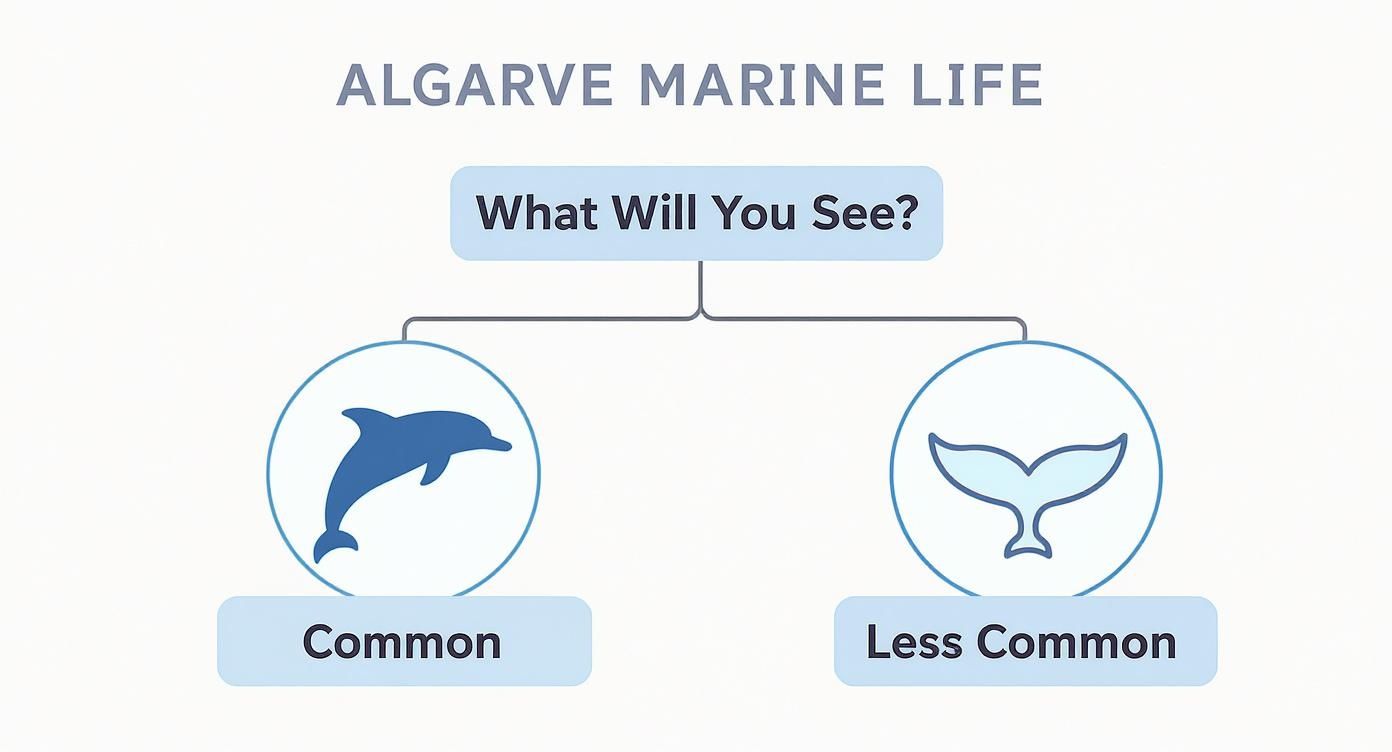
As you can see, dolphins are a very common and reliable sight. Encounters with larger whale species are much rarer, but they add a thrilling possibility to any trip out on the water.
Supporting Ethical and Sustainable Marine Tourism
A truly unforgettable wildlife encounter is one that leaves both you and the animals feeling respected and safe. When you’re choosing a dolphin watching Algarve tour, you’re not just booking a boat trip; you’re casting a vote for the kind of tourism you want to see. By picking an ethical and sustainable operator, you become a guardian of the very ecosystem you’ve come to admire.
Responsible tourism is really the backbone of marine conservation here in the Algarve. The best tour companies operate under a strict code of conduct designed to protect the dolphins and their home. This isn’t just about having good intentions; it's a set of practical, enforceable rules that put animal welfare above everything else.
These operators get it: we are guests in the dolphins' world. That means they will never, ever chase, corner, or feed the animals. Actions like these can cause a huge amount of stress and mess up natural behaviours like hunting and socialising. Instead, they take a patient and respectful approach, letting the dolphins decide if and how they want to interact with the boat.
https://www.youtube.com/embed/XfTDFWNQSnY
How to Spot a Responsible Tour Operator
So, how can you tell a responsible operator from one just trying to make a quick buck? There are a few key things to look for when you're researching and booking your tour. A genuinely ethical company will be totally transparent about its practices and proud to share how it protects local marine life.
Look for operators who specifically mention their commitment to sustainability on their websites or brochures. They often highlight how they follow local and international guidelines for responsible marine wildlife watching.
Here are some tell-tale signs of an ethical tour operator:
- Keeps a Safe Distance: They’ll stay at a respectful distance, usually around 50-100 metres, and approach pods slowly from the side—never head-on.
- Limits Viewing Time: A responsible guide will limit their time with any single pod to around 15-30 minutes to minimise any disturbance before quietly moving on.
- Cuts the Noise: They will slow the engine right down or even switch to neutral when near dolphins, creating a much calmer and less intrusive environment for the animals.
- Has an Expert Onboard: Many of the best tours have a marine biologist on board who gives educational commentary, making your experience richer while ensuring best practices are followed.
The Power of Citizen Science
Choosing an ethical tour does more than just prevent harm; it actively helps with vital conservation work. Many responsible operators in the Algarve team up with marine research organisations, turning every tourist trip into a chance to collect valuable data.
By simply choosing the right boat, you transform from a passive observer into an active contributor to marine science. Your presence helps fund and facilitate research that protects these incredible creatures for generations to come.
This kind of collaboration is a game-changer. The dolphin watching Algarve scene has become one of Portugal’s most important marine ecotourism activities, fuelling a massive surge in scientific monitoring. Data gathered by the Marine Environment Research Association (AIMM) between 2015 and 2023 recorded over 1,000 dolphin sightings, largely thanks to partnerships with local tour boats. This long-term monitoring has even highlighted the Algarve as a potential nursery for young dolphins. You can discover more about these conservation findings on YouTube.
Ultimately, your choice really matters. Supporting ethical operators ensures that your holiday memories don't come at the expense of the local wildlife. It’s a simple decision that has a powerful, positive impact, guaranteeing that the magic of seeing dolphins in the wild can be enjoyed for many years to come.
Practical Tips for Your Algarve Dolphin Tour
Alright, with the big questions answered, let's get into the nitty-gritty details that turn a good day on the water into a great one. A little bit of planning now means you can just kick back and enjoy the show when the dolphins appear. This section covers everything from tour costs to what to chuck in your bag and how to get to the marina without any fuss.
First up, what’s this going to cost? For a standard group dolphin watching Algarve tour on a speedy RIB or a chilled-out catamaran, you’re looking at somewhere between €30 and €50 per adult. Kids usually get a nice discount, so it’s a pretty affordable day out for the family. That price almost always includes the boat trip, a quick safety chat, and a crew who knows these waters like the back of their hand.
What to Pack for Your Day at Sea
Packing light but smart is the name of the game. That Atlantic breeze can be sneakier than you think, and the sun has a real kick to it when you're out on the open water. A small bag with the right stuff makes all the difference.
Here’s a quick checklist to make sure you’re sorted:
- Sun Protection: This is non-negotiable. Slap on some high-SPF sunscreen, and bring a wide-brimmed hat and sunglasses. The Portuguese sun doesn't mess around.
- Camera or Smartphone: You’ll want proof when you spot those fins! Make sure your phone is fully charged, and maybe pop it in a waterproof case, just in case.
- Light Jacket or Windbreaker: Even on a scorching day, it gets surprisingly cool once the boat gets up to speed. A light layer will keep the goosebumps away.
- Sensible Footwear: Stick with trainers or boat shoes with good grip. The deck can get a bit splashy, and you want to stay on your feet.
- Seasickness Remedies: If you’re even a little bit prone to motion sickness, take your remedy before you get on the boat. The sea is usually calm, but it's always better to be safe than sorry.
Getting to Your Departure Point
Most tours set off from the main coastal towns, and getting there is pretty straightforward, especially if you're coming from Faro Airport (FAO). Your best bet really depends on your budget and how you like to travel.
Think of your transport from the airport not just as a transfer, but as the first leg of your adventure. Choosing the right option, like a pre-booked service, removes stress and lets you start your holiday the moment you land.
A rental car gives you total freedom to explore the Algarve on your own schedule. The only catch? Finding a parking spot near a busy marina in high season can be a real headache. Public transport like buses and trains can connect you from Faro to places like Lagos and Albufeira, but they can be slow and don't always drop you right where you need to be.
For a completely hassle-free start, a pre-booked private transfer is a fantastic choice. A service like The Algarve Experience offers door-to-door transport, taking you directly from Faro Airport to your hotel or the marina itself. With fixed prices and drivers who track your flight, it takes all the guesswork out of the journey. You’ll arrive for your dolphin tour relaxed, on time, and ready for an amazing day.
Your Top Questions About Algarve Dolphin Watching, Answered
Even when you're excited and ready to go, a few last-minute questions always seem to pop up. Don't worry, it happens to everyone. Let's tackle the most common queries about dolphin watching in the Algarve so you can book your trip with complete peace of mind.
Is a Dolphin Sighting Guaranteed?
This is the big one, isn't it? The honest, straight-up answer is no. Dolphins are wild, free-roaming animals in their natural home, so any tour operator promising a 100% guarantee isn't playing by the rules of ethical wildlife watching.
But here's the good news: the odds are massively in your favour. During the prime season from May to October, the success rate for spotting dolphins often climbs above 90%. Many companies are so confident that they offer their own "sighting guarantee." This usually means that if you're unlucky and don't see any dolphins, they'll let you join another tour for free or give you a partial refund. Just be sure to check the fine print on their policy before you book.
How Long Are the Tours?
Most dedicated dolphin watching trips are perfectly timed, lasting between 1.5 and 2.5 hours. That's the sweet spot—enough time to motor out from the marina to the areas where dolphins love to hang out, spend a good while watching them, and then cruise back to shore.
If you've booked a combo tour—say, one that also swings by the incredible Benagil Cave or explores other sea grottos—plan for it to be a bit longer. These more packed adventures usually clock in at around three hours, giving you a fantastic mix of wildlife and coastline sightseeing.
What Time of Day Is Best for Spotting Dolphins?
Truthfully, there’s no magic hour. Dolphins are active all day long, so your chances are just as good on a morning trip as they are in the afternoon. The real secret ingredient isn't the time on your watch, but the experience of your crew.
That said, there are small things to consider. Mornings often bring calmer seas, as the wind can sometimes kick up later in the day. A glassy surface can make it a little easier to spot that tell-tale fin breaking the water. But ultimately, a skilled crew knows the local pods' feeding habits and daily routines, and that's what will get you the best views, no matter the time.
The most important variable for a successful tour isn't the time of day, but the knowledge of the skipper. Their connection to the local marine environment is your greatest asset for an unforgettable encounter.
Are the Tours Suitable for Young Children?
Absolutely! Most dolphin watching trips in the Algarve are fantastic for families and create amazing memories for kids. The key is choosing the right boat to make sure everyone is safe and comfortable.
For families with little ones, toddlers, or anyone who needs a bit more stability, a larger catamaran is your best bet. These boats are much steadier, offer more room to move about, and usually have handy facilities like toilets and shaded areas.
The high-speed RIB boats are a massive thrill, but their bumpy, fast-paced ride isn't for everyone. They often have age or health restrictions, so it's vital you double-check the requirements with the tour company before locking in your tickets.
Ready to make your Algarve adventure seamless from the moment you land? For reliable, door-to-door transport from Faro Airport directly to your hotel or marina, trust The Algarve Experience. Book your stress-free airport transfer today!
Related posts