
A Douro wine tour is your ticket into the soul of Portugal's most famous wine region. It’s an immersive journey that blends breathtaking landscapes, historic vineyards, and, of course, tastings of world-class Port and table wines. This is your chance to explore the dramatic, terraced hillsides of a UNESCO World Heritage site while savouring the very flavours that define Portuguese winemaking.
Embarking on Your Douro Valley Wine Adventure
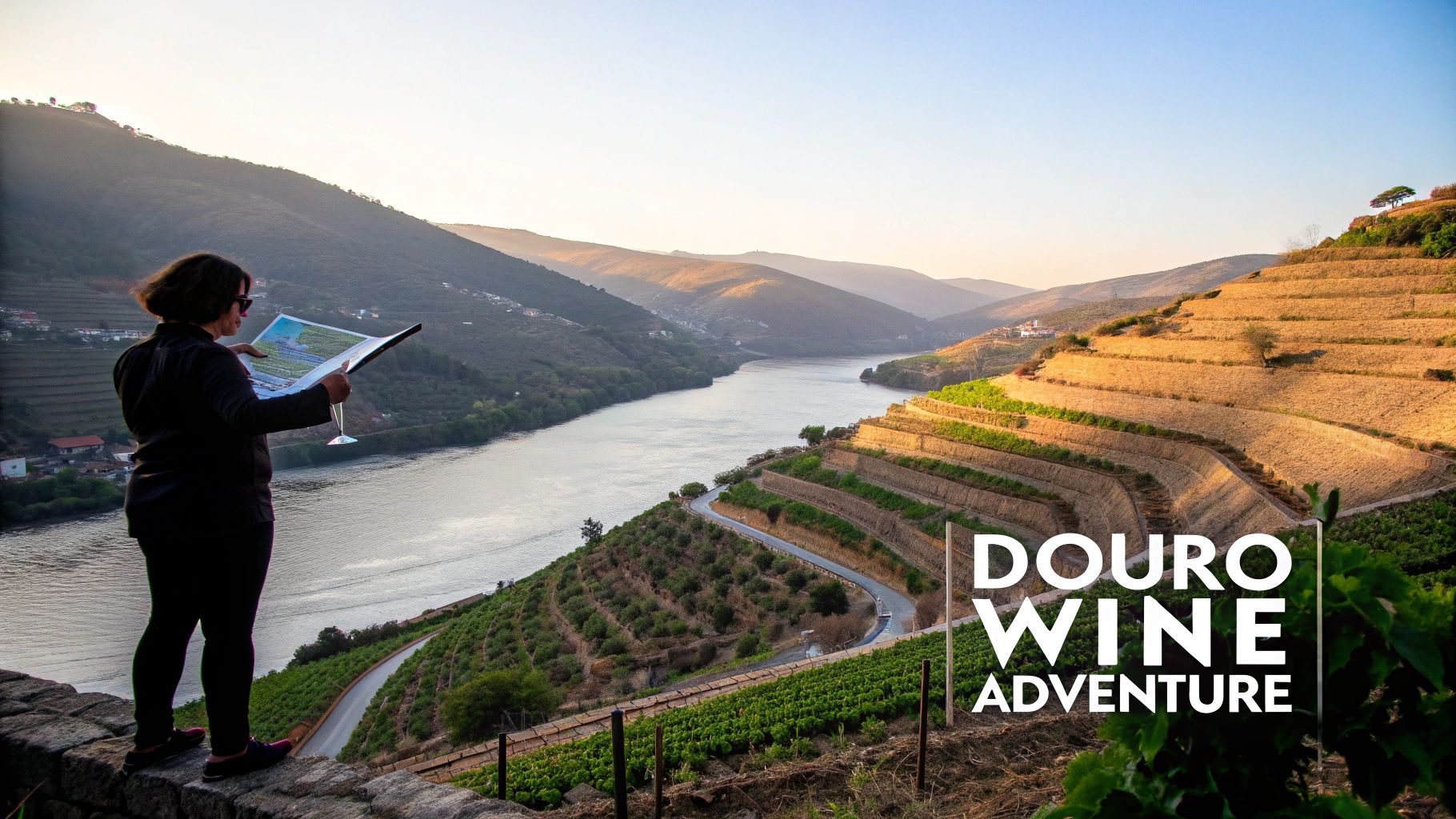
Welcome to the heart of Portuguese wine country. Planning a trip here isn't just about a simple tasting; it's about diving into a living landscape steeped in centuries of tradition. Think of this guide as your personal roadmap to crafting an unforgettable Douro adventure, whether you're a seasoned wine lover or just a curious traveller chasing spectacular views.
We’ll help you navigate the winding roads and terraced vineyards that make this region so magical. You’ll get a clear picture of how to organise your ideal getaway, from deciding between a quick day trip from Porto or a more immersive multi-day stay, right down to picking the perfect transport and wineries, known locally as quintas.
Understanding the Douro's Allure
The Douro Valley isn't just a destination; it's an experience woven from sun, soil, and sheer human grit. Those dramatic, hand-carved terraces lining the river are a testament to generations of labour, creating one of the most stunning wine-growing landscapes on the planet. This is where the story of Port wine begins, a narrative you can literally taste in every glass.
A trip to the Douro offers far more than just wine; it's a sensory journey through a cultural landscape recognised for its outstanding universal value. You're not just visiting vineyards; you're stepping right into history.
The region's unique character is shaped by its three distinct sub-regions: Baixo Corgo, Cima Corgo, and Douro Superior. Each offers a different microclimate and terroir, which directly influences the profile of the wines. Knowing a little about these nuances can help you tailor your tour to your tastes, whether you're chasing bold, structured reds or complex, aged tawny Ports.
More Than Just Port Wine
While Port is the undisputed star of the show, the Douro has also earned serious acclaim for its exceptional unfortified red and white table wines. Many modern quintas now produce world-class DOC (Denominação de Origem Controlada) wines that express the region's unique character in a completely different way. A well-rounded Douro wine tour should absolutely include both.
This is a region that thrives on wine tourism. Picture yourself cruising along the Douro River, completely surrounded by vineyards climbing the steep hillsides—that's the essence of Portugal's Alto Douro Wine Region, a UNESCO World Heritage Site since 2001. Though the region spans about 250,000 hectares, only around 15% is under vine, with 26,000 hectares specifically authorised for Port production. With over 400 estates now welcoming visitors, it's a vibrant scene that caters to every type of wine enthusiast.
This guide gives you the actionable, experience-based advice you need to feel prepared and genuinely excited for your trip. For those flying in, you might find our guide to the best hotels near Porto Airport useful for starting your journey smoothly.
Let's get to it and start planning your perfect Douro Valley getaway.
How to Plan the Perfect Douro Wine Tour Itinerary
First things first: what kind of trip are you dreaming of? Is it a quick, stunning snapshot of the Douro Valley, or a slow, deep dive into its wine, food, and culture? Your answer to this question is the starting point for everything else.
A day trip from Porto is perfect if you're short on time. Think of it as a highlight reel—you'll get a taste of the region's breathtaking beauty, visit a well-known quinta or two, enjoy a scenic lunch, and maybe even squeeze in a quick river cruise. It's efficient, accessible, and gives you a fantastic introduction to what makes the valley so magical.
But if you really want to feel the pulse of the Douro, you need to stay a while. Spending two, three, or more days lets you journey deeper into the Cima Corgo, the heartland of Port production where the most famous estates are tucked away. You'll have time to wander through charming villages like Pinhão, discover tiny family-run quintas that aren't on the main tourist trail, and truly soak it all in.
Build a Tour Around What You Love
The best itineraries aren't one-size-fits-all; they're built around your passions. The Douro Valley is a massive place with something for everyone, so think about what gets you excited.
Are you a die-hard Port fanatic on a mission to taste the rarest vintages? Or maybe you're more interested in the crisp, modern Douro table wines. Perhaps you're a foodie who wants to take a cooking class, or an adventurer who dreams of hiking through the terraced vineyards.
Your interests will guide your choices. A foodie, for instance, should look for a quinta with a renowned restaurant or a hands-on cooking workshop. An outdoor lover will want an estate with marked trails winding through the vines. Nailing down your priorities is the key to creating a focused and unforgettable trip.
Sample Itinerary: The Classic Port Lover's Day Trip
For anyone whose main goal is to dive headfirst into the world of Port wine, this day trip is a whirlwind tour of history, flavour, and iconic views.
- Morning (9:00 AM): Leave Porto behind and drive straight into the Cima Corgo. Your first stop is a legendary Port house like Quinta do Bomfim or Quinta da Roêda. You'll get a proper tour of the cellars and the lagares (the old granite treading tanks), followed by a structured tasting of their classic ruby, tawny, and vintage Ports.
- Lunch (1:00 PM): Time for a traditional Portuguese lunch at a restaurant in Pinhão, preferably one with a terrace overlooking the Douro River. The views are just as important as the food.
- Afternoon (3:00 PM): See the valley from a different angle with a one-hour Rabelo boat cruise from Pinhão. It gives you a whole new appreciation for the scale of the terraced vineyards climbing the hillsides.
- Late Afternoon (4:30 PM): Before heading back, visit a second, contrasting quinta. Maybe a smaller producer known for incredible aged tawnies, so you can compare their style to the bigger house you visited in the morning.
Sample Itinerary: A Three-Day Wine and Food Immersion
This is for travellers who want to slow down and truly savour the region’s flavours, culture, and relaxed pace of life.
By staying longer, you stop being just a tourist. You start to feel the rhythm of the Douro. You have time for spontaneous discoveries, real conversations with winemakers, and quiet moments just staring out at the valley.
Day 1: Arrival and Settling In
Your adventure starts with a scenic drive deep into the valley. Check into your accommodation—maybe a chic wine hotel or a rustic guesthouse—and just take the afternoon to unwind. Your first tasting is at a quinta celebrated for its excellent Douro DOC table wines, perfectly paired with local cheeses and cured meats to whet your appetite.
Day 2: The Foodie's Adventure
Today is all about gastronomy. Start your morning with a trip to a local market to see the incredible fresh produce the region has to offer. In the afternoon, it's time for a hands-on cooking class at a place like Quinta de La Rosa, where you’ll learn to make classic Douro dishes. The best part? You'll get to enjoy the incredible meal you helped create, paired with the estate's own wines.
Day 3: Hiking, Views, and a Farewell Toast
On your last day, it’s time to connect with the land itself. Join a guided hike through the vineyards, learning about the unique schist soils and the tough grape varietals that thrive here. Your final tasting is at a high-altitude quinta, offering jaw-dropping views and one last, memorable toast to your Douro wine tour.
Navigating the Douro Valley With Ease
Figuring out how to get around the Douro's spectacular yet demanding landscape is a massive part of planning your perfect Douro wine tour. Let's be honest, the journey itself is a huge part of the experience, and each way you travel offers a completely different vibe. Your choice here really shapes your day, dictating your itinerary, how flexible you can be, and ultimately, how much you can just relax and soak it all in.
You've got options ranging from total freedom to ultimate convenience. Let's break down what each one really feels like on the ground, so you can pick the one that fits your travel style.
Driving Yourself Through the Valley
Renting a car and hitting the road gives you absolute freedom. You can set your own pace, stay a little longer at a quinta you've completely fallen for, or pull over for a spontaneous photo op at a breathtaking viewpoint (miradouro) you spot along the way. That kind of flexibility is priceless, especially if you want to discover the smaller, family-run wineries that are often way off the beaten path.
But—and it's a big but—this freedom comes with a few challenges. The roads in the Douro are famously narrow, incredibly steep, and full of hairpin turns. You need to be a confident driver to tackle these routes, particularly when you meet a giant tour bus on a blind corner. Plus, a self-drive tour means someone has to be the designated driver, which is a bit of a downer when the whole point is tasting amazing wine.
If you go this route, plan your journey carefully. For a deeper dive into what to expect, check out our guide on the ins and outs of driving on holiday in Porto.
The Scenic Train Journey
For many, the train ride from Porto's beautiful São Bento station along the Douro Line is a highlight in itself. This historic railway practically hugs the riverbank, giving you some of the most stunning, uninterrupted views of the terraced vineyards—sights you just can't get from the road. It’s a genuinely relaxing way to travel, letting everyone in your group just sit back and absorb the scenery.
The main stations in the valley's heart, like Pinhão and Tua, drop you within walking distance of several famous quintas and the riverfront. It's a fantastic option for a car-free day trip focused on a couple of key spots.
The catch? The train's reach is limited. Many of the most charming and exclusive wineries are tucked away high up in the hills, miles from the nearest station. Sticking only to the train might restrict you to the bigger, more accessible estates and could mean trying to find a local taxi to go further, which can be tricky.
The Ultimate Convenience of Private Transfers
For a truly seamless and utterly stress-free Douro wine tour, booking a private driver is a total game-changer. Just imagine being picked up from your hotel in Porto, cruising in a comfortable, air-conditioned vehicle, and being effortlessly chauffeured from one tasting to the next. No worrying about maps, parking, or who has to skip that glass of vintage Port.
This is the perfect choice for:
- Groups or Families: It keeps everyone together and makes logistics simple.
- Serious Wine Lovers: Everyone gets to fully indulge in the tastings.
- First-Time Visitors: You can just enjoy the views while an experienced local handles the tricky roads.
- A Touch of Luxury: It provides a premium, comfortable, and totally personalised experience.
While it's the pricier option upfront, the value it delivers in convenience, safety, and pure enjoyment often makes it well worth the cost. It turns the journey from a logistical puzzle into a pampered part of the adventure.
To help you decide, here’s a quick comparison of your options.
Douro Valley Transport Options Compared
| Transport Method | Pros | Cons | Best For |
|---|---|---|---|
| Self-Drive | Maximum flexibility, freedom to explore off-the-beaten-path locations, control over your schedule. | Challenging, narrow, winding roads; requires a designated driver who can't fully participate in tastings; parking can be limited. | Confident drivers, adventurous travellers, and those wanting to discover smaller, hidden quintas. |
| Train | Incredibly scenic river views, relaxing and stress-free journey, direct access to key towns like Pinhão. | Limited reach to wineries far from stations, less flexibility, may require additional taxis. | Day-trippers, budget-conscious travellers, and those who want to soak in the landscape without driving. |
| Private Transfer | Utterly convenient door-to-door service, everyone can enjoy tastings, local driver knowledge, ultimate comfort and safety. | The most expensive option, less spontaneity as the itinerary is often pre-planned. | Groups, serious wine enthusiasts, luxury travellers, and anyone wanting a completely hassle-free day. |
Ultimately, weighing the pros and cons will point you to the right choice for your trip.
This quick decision guide can help you see which path might be best for your trip's length and style.
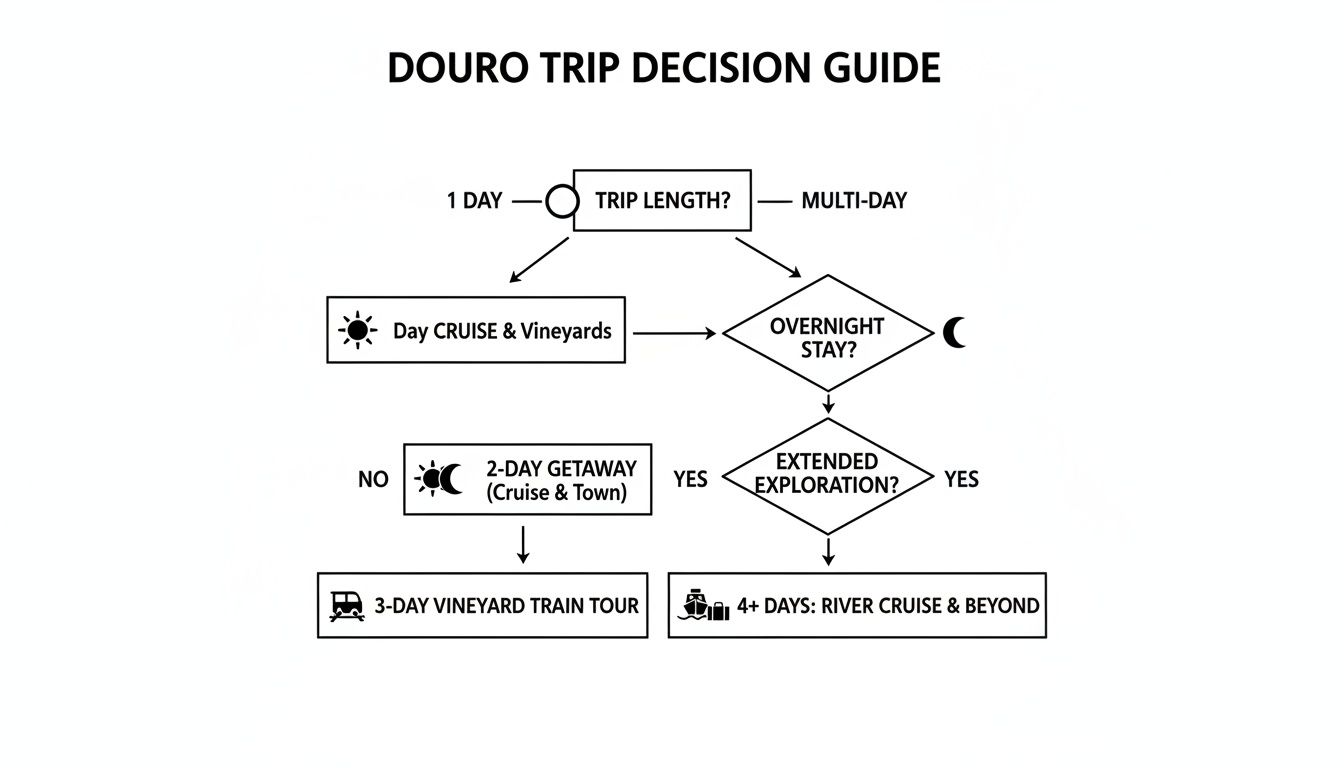
As you can see, multi-day trips often benefit more from the flexibility of a car or the complete ease of a private driver, while a day trip can be perfectly suited to the train.
Your choice of transport is about more than just getting from A to B. It’s about defining the entire pace and character of your tour. Do you want an adventure of discovery, a romantic scenic journey, or an effortless day of indulgence?
Think about your priorities. Weigh the freedom of driving against its responsibilities, the beauty of the train against its limitations, and the cost of a private driver against its unmatched convenience. Your perfect tour is waiting.
Choosing the Right Quintas for Your Wine Tastings
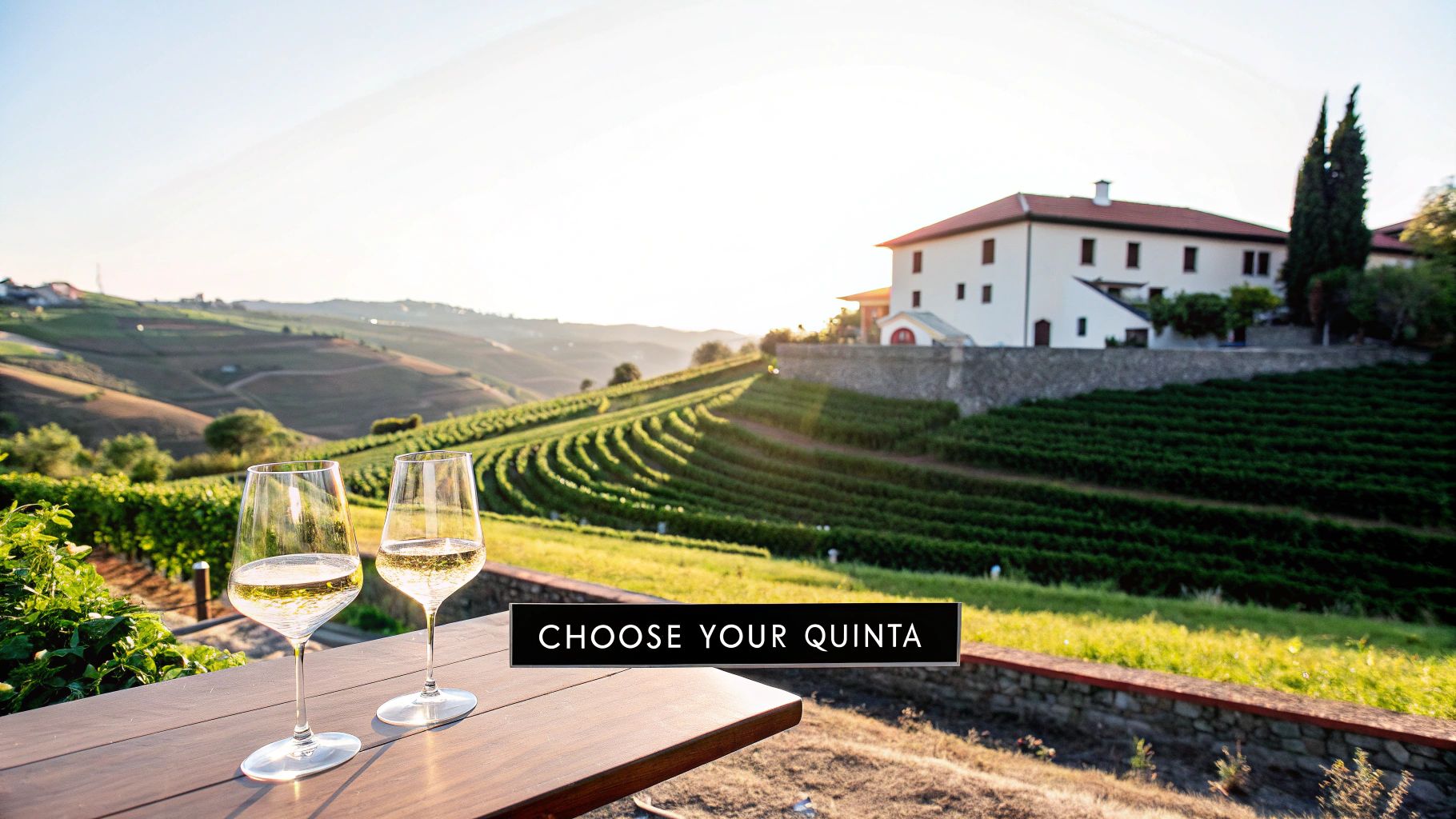
With over 200 wineries—known here as quintas—sprinkled across the valley, picking where to stop for a tasting can feel like the biggest decision of your trip. But here’s the secret: there’s no single “best” quinta, only the best ones for you. Your perfect Douro wine tour depends entirely on what you're after. Are you looking for a deep dive into Port history, an intimate chat with a winemaker, or just a jaw-dropping view with a glass in hand?
The key is figuring out the personality of each estate. Some are grand, historic Port houses with slick, well-oiled tours. Others are tiny, family-run operations where your tasting might happen on the family’s own terrace. Both offer incredible, yet worlds-apart, experiences.
The Iconic Port Houses: Grand Tours and Deep History
For a classic introduction to the Douro, visiting one of the iconic, long-established Port producers is a must. These are the names you’ll recognise from the bottle shop back home—brands like Taylor’s, Graham’s, or Sandeman. Their tours are polished, informative, and absolutely perfect for first-timers wanting to get the lay of the land.
These larger estates often feature:
- Structured, guided tours: You’ll get to see the vast ageing cellars, learn the difference between a tawny and a ruby Port, and walk away with a solid foundation in winemaking.
- Impressive facilities: Many have their own museums, beautiful tasting rooms, and restaurants with panoramic views that are worth the visit alone.
- Accessibility: They are generally easier to reach and have more frequent tour times, making them a breeze to schedule into a packed day.
A visit to somewhere like Graham’s Lodge, for instance, doesn't just give you a fantastic tour—it also offers one of the most spectacular views over Porto and the Douro River. It’s a quintessential experience that beautifully combines education with stunning scenery.
Small Family-Run Wineries: Intimate and Authentic Encounters
On the other end of the spectrum, you have the small, independent quintas, many of which have been run by the same families for generations. A visit here is less of a formal tour and more like a personal invitation into their world. You’re likely to be guided by the owner or winemaker themselves, giving you a chance to hear their stories and ask all the questions you wouldn't get to on a larger tour.
Visiting a small-scale producer offers a direct line to the human side of Douro winemaking. It's where you'll find the passion projects, the experimental batches, and the true heart of the region's resilient spirit.
This is where you'll often discover some of the most exciting Douro DOC table wines alongside exceptional Ports. These producers are the backbone of the region's agricultural fabric. The entire Douro wine tour experience is deeply connected to its small-scale farmers, whose numbers fell from 38,695 in 2010 to just 19,633 by 2020—a dramatic 49% drop. Today, an incredible 61% of these farmers manage less than one hectare, tending their vines part-time. Visiting these estates directly supports a living story of resilience and tradition; you can find more insights on the Douro’s agricultural landscape at JancisRobinson.com.
Beyond the Tasting Room: Experiences That Wow
Many quintas now offer much more than just a standard swirl-and-sip, turning a simple visit into a full-blown experience. This is a fantastic way to immerse yourself in the local culture and create memories that stick. Look for estates that offer unique activities that match your interests.
- For the Foodie: Quintas like Quinta de La Rosa offer incredible dining experiences right on the river. Some even provide hands-on cooking classes where you can learn to prepare traditional Douro cuisine.
- For the Scenery Seeker: Quinta do Crasto is world-famous for its stunning infinity pool, which seems to drop right into the Douro River below. While the pool is for guests, the views from the tasting area are just as breathtaking.
- For the Adventurous: Want to get your hands dirty? Some estates offer a "winemaker for a day" experience. Or, if you’re here during the September harvest, you might even find a place that lets you join in the traditional foot-treading of grapes in stone lagares.
- For the Romantic: Quinta da Pacheca has taken wine country accommodation to a whole new level with its novelty hotel rooms built inside giant wine barrels. It’s a quirky and unforgettable overnight stay. These venues are so stunning, they are often chosen as exclusive sites for celebrations. You can explore more about how the region's beauty lends itself to special events by reading about dream wedding venues in Portugal.
Honestly, the perfect itinerary often includes a mix. Start your day with an educational tour at a grand Port house, enjoy a leisurely lunch and tasting at a smaller family estate, and maybe end with a unique experience like a vineyard picnic. This approach gives you a well-rounded and deeply satisfying taste of the incredible diversity the Douro Valley has to offer.
Insider Tips for a Flawless Douro Wine Tour
Knowing the big picture is one thing, but it’s the little details that separate a good Douro wine tour from a truly great one. Getting these small things right is the key to turning a potentially stressful day into a smooth, unforgettable memory. From timing your visit to knowing what to wear, these are the insider tips that make all the difference.
My single most important piece of advice? Book everything well in advance. This isn't a region where you can just show up and expect to find a spot on a tour, especially at the famous quintas during peak season. Many of these wineries are small, family-run operations with limited staff, and their tours often sell out weeks, if not months, ahead of time. The same goes for your transport and accommodation.
Spontaneity has its place, but in the Douro, a bit of planning ensures you won't be met with the disappointment of a fully booked estate or a long wait for a taxi.
When Is the Best Time to Visit?
The Douro Valley is breathtaking year-round, but each season paints the landscape in a completely different light. The best time for you really depends on the kind of experience you're after.
- Spring (April-June): The hillsides come alive in a vibrant, lush green. The weather is perfectly warm for vineyard strolls and long outdoor lunches without the intense summer heat. It's just beautiful and comfortable.
- Summer (July-August): If you're chasing the sun, this is your season. Expect hot, dry weather perfect for soaking up the rays. Just be prepared for it to be peak tourist season, which means bigger crowds and higher prices.
- Harvest (September-October): This is, without a doubt, the most exciting time to be here. The air is electric with the buzz of the vindima (the grape harvest). You can see the vineyards in full swing, and some quintas even offer incredible hands-on experiences like traditional foot-treading in the lagares.
- Autumn & Winter (November-March): With the crowds gone, a quiet, serene beauty settles over the valley. The landscape transforms into a stunning tapestry of red and gold, and the cooler weather is perfect for cosying up by a fire with a glass of exceptional vintage Port.
The Douro Valley is a powerhouse, producing 20% of Portugal's wine. It’s now a fascinating split between its legendary Port and a huge surge in table wines, which make up about 45% of what's made here. This shift has really exploded in the last 10-15 years, thanks to modern winemaking. The Alto Douro’s 108,000 acres of vines make it the world's largest mountainous fine-wine region, with 40% of its slopes exceeding a dizzying 40% incline. This demands the kind of artisanal, hands-on work you'll get to see up close. You can learn more about this unique landscape on TimAtkin.com.
What to Pack for Your Douro Adventure
Packing for the Douro is all about being practical and comfortable. You’re dealing with rugged terrain and temperatures that can swing dramatically between morning and afternoon, especially in spring and autumn.
Here’s what should absolutely be in your suitcase:
- Sturdy, comfortable shoes: I can't stress this enough. You'll be walking on uneven cobblestones, steep vineyard paths, and cool, sometimes slick, cellar floors. Leave the heels at home and bring good trainers, walking shoes, or sturdy flats.
- Layers are your best friend: A light jacket, cardigan, or scarf is essential. Even on a scorching hot day, the stone wine cellars can feel surprisingly chilly.
- Sun protection: The Douro sun is no joke. A hat, sunglasses, and high-SPF suncream are non-negotiable from spring right through autumn.
- A reusable water bottle: It’s so important to stay hydrated, especially when you’re tasting wine all day in a warm climate.
Mastering Wine Tasting Etiquette
First off, don't be intimidated by the tasting process! It's supposed to be fun and a chance to learn something new. A few simple pointers will have you feeling like a seasoned pro and help you get the most out of every glass.
Always hold your glass by the stem. This isn't just for looks; it stops your hand from warming up the wine, which can change its flavour and aroma.
When the wine is poured, just remember the simple "swirl, sniff, sip" method.
- Gently swirl the wine in your glass to open up its aromas.
- Then, put your nose right over the rim and take a good sniff.
- Finally, take a small sip and let it coat your mouth to pick out all the different flavours.
And please, ask questions! The guides are passionate about what they do and are there to share their knowledge. Most importantly, remember you don't have to finish every single glass. It's perfectly normal and expected to use the spittoon, especially if you're visiting multiple quintas in one day. It lets you taste everything without overdoing it.
Your Top Questions About Planning a Douro Wine Tour Answered
Even the best-laid plans can leave you with a few lingering questions. When you're organising a trip as special as a Douro wine tour, you want every detail ironed out. Here, I'll tackle some of the most common queries we get from travellers, giving you the straightforward, practical answers you need to feel completely ready for your adventure.
Let’s get into the details that truly make a difference.
How Many Days Do I Really Need for a Douro Valley Tour?
While you can certainly get a fantastic taste of the region on a day trip from Porto, the real magic happens when you slow down. We find that two to three days is the sweet spot for an experience you'll never forget. This more relaxed pace means you can visit a few different quintas without feeling like you're on a tight schedule, explore a postcard-perfect village like Pinhão, and maybe even take a lazy boat trip on the river.
A three-day trip, in particular, lets you push deeper into the prestigious Cima Corgo sub-region, which is home to some of the most legendary vineyards. It also gives you the chance to discover smaller, family-run wineries that are a bit further off the main tourist path.
What Does a Typical Wine Tasting Cost in the Douro?
The cost of a tasting can vary quite a bit, so it helps to have a rough budget in mind. It really all depends on the kind of experience you're after.
- Standard Tastings: At most of the larger, well-known quintas, you can expect to pay around €15-€25 per person. This usually includes a guided tour of the property and a tasting of a few of their classic wines.
- Premium Experiences: If you're looking for something more exclusive, private tours at boutique estates can range from €40 to over €100. These often feature premium vintages, older tawny Ports, and delicious food pairings with local cheeses and cured meats.
It’s always a good idea to check the winery’s website and book your spot in advance, as prices and what's on offer can change with the seasons.
Planning a trip often brings up small, practical questions. For instance, you might be sorting through your travel money and wonder what to do with a former Portuguese coin you've found. Getting these little details sorted can make your journey smoother.
Do I Need to Speak Portuguese to Visit the Wineries?
Not at all! While a friendly 'olá' (hello) is always a nice touch and appreciated by the locals, you absolutely do not need to be a fluent Portuguese speaker to have a brilliant time.
Nearly all the quintas that are set up for visitors offer their tours and tastings in English. This is especially true for the more famous estates that welcome travellers from all over the world. If you have your heart set on visiting a very small, family-run producer, it’s probably wise to confirm which languages are spoken when you book, just to be on the safe side.
Can I Buy Wine at the Quintas and Ship It Home?
Yes, and honestly, this is one of the best parts of the trip! There’s nothing quite like bringing home a special bottle (or a whole case) that you simply can't find anywhere else. Most quintas have a shop or "cellar door" where you can buy their full range of wines.
Many of the larger estates offer international shipping and will handle all the logistics for you, making sure your wine gets to your doorstep safe and sound. If you fall in love with a wine at a smaller producer who doesn't offer this service, don't worry—there are several specialised wine shipping companies based in Porto or Peso da Régua that can help you out.
For a completely stress-free journey where you can focus solely on the scenery and the wine, consider a private transfer. The Algarve Experience offers comfortable, reliable, door-to-door transport, allowing everyone in your group to relax and fully indulge in the tastings. Learn more about our tailored transfer services.
Related posts