
You're standing at Terreiro do Paço with a tram crowd behind you, a long list of Lisbon landmarks ahead, and a boat preparing to leave the quay. The question is simple: is this Lisbon river cruise worth taking, or will you see more from a tram, a miradouro, or a walk through Belém?
My answer is straightforward. A short Tagus cruise is worth the money when you want an easy waterfront orientation, wide views of the bridge and riverfront, or a relaxed break from Lisbon's hills. It isn't the best choice for every traveller, especially if you have only a day, dislike boats, or want close-up access to monuments. This guide treats the cruise as both a transport decision and a sightseeing product, so you can choose the right boat, understand the timings, and book without wasting part of your day.
Lisbon's cruise scene also fits into wider Portugal planning. Some visitors arrive or leave through the Algarve, where Faro Airport transfers connect the coast with Albufeira and other destinations. By the end, you'll know which Tagus experience suits your itinerary, what the advertised durations mean, what to check before boarding, and when a private onward transfer makes more sense than another taxi queue.
What a Lisbon River Cruise Actually Is
You're at the quay, but “river cruise” can mean several very different products. Lisbon's short Tagus boats are local sightseeing experiences. They usually return to the same central waterfront rather than transporting you between cities, and they should be planned separately from a walking tour, tram ride, or hop-on hop-off bus.
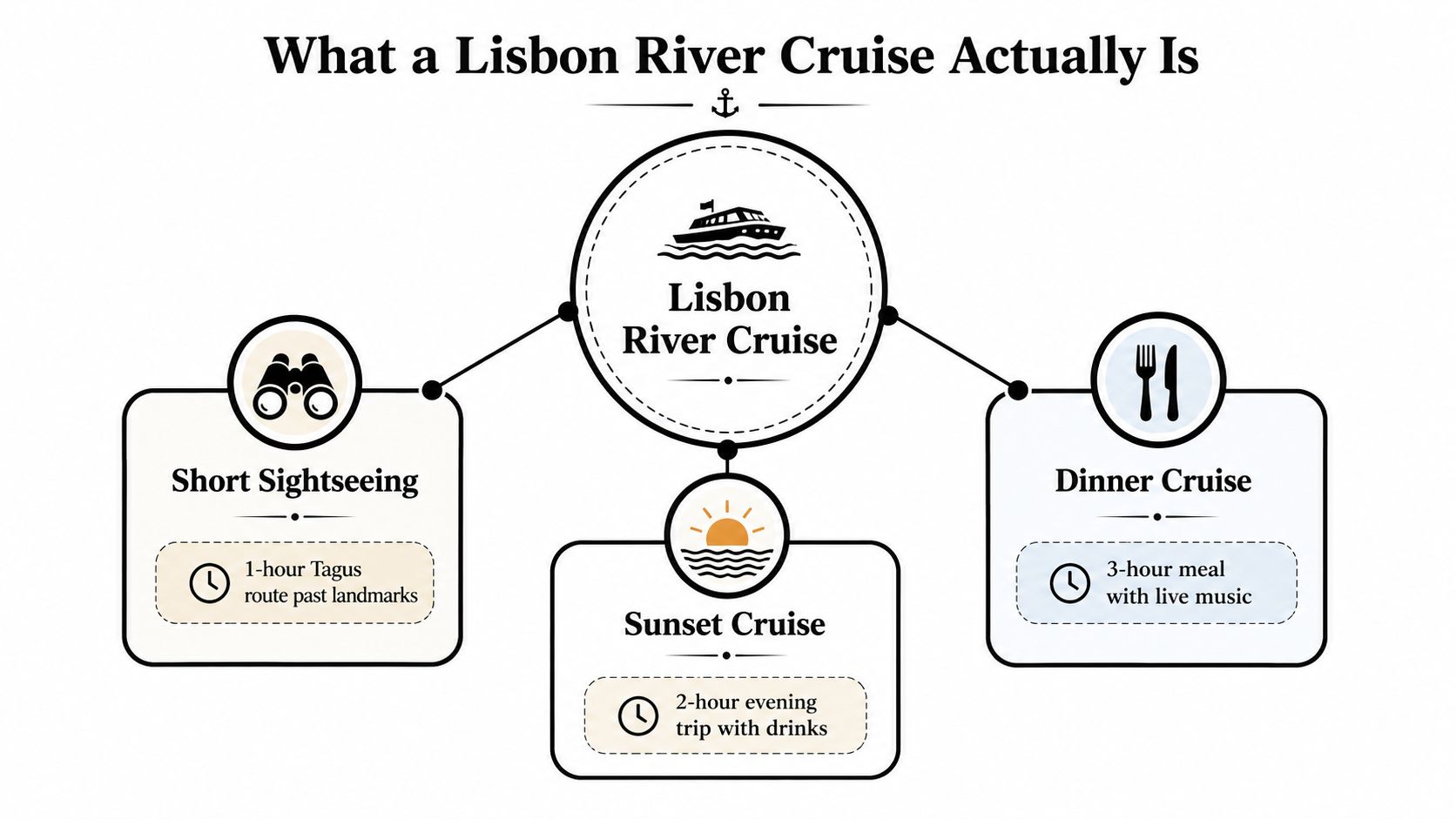
The three formats travellers usually compare
Short daytime sightseeing cruises follow a fixed loop along the central Tagus waterfront. Visit Lisboa listings include tours lasting 45 minutes and 2 hours, while FRS Portugal advertises a scenic 1 hour and 40 minute cruise on the river (Visit Portugal's Lisbon cruise listing). These trips are best for first-time visitors who want the broad shape of Lisbon from the water without giving up an entire afternoon.
Sunset and dinner cruises turn the same waterfront into an evening activity. The boat becomes the setting, not just a moving viewpoint, with drinks, food, music, or reserved seating depending on the operator. Couples often prefer sunset departures because the light softens the city and the river feels less like a transport corridor.
Multi-day Portugal river cruises are a different category. Longer itineraries may begin or end in Lisbon while continuing towards Porto or the Douro, with pre-cruise accommodation and organised excursions. They're premium holiday products, not an extended version of a Terreiro do Paço sightseeing loop.
The Tagus gives Lisbon its maritime face. It's about 1,100 kilometres long, making it one of the longest rivers in the Iberian Peninsula and the largest within Portuguese territory, before reaching the Atlantic at Lisbon (Visit Lisboa's Tagus route guide). Traditional Tagus boats declined sharply after the 25 de Abril Bridge opened in 1966, and only about 75 of the thousands originally built were reported to have survived, which helps explain why restored boats are sold as heritage experiences rather than simple transport.
My rule: If you want orientation and open views, take the short cruise. If you want a meal or a date-night setting, book the evening product. If you want Porto, the Douro, and organised excursions, search for a multi-day itinerary instead.
The Tagus Route and What You See On Board
A useful Lisbon river cruise starts in the centre, usually near Terreiro do Paço or another central quay, then heads west towards Belém. The boat gives you distance from the tightly packed streets, but it won't replace a visit to the monuments themselves.
From the central quay towards Belém
At departure, look back towards the Praça do Comércio and the lower slopes of Alfama. From the river, Lisbon's hills form a layered backdrop rather than a maze of streets. This is the strongest part of the trip for understanding the city's relationship with the waterfront.
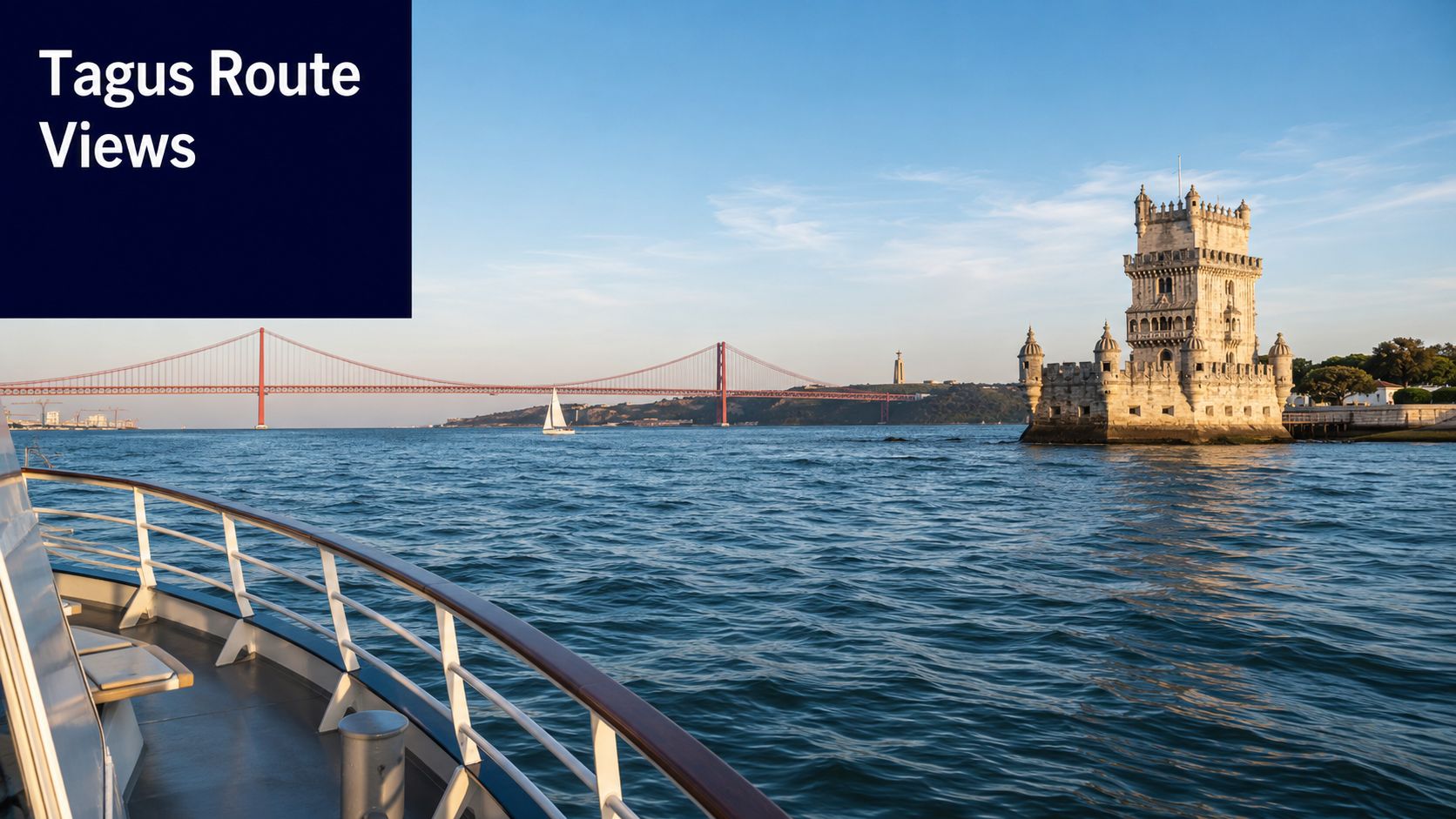
As the boat moves west, the view opens. You may see the Cristo Rei statue across the river, the industrial and cultural waterfront around MAAT, and the outline of Belém Tower. The 25 de Abril Bridge dominates the route, with traffic and trains crossing above while the boat moves underneath or nearby.
Why the route works better as sightseeing than transport
The central-to-Belém stretch gives a short cruise enough visual variety. You get the historic centre, the bridge, both riverbanks, cultural architecture, and the maritime edge of Lisbon without spending hours travelling through less relevant sections of the estuary.
Sightlines change with the light. Daytime departures make architectural details easier to pick out, while late-afternoon trips add warmer colour to the waterfront. On a sunset boat, the bridge and western skyline become silhouettes, so bring a camera for atmosphere rather than expecting crisp detail in every photograph.
The river also exposes Lisbon's working scale. A Portuguese transport-sector presentation about the Port of Lisbon reports about 30 million passengers and more than 40,000 vehicles moving between the riverbanks each year, supported by 9 terminals and 33 large-capacity passenger and ferry vessels (Port of Lisbon transport presentation). That activity can affect boarding points, quay access, and how quickly passengers move on and off sightseeing boats.
Don't expect the cruise to stop at every landmark. It's a slow-moving orientation ride, ideal for seeing how Lisbon fits together from the water. Visit Belém Tower, MAAT, the Jerónimos area, or the bridge viewpoints on land when you want detail.
Cruise Formats Compared From Sightseeing to Multi-Day
The right format depends on what you want from the boat. A traveller with limited time shouldn't buy a dinner cruise just because it sounds more memorable, and a serious river-cruise customer shouldn't mistake a short Tagus loop for a Douro itinerary.
| Format | Typical Duration | Price Range | Best For | Departure Point |
|---|---|---|---|---|
| Daytime sightseeing loop | 45 minutes to 2 hours | From about €18.95 | First-time visitors, families, limited schedules | Terreiro do Paço or central quays |
| Scenic FRS Portugal cruise | 1 hour 40 minutes | Varies by operator and date | Travellers wanting a longer landmark route | Central Tagus departure point |
| Sunset cruise | Around 2 hours | Higher than basic daytime products | Couples, photographers, relaxed evenings | Central waterfront quays |
| Dinner cruise | Around 3 hours | Higher, depending on meal and entertainment | Celebrations, dinners, visitors wanting an evening programme | Central waterfront or designated dinner quay |
| Multi-day Portugal itinerary | Several days | Premium, itinerary-dependent | Travellers combining Lisbon with Porto or the Douro | Lisbon or another scheduled port |
The short daytime product is the sensible default for most visitors. It gives you the river perspective without locking your evening into a fixed meal or entertainment schedule. FRS Portugal's advertised 1 hour and 40 minute scenic option sits between the quick loop and a full evening programme, making it a useful compromise (FRS Portugal route information via Visit Portugal).
A sunset cruise suits couples and travellers who've already spent the day on foot. Dinner cruises work better for people who value the onboard atmosphere as much as the view. If you're comparing evening boat experiences in other destinations, this guide to top sunset cruises in San Diego offers useful context on how sunset products are usually positioned.
Multi-day Lisbon-to-Porto products demand a separate budget and schedule. Current listings show limited-season 2026 departure dates and pre-cruise Lisbon stays, so treat them as a structured holiday rather than a casual city activity (2026 Lisbon river-cruise listings).
Prices, Durations and What Is Included
Short Tagus cruises are becoming easier to compare because operators publish frequent departures and clear time slots. Current Lisbon listings show prices starting from about €18.95, while FRS Portugal promotes multiple daily round trips and a special sunset cruise (Euronews report on Lisbon's river-cruise market).
What the basic fare normally buys
A daytime ticket generally covers the boat ride and the route. Commentary may be included, but don't assume that a guide, welcome drink, reserved seat, or food is part of the lowest advertised price. Check the booking page before paying, particularly when two operators advertise similar durations from nearby quays.
The price rises when the boat operates as an evening venue. Sunset products may include a drink, while dinner cruises can add a set meal, table service, music, or a more formal boarding process. The fare reflects what happens on board, not just the number of minutes spent on the water.
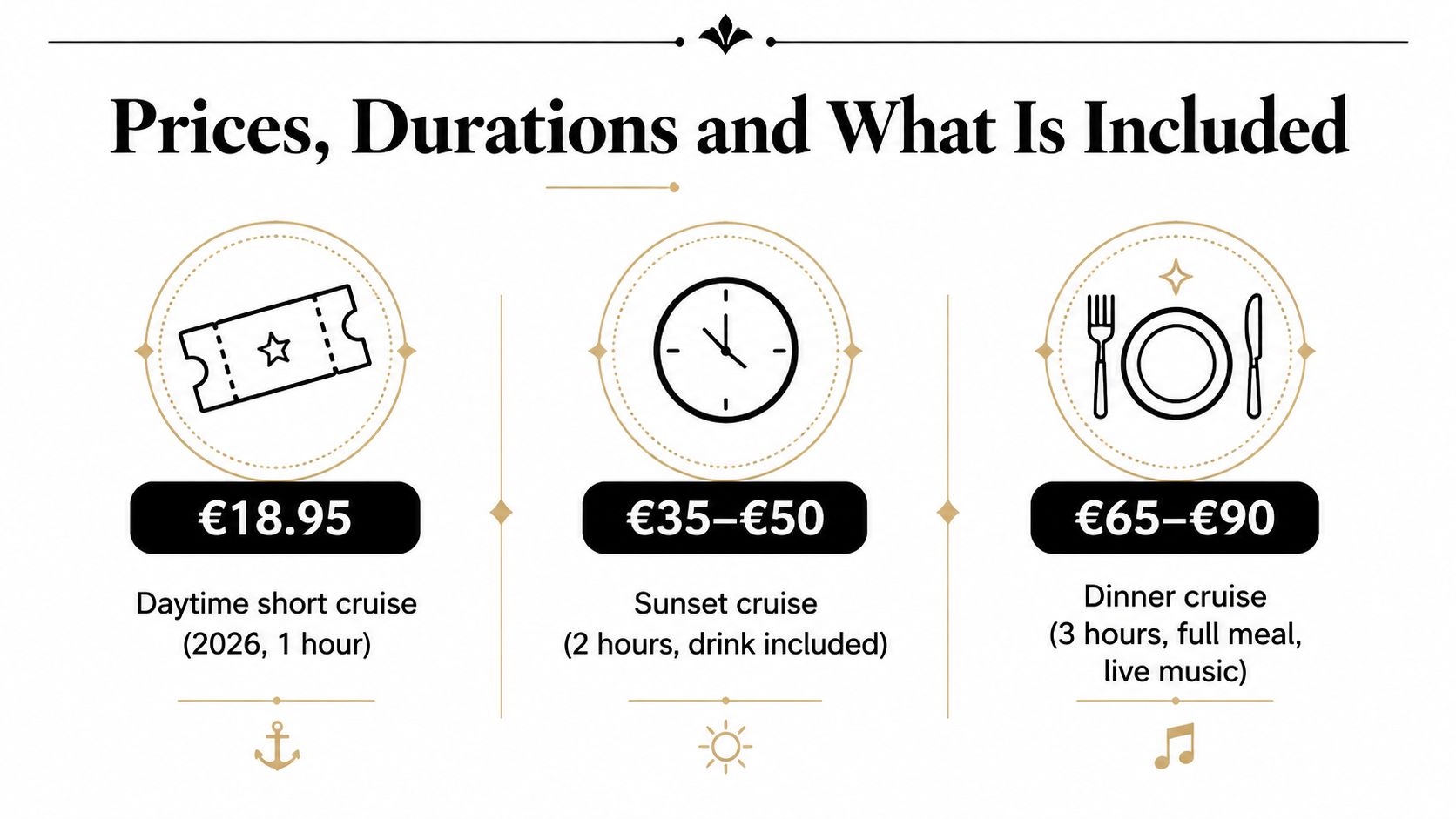
The duration structure matters. A 45-minute loop is designed for frequency and a quick view, while a 2-hour product has more time to travel further west and linger near the main waterfront sights. FRS Portugal's 1 hour and 40 minute scenic cruise sits in the middle, offering more coverage than the shortest loop without becoming an evening commitment (FRS Portugal sightseeing details).
Prices also change with demand, departure time, boat style, and inclusions. Sunset and dinner slots are more time-sensitive, so compare the full package rather than judging only by the headline price.
For another way to experience Lisbon from the water, compare the route and inclusions on this Lisbon sailing experience before choosing a fixed-circuit sightseeing ticket.
When a River Cruise Beats Trams, Tuk-Tuks and Miradouros
A Lisbon river cruise earns its place when the city's roads and viewpoints feel too crowded. The 25 de Abril Bridge carries around 150,000 vehicles and 174 trains daily, serving more than 100 million users a year, according to a recent report (Euronews coverage of the 25 de Abril Bridge). From the river, that movement becomes part of the view rather than an obstacle between you and it.
Choose the boat for a wide, calm perspective
A tram ride gives you neighbourhood texture, but it also brings queues, tight seating, and blocked sightlines. A tuk-tuk can reach narrow streets and viewpoints that boats can't, while a miradouro gives you height and a fixed panorama. The boat wins when you want the bridge, both banks, and the full waterfront in one continuous view.
A cruise also works well after a morning in Alfama. You can sit down, watch Lisbon recede, and see the city from an angle that walking cannot provide. A sunset departure adds the atmosphere of a slow-moving miradouro, with the river replacing a crowded terrace.
The Lisbon city tours are the better choice when your priority is getting close to tiled façades, historic streets, churches, and neighbourhood restaurants. Land transport also wins if you have only 24 hours and need to move efficiently between several inland sights.
Skip it when the boat doesn't solve your problem
Don't book a cruise just because every Lisbon itinerary includes one. Skip it if you get seasick, have a very tight budget, or already plan a full Belém day with little spare time. The river won't take you inside the monuments, and the boat's perspective can make famous buildings feel farther away than expected.
My decision rule is simple:
- Book the cruise if you want a relaxed orientation, broad waterfront photography, or a break from steep streets.
- Choose land transport if you need door-to-door sightseeing or close access to museums and historic buildings.
- Combine both if Lisbon is part of a longer stay. Use the boat for the city's shape, then walk Belém or explore Alfama properly.
Operators, Departure Points and Booking Checklist
FRS Portugal is a practical starting point for a scheduled Tagus sightseeing trip, with published departures and a defined route. Visit Lisboa also lists short outings on restored historic boats. Choose those when the vessel's maritime character matters as much as the view. For a private schedule, compare the fixed departures with boat rental in Lisbon.
Central sightseeing boats usually leave from quays near Terreiro do Paço, Cais do Sodré, or Belém, depending on the product. Treat the meeting point as part of the booking. One waterfront area can have several access points, and the closest metro exit may not lead to your boarding gate.
Check these details before paying
Confirm the quay and check-in time. Arrive 20 to 30 minutes early, especially for sunset and dinner departures. Busy waterfront paths can turn a short walk into a rushed boarding.
Read the inclusions. Check whether the fare includes commentary, drinks, food, reserved seating, or only the boat ride. Dinner cruises commonly use fixed tables, while daytime sightseeing boats may leave seating more flexible.
Ask about children and access. Confirm child fares, under-three policies, pushchair rules, and step-free access with the operator. Historic boats may use different boarding arrangements from modern vessels.
Check the operating policy. Wind, rain, river conditions, or quay operations can change a departure. Save the cancellation and rescheduling terms before paying for a non-refundable ticket.
Lisbon's waterfront functions as a busy transport network, not a private marina. The Port of Lisbon network includes 9 terminals, with about 30 million passengers moving between the riverbanks each year (Port of Lisbon transport presentation). Allow extra time for passenger flow and quay access rather than judging the journey from a map alone.
Planning a larger maritime itinerary? Use cruise ships information from CruiseLobster to distinguish large-ship port calls from local Tagus sightseeing. That distinction matters when comparing a short city cruise with a vessel designed for an extended holiday.
Best Time to Go, Weather Tips and Combining with the Algarve
Spring and early autumn usually offer the most pleasant balance of light, temperature, and river conditions. Summer brings the widest choice of departure times and more sunset options, but it also creates heavier demand around the waterfront. Winter can offer quieter departures, yet wind and unsettled conditions make the ride less predictable.
Match the departure to your priorities
For daytime photography, choose a departure when the riverfront has clear visibility and the sun isn't directly in your lens. Late afternoon is my favourite compromise. You get softer light without committing to a dinner schedule.
Evening trips need more clothing than many visitors expect. The river breeze can feel cool after a warm day, so pack:
- A light layer: Bring a jacket or jumper for sunset and dinner departures.
- Sun protection: Use sunscreen and carry sunglasses on daytime trips.
- Motion-sickness preparation: Travellers who are sensitive to movement should consider suitable medication and choose a larger, steadier boat when the operator offers that choice.
- Practical footwear: Wear shoes that handle quay surfaces and boarding ramps comfortably.
Tides and wind can affect the feel of the ride, even when the weather looks good from a city street. If conditions matter to you, check the operator's policy before booking a non-refundable evening ticket.
Link Lisbon with your southern itinerary
A Tagus cruise can sit neatly between a Lisbon hotel stay and an Algarve transfer. If you're continuing south, plan the boat as a timed activity rather than assuming you can finish whenever you like. Leave enough space between disembarkation and your onward departure, especially if you need to collect luggage or cross the city.
Faro Airport is commonly placed about 35 to 46 kilometres from Albufeira, with a normal private-car journey of roughly 40 to 50 minutes, depending on traffic (Faro Airport to Albufeira route details). That makes a pre-booked connection useful when your Lisbon plans continue through Faro and into Albufeira.
For wider itinerary ideas, browse these top travel plans for 2026, then compare your Lisbon schedule with a booking page and price list for the onward journey. The Algarve Experience operates door-to-door transport, including Faro Airport connections, with meet-and-greet service, flight monitoring, and vehicles suited to individual travellers, families, and groups.
Frequently Asked Questions About Lisbon River Cruises
Where do Lisbon river cruises depart from?
Departure points vary by operator and route. Terreiro do Paço is a common central reference, while other listings use Cais do Sodré or Belém. Check the exact quay on your confirmation, then allow extra walking time from the square, metro station, or hotel.
Can children join, and do under-threes travel free?
Children are allowed on many sightseeing boats, but age rules and fares differ. Under-three travel policies aren't universal, so check the operator's booking conditions before selecting seats. Families should also ask whether pushchairs can be stored and whether the boarding ramp is suitable for their needs.
What happens if weather or tide cancels the cruise?
The operator normally decides whether conditions are safe. Depending on the booking terms, you may receive a rescheduled departure or another remedy, but don't assume every ticket has the same cancellation protection. Keep your phone available on the day and contact the operator if the forecast deteriorates.
Can I connect a Lisbon cruise with transport to the Algarve?
Yes, but plan the timings conservatively. A private, pre-booked vehicle can collect you from a Lisbon hotel or agreed meeting point and continue towards Faro or Albufeira, avoiding the uncertainty of finding a taxi after disembarkation.
Public transport from Faro Airport to Albufeira is indirect in some travel guides, with passengers commonly reaching Faro bus terminal before taking an intercity bus. The full bus journey is described as taking around 1 hour 25 minutes to 1 hour 30 minutes (Algarve public transport guidance). A direct airport-connected coach option is also described with a typical journey of about 40 minutes to Albufeira bus station (Albufeira airport transport guide).
If you're comparing a private transfer from Faro Airport to Albufeira price, one 2026 guide places a private one-way journey at about €40 to €60, with door-to-door convenience (private Faro Airport transfer guidance). Reserve sunset cruises early in peak season, and arrange your Albufeira to Faro Airport return transfer before the final day.
The Algarve Experience offers pre-booked, door-to-door transport for travellers linking Lisbon plans with Faro, Albufeira, and wider Algarve destinations, including meet-and-greet service and flight monitoring. Visit The Algarve Experience to compare your transfer options and arrange a reliable onward journey before you board the Tagus.