
Tiras de choco frito are thin strips of cuttlefish coated in flour and deep-fried until golden and crispy, then seasoned with salt and sometimes garlic or chili. From Faro Airport, Albufeira is about 37 to 46 kilometres away and usually takes 35 to 45 minutes by car, making a beachside plate of this Portuguese favourite an easy first taste of the Algarve.
You've barely collected your luggage when the holiday begins to take shape. Sunlight spills across the terminal, the air smells faintly of salt, and somewhere beyond the motorway a busy tasca is frying cuttlefish for diners who've already ordered cold drinks. By the time you reach the coast, you may be ready for a dish that tastes of working harbours, olive oil and long conversations beside the sea.
Discovering Tiras de Choco Frito
At a beachside stall, a vendor lifts a freshly fried strip of cuttlefish onto a waiting plate. The coating is crisp and pale gold, the aroma savoury and warm, and the sides stay deliberately simple. Pick up a piece and listen for the faint crunch. Beneath it, the centre should be tender, with the pleasantly chewy texture that makes tiras de choco frito so recognisable.
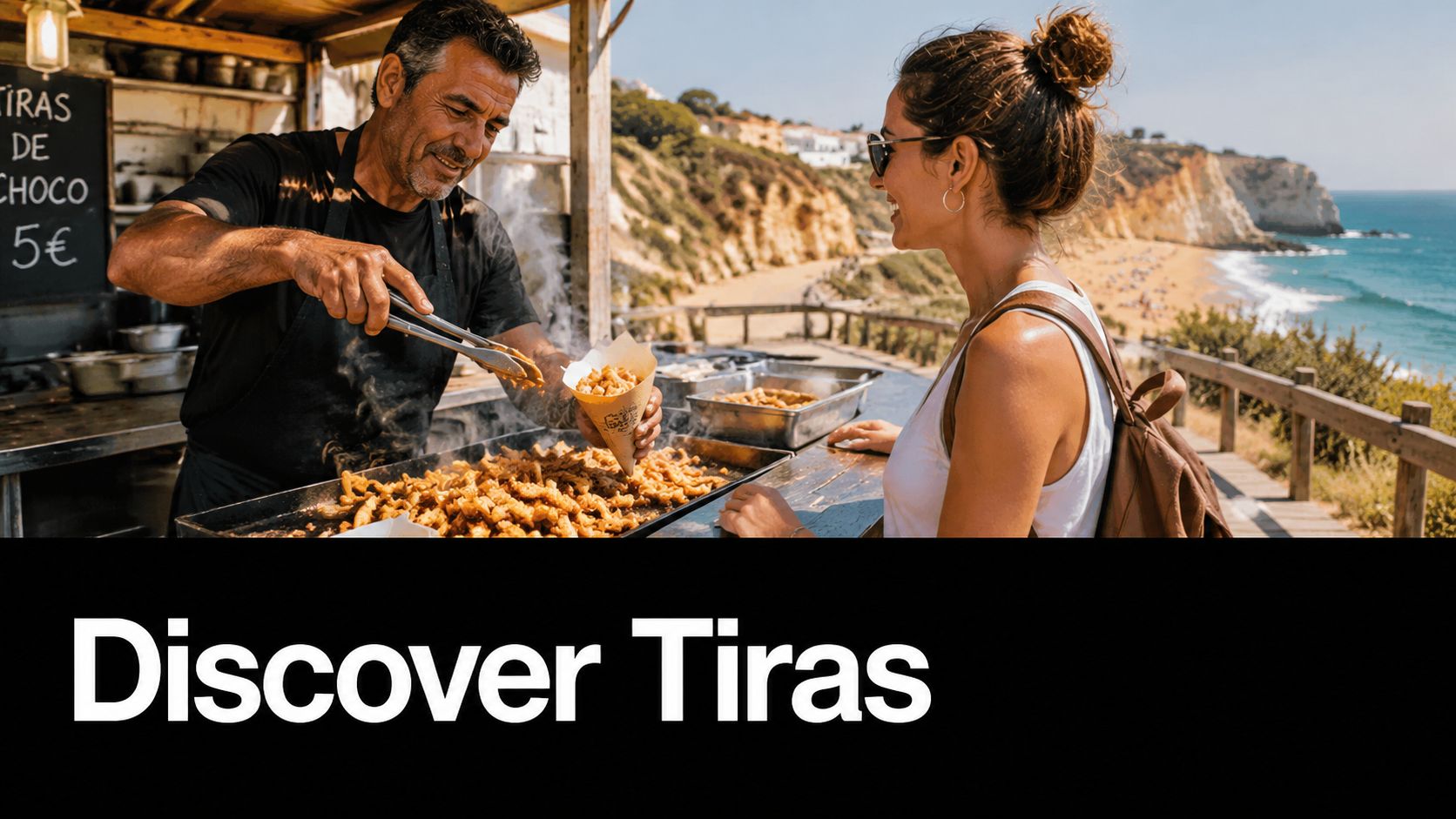
The name gives you the essential clue. Choco means cuttlefish and frito means fried. The seafood is seasoned, dusted with flour and cooked quickly in hot oil. It suits a paper napkin and a cold drink, yet the dish has enough character to say where it comes from.
Why the dish feels so local
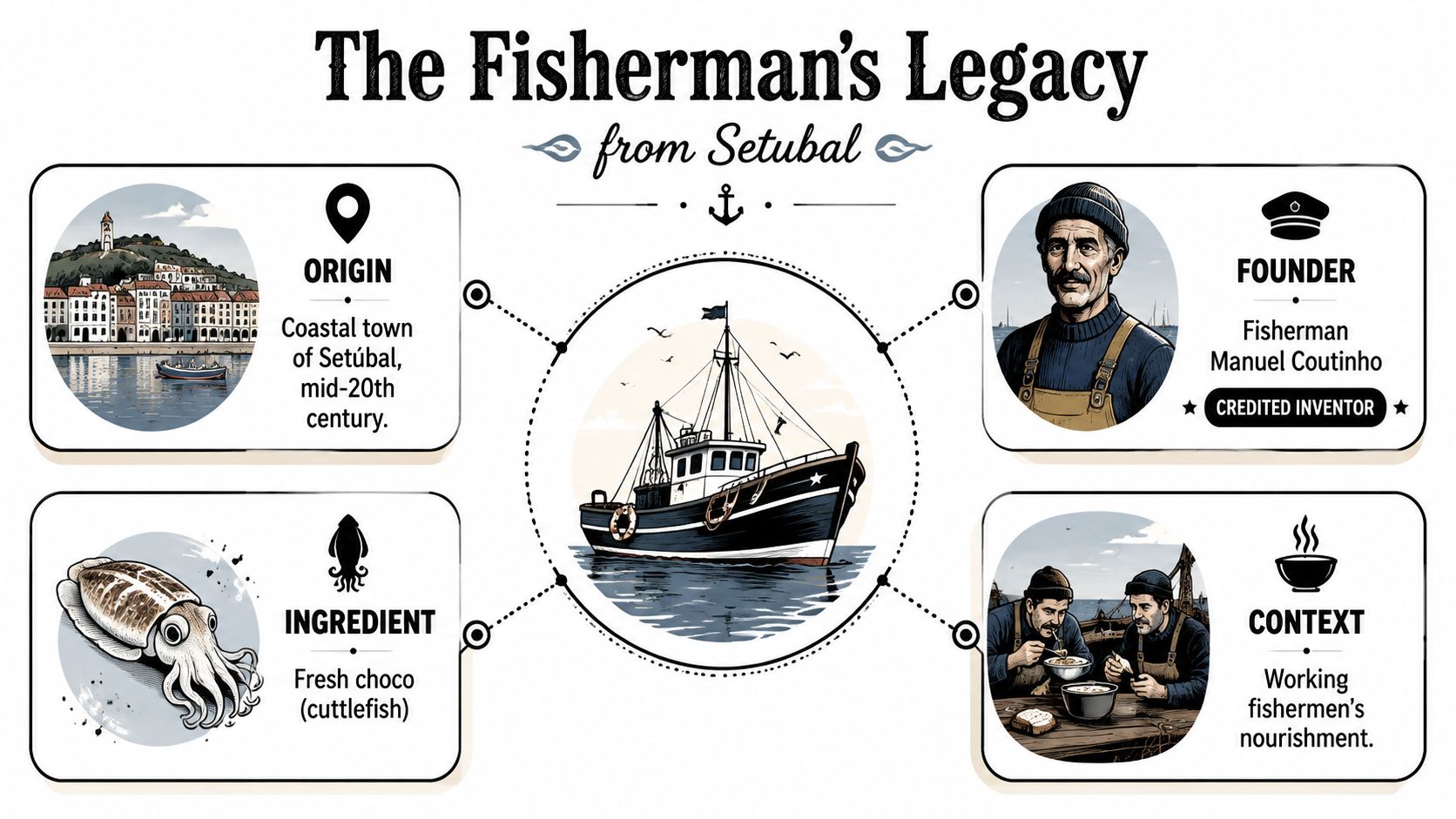
Its strongest roots lie in Setúbal and the Sado estuary, even when a plate appears on an Algarve menu. Portuguese recipe traditions associate it with the mid-20th century, fishermen and neighbourhood taverns. What distinguishes it from generic fried seafood is that traceable coastal story, shaped by the Sado and the rhythm of working harbours.
That history gives visitors a useful way to read the dish. Look at the cut of the strips, the lightness of the flour and the scent of olive oil. Listen to the fryer working behind a busy counter. A crowded dining room and a menu attentive to local fish can reveal more than a polished description, especially when you have arrived from Faro Airport and are choosing your first coastal stop.
A useful first impression: the best plate should taste of cuttlefish first, with the coating adding crunch rather than hiding the seafood.
That balance makes tiras de choco frito a rewarding introduction for travellers staying in Albufeira, Vilamoura, Portimão or Lagos. It is informal and easy to share, but each cook leaves a mark through freshness, seasoning and frying time. Sample it beside the coast, then follow the flavour back towards the fishing story that made the dish endure.
A Fisherman's Legacy from Setúbal
The modern identity of choco frito is usually traced to Setúbal during the 1950s. Portuguese recipe accounts credit fisherman Manuel Coutinho with popularising it after opening a tavern in the city. His customers were fellow workers and local drinkers, so the dish grew from everyday coastal life, shaped by hungry fishermen, shared wine and the steady pulse of the harbour.
The Sado estuary supplied both the setting and much of the ingredient. Fishermen brought in cuttlefish early in the morning, including pieces damaged, partly eaten or difficult to sell. Rather than let them go to waste, they sliced the seafood, seasoned it with salt, garlic and chili, then fried it in olive oil. What began as a practical snack became a satisfying partner for wine and conversation.
From improvised food to regional signature
The story roots the dish in a specific fishing economy and working-class tradition, giving it a clear identity beyond the generic seafood plates found on tourist menus. Independent Portuguese-language accounts place its regional home in Setúbal and the Sado estuary, with fishermen's improvisation at the starting point. Those details help explain why locals treat choco frito as part of the town itself.
The recipe changed as it travelled through kitchens. One Setúbal account records that the earliest version from the 1950s did not use flour. Flour dusting arrived later through Andalusian influence, and the coating became closely associated with the restaurant style travellers recognise today. A modest fisherman's fry gradually became more standardised, while keeping its connection to the coast.
Portuguese recipe traditions describe the dish's Setúbal origins and fisherman's preparation, while a separate account follows the flour-coated evolution of Setúbal's choco frito and the Sado estuary's role in its story through the flour-coated evolution of Setúbal's choco frito. Together, these accounts place the dish firmly in Portuguese coastal culture.
Order it in the Algarve and the plate carries Setúbal with it. The dining room might overlook a resort marina, or sit beside a road reached from Faro Airport, but the flavour still points north, towards the harbour, taverns and working fishermen that gave choco frito its character.
The Art of Perfect Fried Cuttlefish
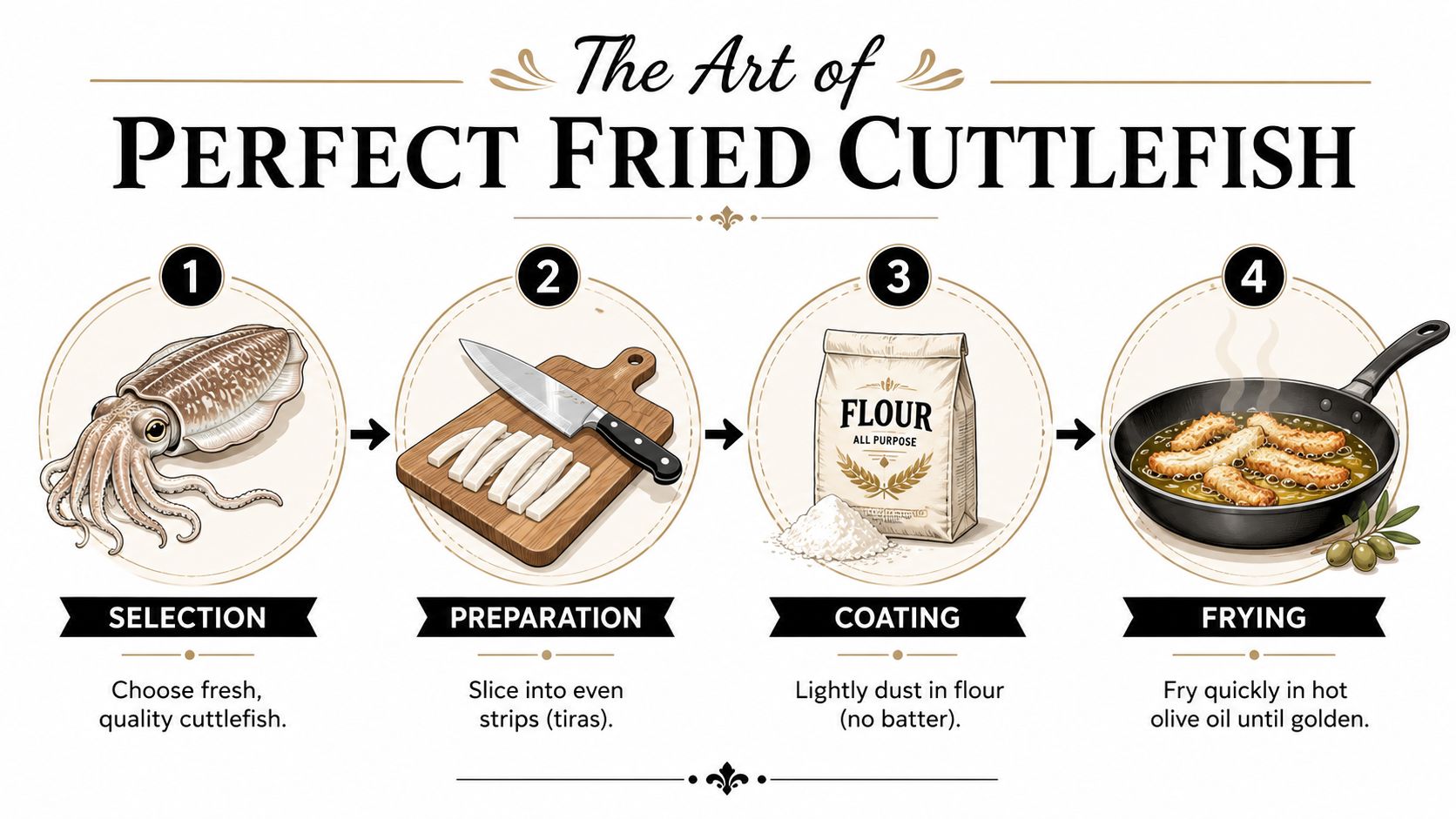
Good tiras de choco frito depends on control. Cuttlefish can become tough when overcooked, while insufficient heat leaves the coating pale and oily. The cook has to prepare even strips, dry them properly and fry them in small batches so the oil remains hot enough to create a clean crust.
Four details that shape the result
Prepare the strips evenly. Narrow, similar-sized pieces cook at roughly the same rate. Salting before drying helps season the seafood, while removing surface moisture reduces spitting and supports a crisper finish.
Use a light flour coating. The familiar modern style uses flour rather than a heavy batter. A thin dusting gives the cuttlefish a delicate shell, allowing its natural flavour and texture to remain central.
Control the heat. A Portuguese regional recipe specifies frying at about 170°C for roughly 7 minutes, after salting, drying and flouring the strips. The guidance is useful because it balances rapid crust formation with the risk of overcooking, as described in this preparation guide for Setúbal-style choco frito.
Fry in small batches. Too much cuttlefish at once drops the oil temperature. The coating then absorbs more oil, browns unevenly and may turn soft before the centre is ready.
The old and new versions deserve separate appreciation. The original preparation didn't rely on flour, while the later flour-coated style reflects Andalusian influence and restaurant standardisation. Neither detail makes one version automatically superior. Instead, it gives you a way to understand why a plate may look different from the one described in an older recipe.
For a broader introduction to Mediterranean cooking techniques and pantry habits, start cooking mediterranean at home before attempting your own version.
At the table, quality is easy to recognise. The crust should be crisp rather than thick, the cuttlefish should retain its character, and the seasoning should support the seafood instead of overwhelming it.
Ordering and Pairing Like a Local
At a busy lunch counter, ask whether the cuttlefish is fresh, prepared in the house style and included in that day's seafood selection. Staff may answer quickly while plates are flying out, yet the reply reveals whether choco anchors the kitchen or sits as an afterthought on a broad tourist menu.
Look for tiras, or strips, if you want the style described here. A menu naming choco alongside the day's fish and seafood gives a clearer signal than a vague “fried seafood” listing. The best plate keeps the cuttlefish in the spotlight, with a light crust and enough room to taste the sea.
Why price and sourcing matter
Portugal's seafood market adds useful context. A 2024 European Union market source recorded the country's highest first-sales price for common cuttlefish at €5.95 per kilogram, above the Netherlands and Belgium, as reported in this Portuguese recipe and market guide covering choco frito and regional pricing. That figure does not set a restaurant's menu price, but it shows why choco frito deserves more respect than the label of cheap beach food suggests.
Portugal also imports significant quantities of squid and cuttlefish. The same source records €66 million in import value and 18,349 tonnes in 2019, with imports coming heavily from Spain, India and China. Availability, sourcing and seasonality can shape the plate, particularly at restaurants serving large visitor numbers.
Pair the dish with something refreshing. Crisp Vinho Verde brings acidity and lift, while a local lager keeps the meal uncomplicated. Grilled bread or a fresh salad cools the rhythm of hot, fried seafood with a little crunch and freshness. If your Algarve trip includes more than one food stop, this Algarve wine-tasting guide can help fit a local tasting into the route from Faro Airport to the coast.
A dramatic portion can hide a thick coating or a scatter of garnishes. Watch for the smaller plate leaving a busy fryer moments after ordering. Its crust should arrive hot, while the centre stays tender, giving you a better measure of the cuttlefish itself.
Where to Find the Best in the Algarve
The most promising places often look ordinary from the outside. A small tasca near the waterfront may have plastic chairs, a handwritten fish board and a fryer working steadily behind the counter. Inside, local diners order without much ceremony, and the room fills with the sounds of cutlery, conversation and plates landing on tables.
Fish restaurants and beachside cafés along the coast from Albufeira to Lagos can be good hunting grounds. In Albufeira, look near the waterfront and areas where seafood restaurants serve visitors throughout the day. Vilamoura offers a more polished marina atmosphere, while Portimão and Lagos provide stronger harbour associations and plenty of restaurants built around the sea.
Read the room before you order
Authenticity doesn't require a rustic façade. Use several practical clues instead:
- Follow local demand: A busy dining room with Portuguese-speaking regulars suggests that the kitchen has a returning audience, not only passing holidaymakers.
- Watch the fryer: A visible cooking station lets you see whether portions are being fried to order or left waiting.
- Check the fish board: Menus that highlight daily catch show that the restaurant pays attention to what arrives locally.
- Choose the harbour atmosphere: Waterfront and fishing-harbour restaurants often sit close to the supply routes that shaped the dish.
You can also ask a hotel host, taxi driver or shopkeeper where they'd eat choco frito themselves. Locals may point you towards a modest place that doesn't appear prominently in travel searches. Their recommendation is especially useful if you're staying away from the main resort centre.
For visitors based in Albufeira, a focused guide to fish restaurants in Albufeira can help narrow the choice before you set out. The right venue depends on your mood. Choose a casual tasca for a noisy, social meal, a harbour restaurant for a slower seafood lunch, or a marina table when you want the dish folded into a more leisurely evening.
Getting from Faro Airport to the Algarve Coast
The practical part is refreshingly simple. Faro Airport to Albufeira is about 37 to 46 kilometres, depending on route and source, and a car or private transfer usually takes 35 to 45 minutes in normal traffic. Road distance and timing are supported by this Faro Airport to Albufeira route information and local Faro taxi guidance.
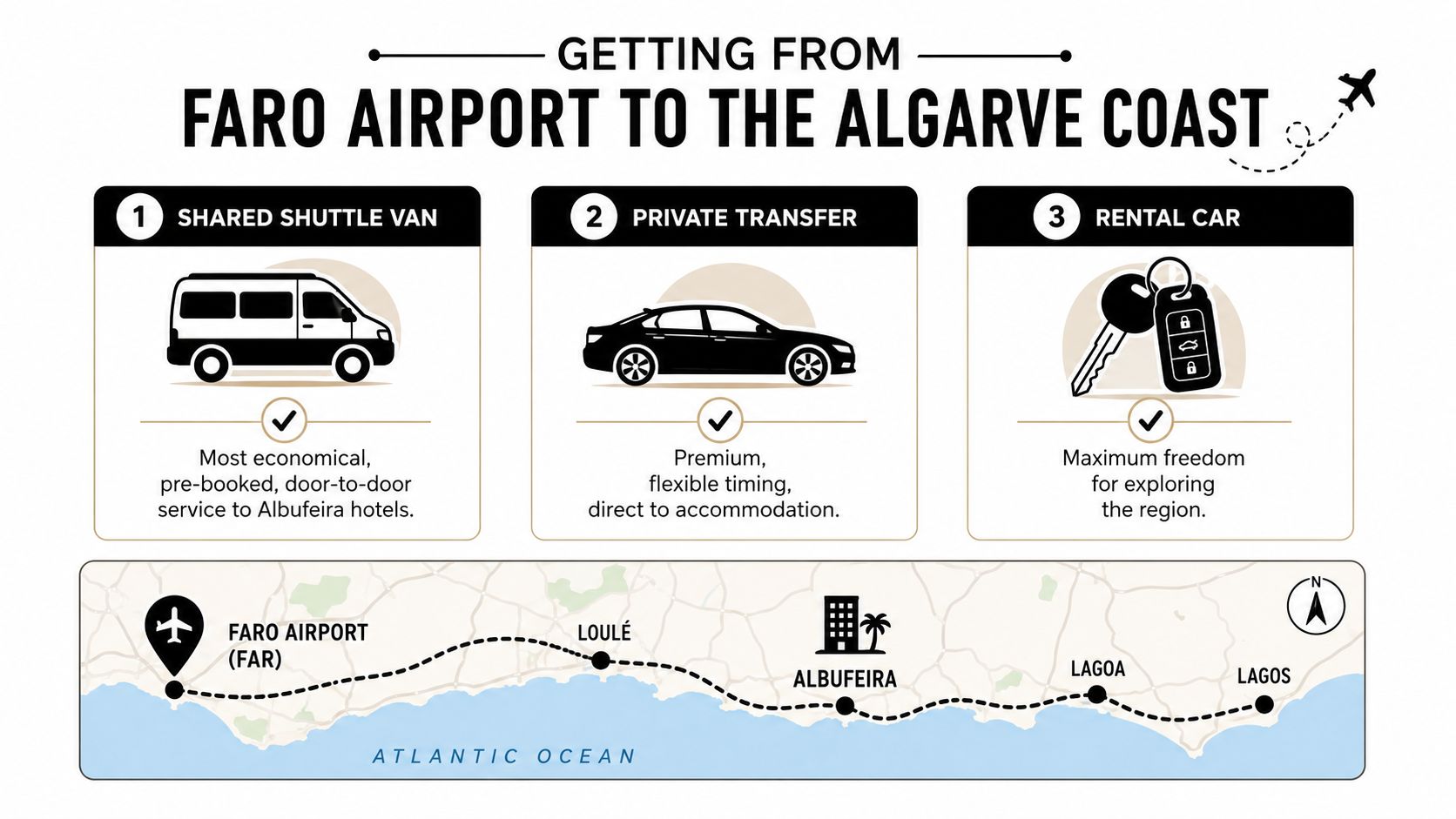
Compare the main options
| Option | What it suits | What to consider |
|---|---|---|
| Private transfer | Families, groups, late arrivals and travellers who want a direct journey | Pre-booking can provide fixed pricing, meet and greet and a vehicle matched to luggage |
| Shared shuttle | Travellers focused on keeping the fare lower | The vehicle may make additional hotel stops |
| Taxi | Immediate departure without advance planning | The final fare depends on the official tariff, distance, time and travel conditions |
Official Faro taxi tariff information lists a €3.25 daytime minimum fare, rising to €3.90 at night, on weekends or public holidays. The listed per-kilometre rate is €0.94 by day and €1.13 at night, on weekends or public holidays, as shown in the published Faro Airport transfer tariff details. These are tariff components, not a guaranteed total for the airport journey.
A pre-booked Faro Airport to Albufeira transfer is attractive when you're travelling with children, bulky luggage or a tired group. A driver can meet you at the terminal, take you directly to your accommodation and communicate in English, while flight monitoring helps the pickup adapt to delays. For a wider perspective on comparing airport transport services in another destination, see this guide to Cozumel transfer options compared.
For route-specific planning, this guide to getting from Faro Airport to Albufeira is a useful companion. Before booking, confirm the destination address, passenger count, luggage needs, child-seat requirements, payment terms and the provider's procedure for flight delays. Those small checks make the arrival far calmer, leaving you free to think about lunch rather than finding the taxi queue.
Your Complete Algarve Food Adventure
Tiras de choco frito offers more than a tasty plate at the coast. Its flour-dusted modern style reflects a recipe that evolved from an earlier fisherman's fry, while its strongest identity remains tied to Setúbal, the Sado estuary and Portugal's working seafood culture.
In the Algarve, order it where the kitchen looks busy and the menu treats cuttlefish seriously. Ask about freshness, choose a crisp drink, and pay attention to the contrast between the golden coating and tender centre. If you're arriving through Faro Airport, a direct journey to Albufeira or another coastal base lets the food adventure begin without unnecessary transport stress.
The Algarve Experience provides 24-hour Faro Airport transfers, door-to-door service, fixed transparent pricing and comfortable vehicles for solo travellers, families and groups. Visit The Algarve Experience to arrange your transfer and arrive ready for a proper plate of tiras de choco frito.
Related posts