
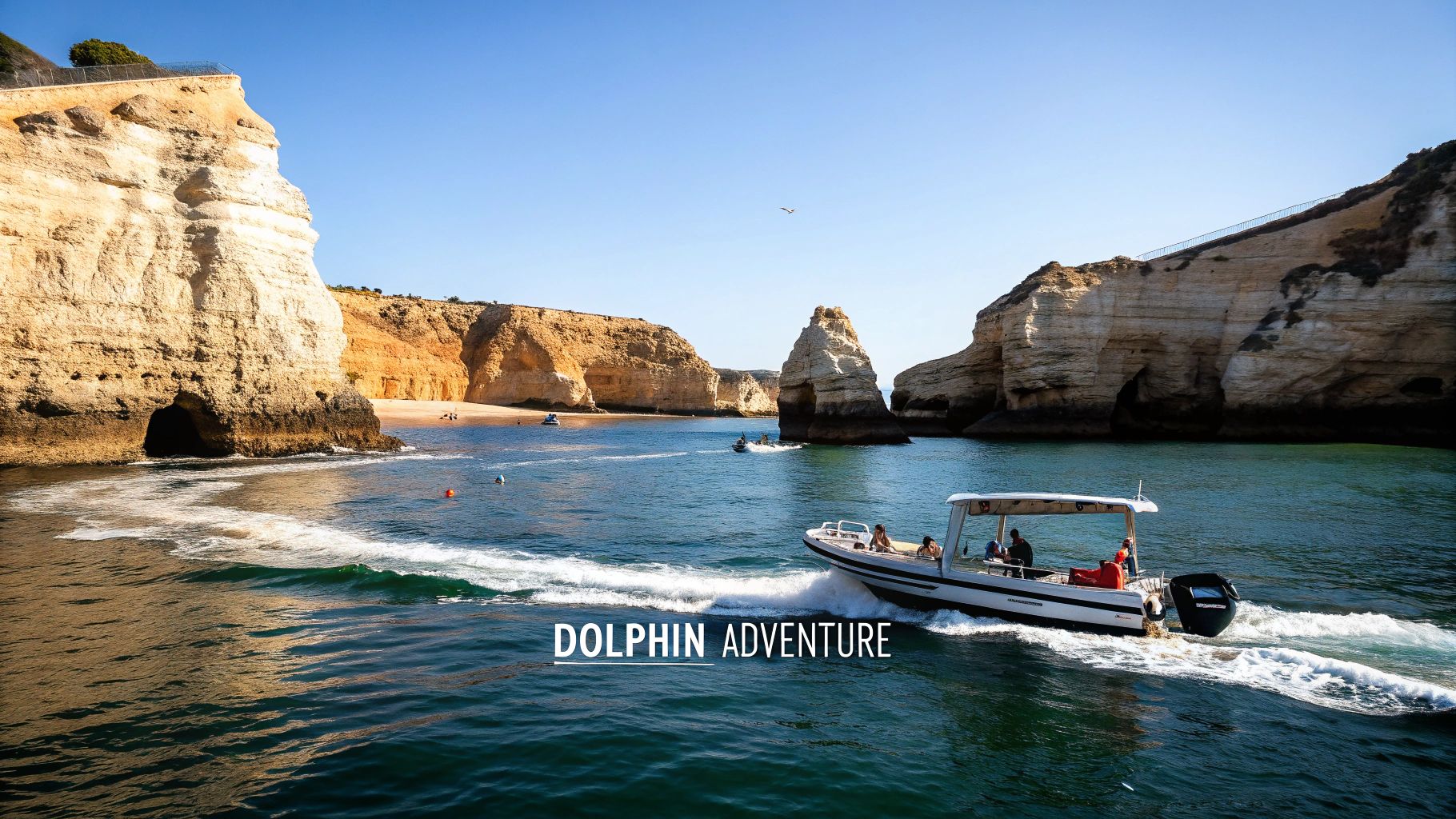
Picture this: you’re gliding out from the Lagos Marina, the warm Algarve sun on your face, as you head into the vast, brilliant blue of the Atlantic. This is exactly where your dolphin watching Lagos adventure begins, an experience that’s become a must-do for anyone visiting Portugal's southern coast. Think of this guide as your all-access pass to one of the most unforgettable wildlife encounters the Algarve has to offer.
Why Is Lagos Such a Hotspot for Dolphin Watching?
Lagos is the perfect launchpad for exploring the rich marine life teeming just off the coast. Its unique position on the Atlantic, combined with that jaw-dropping scenery of golden cliffs and hidden sea caves, creates a backdrop so stunning you'll be pinching yourself. It’s one thing to see dolphins, but it’s another thing entirely to watch them leap and play against the dramatic landscape that makes the Algarve famous.
But it's not just about the pretty views. These coastal waters are a natural feeding ground and a major highway for several dolphin and whale species, which means sightings are incredibly common. It's no surprise that Lagos has cemented its reputation as a world-class hub for responsible, thrilling marine tourism.
A Growing Hub for Marine Ecotourism
The magic of dolphin watching in Lagos hasn't gone unnoticed. In recent years, it's become a cornerstone of the region's ecotourism, drawing in travellers who want authentic, respectful wildlife encounters. This is great news for the local economy and for conservation. In fact, according to the Algarve Tourism Board, marine wildlife tours have seen a steady growth of around 15% annually since 2018, with Lagos right at the heart of it all. This steady climb really underscores the area's importance in sustainable travel. You can dive deeper into the Algarve's tourism trends over at Visit Portugal.
What makes the whole experience so special is the mix of near-guaranteed sightings and the genuine commitment of local tour operators to do things the right way. You’re not just a tourist on a boat; you're an observer, helping to appreciate and protect these incredible animals.
So, what's next? In the sections to come, we’ll break down everything you need to know to plan the perfect trip, including:
- The different dolphin species you can expect to meet.
- How to choose the best boat tour for your vibe, whether you're with family or flying solo.
- The best seasons and times of day to maximise your chances of a great sighting.
Before we dive in, here’s a quick overview to get you started.
Dolphin Watching in Lagos At a Glance
This table gives you a snapshot of what to expect, helping you plan your adventure with ease.
| Key Aspect | Details |
|---|---|
| Location | Lagos, Algarve, Portugal |
| Primary Departure Point | Lagos Marina |
| Best Season | April to October |
| Best Time of Day | Morning (calmer seas) or Late Afternoon (golden hour) |
| Common Dolphin Species | Common, Bottlenose, Striped, Risso's |
| Tour Duration | Typically 1.5 to 3 hours |
| Average Price | €35 – €50 per person |
| Booking | Recommended to book in advance, especially in summer |
With these basics covered, you're already one step closer to an incredible day on the water. Let’s get into the details
Meet the Marine Stars of the Algarve
Your boat trip is more than just a scenic cruise into the Atlantic; it’s an invitation to come face-to-face with the incredible marine life that calls these waters home. While the coastline is spectacular, the real A-listers on any dolphin watching Lagos tour are the intelligent and playful dolphins that frequent the area. Getting to know a little about them beforehand transforms the experience from a simple sighting into something much more personal.
The most common performers you'll likely run into are the Common Dolphins (Delphinus delphis). Think of them as the acrobats of the ocean, famous for their incredible speed and high-energy antics. They often travel in huge groups, sometimes numbering in the hundreds, creating an unforgettable spectacle as they leap, surf the boat's wake, and socialise all around you. Their distinctive yellowish hourglass pattern on their sides makes them pretty easy to spot.
The Gentle Giants of the Coast
Sharing the spotlight are the bigger, more majestic Bottlenose Dolphins (Tursiops truncatus). You've probably seen this species in movies, but trust me, seeing them in the wild is a completely different ball game. They're typically larger and more robust than their common cousins, with a more uniform grey colour. Bottlenose dolphins usually stick together in smaller, tight-knit family pods.
They might not be as flashy or acrobatic as the common dolphins, but their powerful presence and curious nature are completely captivating. Watching a pod of bottlenose dolphins gracefully break the surface to breathe is a moment of pure tranquillity and awe.
Here's a quick tip for telling them apart: pay attention to size and behaviour. If you see a massive pod of smaller, zippier dolphins putting on an energetic show, they're almost certainly Common Dolphins. If the group is smaller and the animals are larger and more deliberate in their movements, you’re probably looking at Bottlenose Dolphins.
Other Possible Sightings
The Algarve's rich marine ecosystem means you might get a few surprise guests on your tour. While they're not guaranteed, it's not unheard of to spot other species that just add to the magic of the day.
- Risso's Dolphins: With their unique scarred bodies that get whiter as they age, these dolphins are a truly striking sight.
- Harbour Porpoises: These guys are much smaller and shier than dolphins. You often just see a small dorsal fin briefly breaking the surface.
- Minke Whales: At certain times of the year, lucky visitors might even witness the spout of a Minke Whale, the smallest of the great whales.
- Diverse Seabirds: Keep an eye out for Cory’s Shearwaters and Northern Gannets. They often follow the dolphin pods to get in on the action and feed on the same schools of fish.
This rich biodiversity is exactly why the waters off Lagos are so special. While the dolphins are the main event, the entire marine environment is a vibrant world just waiting to be discovered. If you happen to be starting your journey from the region's main airport, checking out boat tours from Faro can offer similar incredible opportunities to connect with this marine life.
How to Choose Your Perfect Dolphin Tour
Picking the right tour for dolphin watching in Lagos is a bit like choosing the right vehicle for a safari. The boat you're on completely shapes the experience, from how fast you go and who you're with, to just how close you get to the action. Not all dolphin tours are created equal, so let’s break down the options to find your perfect match.
What's your ideal day on the water? Are you an adrenaline-seeker wanting to feel the Atlantic spray as you zip across the waves? Or do you picture a more relaxed cruise, with plenty of space to move around and soak in the scenery? The two main options sailing out of Lagos Marina cater to these very different styles.
The High-Speed RIB Experience
For those craving a real thrill, the Rigid Inflatable Boat (or RIB, as you'll hear it called) is your best bet. These are fast, agile boats that sit low on the water, giving you an exhilarating, up-close perspective that’s hard to beat. Because they're smaller and quicker, RIBs can cover more ground, which often increases the chances of finding lively dolphin pods.
- Best for: Thrill-seekers, couples, and small groups who want a dynamic adventure.
- Pros: The speed means a wider search area, and the low profile offers an intimate, water-level view of the dolphins.
- Cons: It can be a bumpy ride, making it less suitable for young children or anyone with back problems. Space is limited, and there's not much shade to speak of.
The Comfortable Catamaran Cruise
If comfort and a steady ride are your top priorities, then a larger catamaran is the way to go. These boats are perfect for families, bigger groups, or anyone who just prefers a smoother, more leisurely journey. With tons of deck space, onboard toilets, and usually a shaded area, catamarans provide a much more relaxed setting for your dolphin watching.
While they are slower, their stability makes them a fantastic platform for photography. You can move around freely to get the perfect shot without worrying about the boat rocking. To help you quickly tell what you're seeing out there, this simple guide breaks down the two most common species.
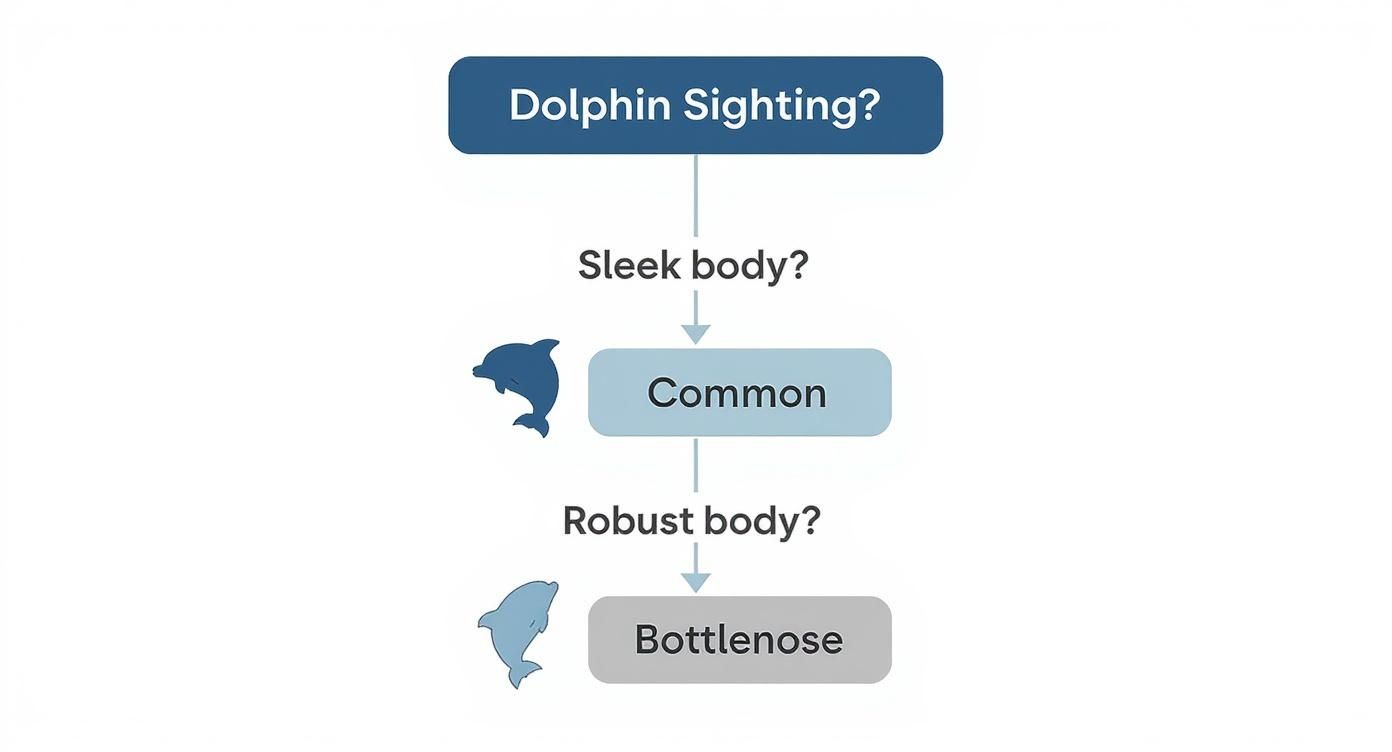
As the infographic shows, body shape is a key clue—Common dolphins are sleek and athletic, while Bottlenose dolphins are noticeably more robust.
To make the choice even clearer, here’s a quick side-by-side comparison.
Comparing Dolphin Tour Options in Lagos
| Tour Type | Best For | Pros | Cons |
|---|---|---|---|
| High-Speed RIB | Thrill-seekers, couples, adventure lovers | Fast, covers more area, intimate water-level views, exciting ride | Bumpy, not ideal for young kids or those with back issues, limited space and shade |
| Catamaran | Families, larger groups, photographers, comfort-seekers | Stable and smooth ride, spacious deck, onboard facilities (toilets, shade) | Slower pace, less ground covered, larger group sizes |
Ultimately, there's no "wrong" choice here. A RIB gets your heart pumping with a close-up encounter, while a catamaran offers a stable, comfortable, and family-friendly platform for watching the show.
Both options give you a fantastic opportunity to see these incredible animals in their natural habitat. For a deeper dive into the different boats and trip styles, you can find more info on a boat tour in the Algarve to compare everything on offer.
Finding the Best Time for Dolphin Sightings
When it comes to wildlife adventures, timing is everything. For the best dolphin watching Lagos has to offer, picking the right season—and even the right time of day—can completely transform your experience. Thankfully, the Algarve gives us a long and beautiful window for marine tours, stretching all the way from early spring to late autumn.
The peak summer months of July and August bring the hottest weather and a buzzing atmosphere to town. It’s a great time to be here, but it's also when the Atlantic is busiest with boats. While you'll still see plenty of dolphins, the sheer number of tourists can sometimes mean a more crowded trip, both on the water and back at the marina.
This is why many seasoned visitors will tell you the sweet spot is during the shoulder seasons: spring (April to June) and autumn (September and October). The weather is still absolutely gorgeous, the sea is often calmer, and fewer boats are heading out. This creates a much more serene environment, allowing for a more personal and peaceful encounter with the dolphins.
Peak Summer vs. Shoulder Season
So, which one is right for you? It really just boils down to your travel priorities. Summer guarantees that classic holiday buzz, while spring and autumn offer a more chilled-out pace.
- Peak Season (July-August): Expect scorching sunny days and a very high chance of sightings. Just be ready for busier tours and a bustling Lagos marina.
- Shoulder Season (April-June & September-October): Enjoy lovely warm temperatures, calmer seas, and smaller tour groups. This time of year often delivers a far more tranquil wildlife watching experience.
The influx of visitors in summer is no small thing. In 2023, dolphin watching trips in Lagos peaked in July and August with an average of 1,200 participants per month. That's a whopping 25% increase compared to pre-pandemic levels in 2019, showing just how popular these tours have become. You can dig deeper into these trends with these official Portuguese tourism statistics.
Morning or Afternoon Tours?
Once you’ve picked your season, the next decision is what time of day to go. Most companies run both morning and afternoon trips, and honestly, each has its perks.
Morning tours, usually leaving around 9 or 10 a.m., often get the calmest sea conditions. The ocean is frequently smoother before the afternoon winds kick in, which means a more comfortable ride—a big plus for anyone prone to seasickness.
On the other hand, late afternoon tours give you that magical "golden hour" light. The low sun casting a warm glow over the Atlantic creates a spectacular backdrop for photos, making any dolphin sighting feel even more special. Sighting success rates are consistently high all day, so the best choice really just comes down to personal preference.
Why Responsible Dolphin Watching Matters
Seeing dolphins in their natural habitat is one of those pinch-me moments, a real privilege. But the thrill of dolphin watching in Lagos comes with a serious responsibility to keep these incredible animals safe. It’s on us to make sure our curiosity doesn't cause them stress. Responsible tourism isn't just a buzzword; it’s a commitment that directly impacts their well-being and the health of the entire Atlantic ecosystem.
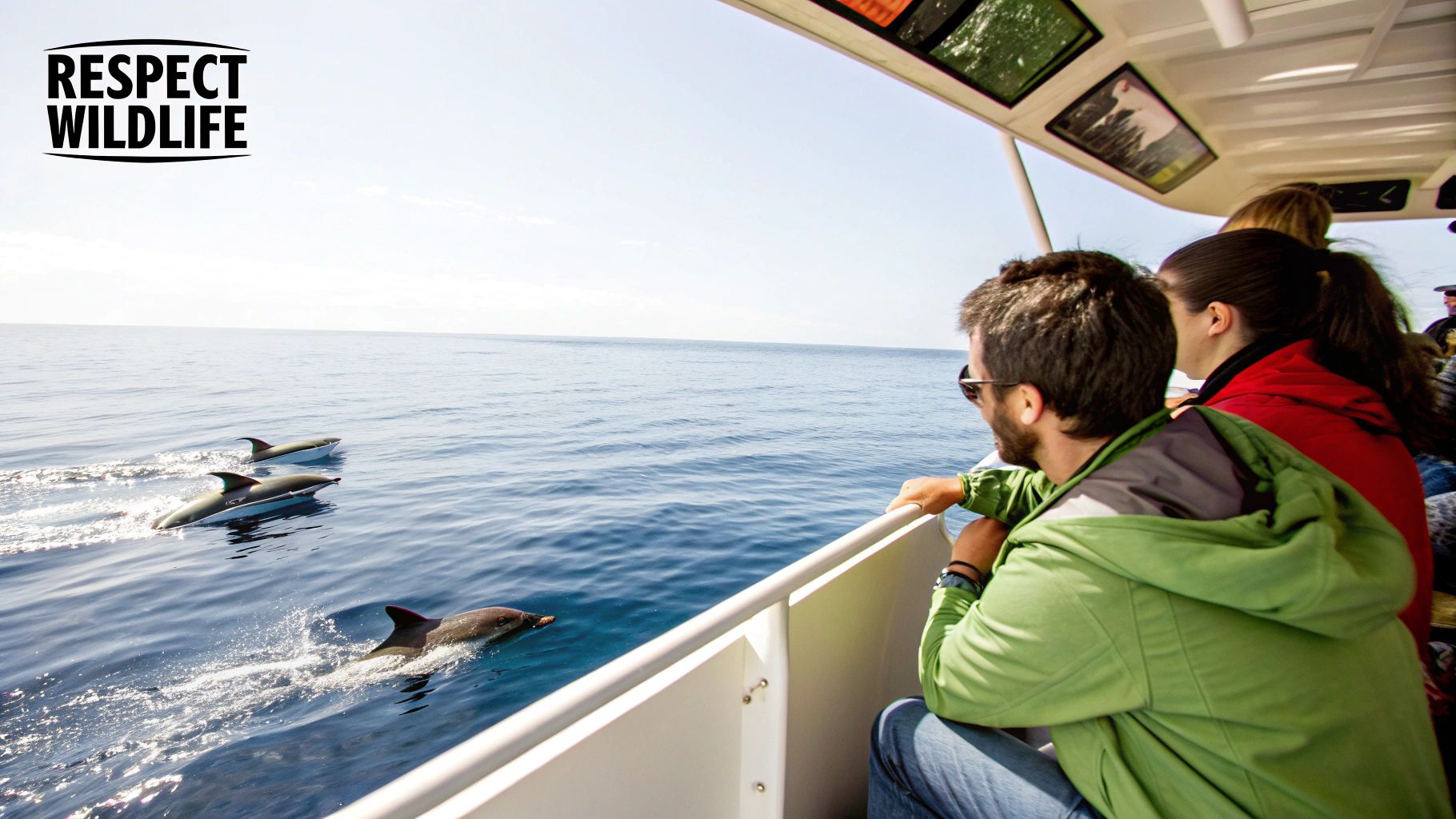
This all boils down to choosing tour operators who get it—we're just visitors in the dolphins' home. They follow established guidelines designed to keep disturbances to a minimum. Think of it like this: you wouldn't show up at a friend's house and start chasing their pets around or messing with their routine. The same common sense and respect apply out on the water.
Portugal's Official Guidelines
To protect its precious marine wildlife, Portugal has put clear, non-negotiable rules in place for tour boats. A truly responsible operator will always live by these principles:
- Maintain a Safe Distance: Boats must keep a respectful distance and never charge straight at a pod or approach from behind, which can make the dolphins feel trapped.
- Limit Viewing Time: To avoid overstaying their welcome and causing stress, encounters are typically kept to 15-30 minutes.
- Control Speed and Noise: Operators should slow right down and avoid any sudden, noisy changes in speed or direction that could easily startle the animals.
- Never Feed or Touch: Getting hands-on or offering food is a huge no-go. It messes with their natural hunting instincts and can be seriously harmful to their health.
The whole idea is simple: observe, don't interfere. A great tour lets you witness dolphins being dolphins—hunting, playing, and socialising. Those natural behaviours stop the second the animals feel threatened or harassed.
The Global Importance of Conservation
While our focus here is on the beautiful Algarve coast, the need for marine conservation is a global story. Take the critically endangered Atlantic humpback dolphin, found in the waters off another Lagos—in Nigeria. This species faces immense threats from pollution and habitat loss.
Although it's a different dolphin in a different part of the world, its struggle is a powerful reminder of how vulnerable marine life is everywhere. It really drives home the importance of supporting protective measures right here in our own backyard. You can learn more about these specific conservation efforts in West Africa.
So, when you choose an eco-conscious tour in Lagos, Portugal, you’re doing more than just buying a ticket for a boat trip. You're casting a vote for sustainable tourism. You're supporting local businesses that put the ocean first. And you're playing a direct part in protecting the Algarve's incredible marine heritage for everyone who comes after us.
Practical Tips for Your Lagos Adventure
Now that you’ve got the exciting parts figured out, let’s talk logistics. A little bit of planning is all it takes to make sure your dolphin watching Lagos trip is smooth, stress-free, and absolutely unforgettable. Trust me, it’s the small details that turn a good day into a great one.
First up: should you book your tour ahead of time or just rock up at the marina and hope for the best? If you're visiting during the peak summer months of July and August, booking online beforehand is a no-brainer. These tours fill up incredibly fast, and there’s nothing worse than missing out. In the quieter shoulder seasons, you might get lucky with on-the-day availability, but booking ahead is always the safest bet.
What to Wear and Pack for Your Tour
Comfort is everything when you're out on the Atlantic. Even on a scorching day, the breeze off the water can feel surprisingly cool, especially when the boat gets up to speed. The golden rule? Dress in light layers.
Here’s a quick checklist to get you sorted:
- A Light Windbreaker: This is non-negotiable. It’s perfect for when the boat is moving fast or if a few clouds decide to show up.
- Comfortable, Non-Slip Shoes: Boat decks can get slippery. A good pair of trainers or boat shoes with decent grip is a must for staying safe.
- Sun Protection: The Algarve sun doesn't mess around. Pack high-SPF sunscreen, a wide-brimmed hat, and a good pair of sunglasses.
- Camera or Smartphone: You'll want to capture those magical moments, so make sure your device is fully charged. A waterproof case isn't a bad idea, either.
A quick word on seasickness—it can sneak up on anyone. If you know you're prone to motion sickness, pop into a pharmacy and ask about remedies before you set sail. Staying hydrated and keeping your eyes fixed on the horizon usually helps, too.
Budgeting and Getting to Lagos
So, how much should you set aside? Dolphin watching tours in Lagos typically run anywhere from €35 to €50 per person. The price usually depends on the length of the trip and the type of boat—RIBs and longer catamaran cruises might be on the higher end of that scale.
For anyone flying into the region, getting from Faro Airport to Lagos is pretty straightforward. While you can brave public transport, booking a transfer is often the easiest and most relaxing option, especially if you’re hauling luggage. We've got a full breakdown of what to expect and how to book your Faro Airport transfers with The Algarve Experience, which makes that final leg of your journey completely seamless. It’s the best way to arrive in Lagos feeling refreshed and ready for adventure.
Got Questions About Dolphin Watching? We've Got Answers
Even with the best-laid plans, a few questions always bubble up before a big day out on the water. To make sure you feel totally ready for your dolphin watching adventure in Lagos, we’ve rounded up some of the most common queries. Think of it as your final pre-trip sanity check.
First up, a big one: safety. Let’s put your mind at ease. Every licensed tour operator in Lagos plays by the book, following strict maritime safety rules. Boats are kitted out with life jackets for every single person, and the skippers aren't just good at finding dolphins—they're seasoned pros trained in first aid and emergency drills. Your trip is designed to be as safe as it is amazing.
What if the Dolphins Don’t Show Up?
This is a totally fair question for any wildlife tour. While the waters off Lagos boast an incredible sighting success rate—often over 95% in peak season—dolphins are wild, free, and have their own schedule. The best tour companies are always straight up about this.
For those rare days when the dolphins are feeling shy, most operators have a solid policy in place. Usually, it's one of two things:
- A free do-over: You'll get a complimentary ticket to try your luck on another tour.
- A partial refund: A little something back to soften the disappointment.
Always double-check the company's "no-sighting" policy when you book. It's a sign of a professional, customer-first attitude that puts your experience first, no matter what the marine life decides to do that day.
Is This Trip Okay for Kids and Grandparents?
Absolutely! Dolphin watching is one of those brilliant activities that everyone from toddlers to grandparents can enjoy together. It makes for a perfect family outing. The key, however, is picking the right boat for your crew.
For families with young kids, anyone expecting, or older guests, a larger, more stable catamaran is your best bet. The ride is smoother, and they usually have onboard facilities, making for a much more comfortable and secure trip. The zippy, bouncy high-speed RIBs are a blast, but they aren't generally recommended for these groups.
A Few More Common Questions Answered
Here are a few more quick-fire answers to things people often wonder about before heading out on their dolphin watching tour in Lagos.
- Are there toilets on the boat? Depends on the vessel. Big catamarans? Almost always. The smaller RIBs? Nope. This is a pretty important detail to consider when you're choosing your tour!
- Can I bring my own snacks and drinks? Most tours are fine with you bringing a small bag with water and some nibbles. Staying hydrated is always a smart move, so we definitely recommend packing a bottle of water.
- Am I going to get wet? On a catamaran, you’ll probably stay bone dry. On a RIB, you should definitely expect some sea spray, especially if it’s a bit windy. Honestly, it’s all part of the fun!
Ready to make some unforgettable memories on the Atlantic? The Algarve Experience takes the hassle out of travel with our reliable, door-to-door transfers, getting you from Faro Airport to Lagos with zero stress. Start your adventure with us.
Related posts